
Click here for a downloadable PDF version of this article.
At our first Station of Advent we heeded the invitation from Jesus in Mark’s Gospel (Chapter 13) to be awake and alert, to be aware of the Kingdom of God and how it is unfolding before us in the here and now. The first Station of Advent called us to a stance of active awareness.
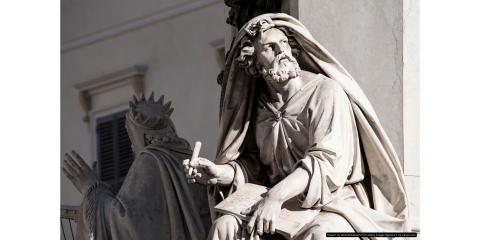
At this second Station of Advent we encounter the Prophet Isaiah through the first reading at Mass on Sunday (Isaiah 40:1-5, 9-11), but first a bit of biblical literacy before we continue. Biblical studies have helped us to see that there are three distinct periods of Jewish history covered in the 66 chapters of Isaiah:
- From the eighth century BC onward, the behavior of Israel is more self-confident than reliant on God, “pride is the antithesis of faith” as one of my professors put it. There is the consequence of punishment if there is no change in attitude and behavior.
- In 587 BC Babylon invaded Jerusalem, destroyed the city and the holy Temple, and then deported most of the inhabitants. The Babylonian Exile lasted for a span of 50 years.
- In the post-Exilic period Israel has returned to the Promised Land with visions for a new future with new possibilities as the Jews rebuild Jerusalem, the Temple, and their faith relationship with God.
Spanning hundreds of years these three historical periods are reflected in three distinct sections of the book of the prophet: First Isaiah (Chapters 1-39), Second Isaiah (chapters 40-55), and Third Isaiah (chapters 56-66).
On this second Sunday of Advent, for us at this second Station of Advent, we listen to the words of the prophet coming from Second Isaiah. The city of Jerusalem and the Temple have been destroyed, the people are in exile, all has been lost, and there seems to be no hope. But in the midst of displacement and despair the prophet speaks a message of consolation and trust.
Comfort, give comfort to my people, says your God. Speak tenderly to Jerusalem. A voice cries out: in the desert prepare the way for the Lord! Make straight in the wasteland a highway for our God! The rugged land shall be made a plain and the rough country a broad valley.
In desolation they will experience comfort; the winding paths will be made straight; the rough ways will be made smooth.
But the Prophet Isaiah has more to say, using the simile of a gentle shepherd with sheep, the hope-filled prophet becomes a consoling poet, “like a shepherd God feeds this flock, gathering them in loving arms, and leading them home.” I continue to be amazed at how much energy the shepherd image holds for us even though we, in Western society, do not have shepherds with sheep in pastures. John McKenzie, SJ, in his Dictionary of the Bible, has a wonderful line about the shepherd and sheep. “The shepherd established a remarkable rapport with his flock; they recognize his voice and distinguish it from others and learn to obey commands given by voice. They seem to have perfect confidence in their shepherd and follow him wherever he leads.” [1]
The Prophet Ezekiel personifies the scene described by Father McKenzie. Beginning with verse 11 in chapter 34, and speaking in the first person, the Lord of Israel announces, “I myself shall take care of my flock. I shall rescue them. . . . I shall bring them back. . . . I shall feed them. . . . I shall give them rest. . . . I shall be a true shepherd to them.”
John Sanford, an Episcopal priest and Jungian analyst, profoundly writes of the shepherd image in his book Mystical Christianity: A Psychological Commentary on the Gospel of John. In a section on John 10, Sanford reflects that:
The parable of the Good Shepherd is based on images that were familiar to the people of Jesus’ time: sheep, the sheepfold with its gate, the dangers to the sheep, and the role of the shepherd. In his parable Jesus turns this familiar setting into a powerful symbol for the passage of the soul through this life and for the importance of himself as the guide. [2]
“I know my own and my own know me” suggests an intense and personal desire of the shepherd to be one with the sheep of the flock. At this second Station of Advent, through Second Isaiah, we hear intense words of compassion and a desire for mutual presence by our God.
I recall times when I was teaching in a high school and my three years in campus ministry at Chaminade University in Honolulu when, through these ministries, I was like a good shepherd to the students. Providing a listening ear, sharing a comforting smile, and offering an understanding heart gave so much to these seeking young minds and hearts. I recall talking about such an experience in spiritual direction, describing a time when I was like a good shepherd to others. As the direction session continued my spiritual director asked me of my experience of being comforted by God, the Lord of all, the Good Shepherd. What was it like to be “led to grassy meadows, to sit in loving presence by tranquil streams, to have my soul restored in love, to have kindness and faithfulness with me all the days of my life” (Psalm 23)? As I sat with my director’s intimate questions I realized that I can only be that comforting, consoling presence to others because I have experienced and savored that holy presence with God. The gift received is the gift shared!
And maybe this is the focus for us at this Second Station of Advent, to pause in prayerful reminiscence with these two questions. 1) When was it that I was like a good shepherd to another? 2) When have I experienced the loving and intimate presence of God that is so healing and comforting? One more suggestion: sit with your experience, with the words of Isaiah and Ezekiel, of McKenzie and Sanford, while listening to Beethoven’s 6th Symphony, “The Pastorale!”
After the first reading at liturgy from Isaiah 40 we sing a very appropriate Responsorial Psalm:
I will hear what God proclaims, for God proclaims peace to this people! Near indeed is God’s presence to those who live in love. Kindness and truth shall meet, justice and peace shall kiss. Truth shall spring out of the earth and justice shall look down from heaven. (Psalm 85)
May the gift of holy presence that we know from our time in prayer with God be the gift of loving presence that we share with others, both in our homes and neighborhoods, and with those around the world through prayerful intercession.
Endnotes:
- McKenzie, SJ, John. Dictionary of the Bible. New York: Collier Books, 1965, p. 802.
- Sanford, John. Mystical Christianity: A Psychological Commentary on the Gospel of John. New York: Crossroad, 1993, p. 209.