
Home
  • About Us
    • Contact Us
    • Our Staff
    • Visit Us
  • Library
    • Directed Research
    • Library Catalog
    • Marianist Library Classification
    • Marianist Subject Headings
    • NACMS Cumulative Index
  • Podcasts
    • Sharing Our Marianist Stories
    • Advent Marian Meditations
    • Lenten Meditations
    • Stations of Easter Meditations
  • Programs
    • Marianists Write Now!
    • MSP 2.0
    • New Employee Orientation
    • Online Marianist History Course
    • Online Reading and Conversation Groups
    • Presentations
    • Spirit of Saragossa Retreat
    • Vowed Marianist Formation
  • Publications
    • Bookstore
    • Community Meeting Kits
    • E-Publications
    • General Chapter of 1981 Documentary
    • Marianist Heritage Virtual Tour
    • Newsletter
    • Recorded Webinars
    • Copyright Policy

Explore our Resources

Marianist History/Biography

  • William Joseph Chaminade
  • Adèle de Batz de Trenquelléon
  • Marie Thérèse de Lamourous
  • SM History
  • FMI History
  • Lay Marianist History
  • Other Biographies
  • Marianist Charism - Spirituality

  • Faith
  • Mary
  • Prayer
  • System of Virtues
  • Marianist Charism - Apostolic Approach

  • Community
  • Mission
  • Inclusivity
  • Marianist Family
  • Ministry - Solidarity/Social Justice
  • Ministry - Education
  • Three Offices
  • Reference Works

    Community Resources

  • Community Meeting Kits
    1. Home
    2. Bookstore
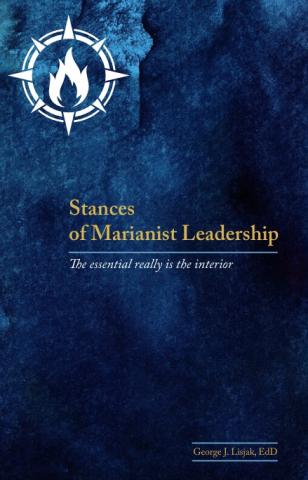
    3. Stances of Marianist Leadership: The essential really is the interior

    Stances of Marianist Leadership: The essential really is the interior

    Authors: 
    George J. Lisjak
    What makes Marianist Leadership both good leadership and also authentically Marianist? This question is at the heart of "Stances of Marianist Leadership: The essential really is the interior," a new book written by George Lisjak, the director of the North American Center for Marianist Studies (NACMS).


    “I believe, then, that the call to be Marianist is itself a call to leadership.”[1]

    -- ­George Lisjak


    What makes Marianist Leadership both good leadership and also authentically Marianist? This question is at the heart of Stances of Marianist Leadership: The essential really is the interior, a new book written by George Lisjak, the director of the North American Center for Marianist Studies (NACMS).


    Lisjak, who has more than 40 years of leadership experience in Marianist institutions and holds a doctorate in educational leadership, contends that Marianist leadership can be practiced not only within Marianist organizations but also within other organizations, including those not specifically Marianist.


    The distinguishing feature of a Marianist approach is found in the book’s subheading.


    According to Lisjak, “Marianist Leadership is a response to a call from God. The ‘what’ and the ‘how’ of leadership may cause it to appear to be Marianist, but it is the ‘why,’ an internal ‘yes,’ to the call that makes it so. The essential really is the interior.”[2]


    While “characteristics” or “pillars” are often used to define qualities that are Marianist, Lisjak, a lover of professional baseball, views Marianist Leadership as stances, similar to a batter's stance at the plate. While externally observable, a batter’s adjustments—for example, the position of the hands on the bat—have been internally discerned for greatest success versus a pitcher. So, too, does Marianist Leadership flow from an internal process.


    But just what are the Purposeful, Developmental, Collegial, Responsive, and Transformational Stances of Marianist Leadership, and how do they interconnect with the principles of mission and vision found within organizational leadership practices? Read Stances of Marianist Leadership to find out.


    [1] George J. Lisjak, Stances of Marianist Leadership: The essential really is the interior (Dayton, OH: NACMS, 2025), 9.

    [2] Lisjak, Stances of Marianist Leadership, 11.
    Marianist Leadership encompasses both action and motivation. While different methods and techniques may be brought to bear in different situations, Marianist Leadership cannot be reduced to a style. There may be styles that appear more like what would be expected of a Marianist leader and other styles that appear less so, but true Marianist Leadership transcends style and situation. Just as with being Marianist, Marianist Leadership is a response to a call from God. The “what” and the “how” of leadership may cause it to appear to be Marianist, but it is the “why,” an internal “yes,” to the call that makes it so. The essential really is the interior.

    This interiority has some important implications. Authority provides particular opportunities for leadership, but just as with other brands of leadership, Marianist Leadership can be exercised whether holding a position of authority within an organization or group or not. Marianist Leadership may be expected in Marianist organizations or groups, but it may also be exercised in organizations and groups that are not expressly Marianist.

    Marianist Leadership encompasses both action and motivation. While different methods and techniques may be brought to bear in different situations, Marianist Leadership cannot be reduced to a style. There may be styles that appear more like what would be expected of a Marianist leader and other styles that appear less so, but true Marianist Leadership transcends style and situation. Just as with being Marianist, Marianist Leadership is a response to a call from God. The “what” and the “how” of leadership may cause it to appear to be Marianist, but it is the “why,” an internal “yes,” to the call that makes it so. The essential really is the interior.

    This interiority has some important implications. Authority provides particular opportunities for leadership, but just as with other brands of leadership, Marianist Leadership can be exercised whether holding a position of authority within an organization or group or not. Marianist Leadership may be expected in Marianist organizations or groups, but it may also be exercised in organizations and groups that are not expressly Marianist.

    Read Excerpt

    Introduction ...v

    Chapter One | The Landscape: Definitions and Parameters ...1

    Chapter Two | The Purposeful Stance ...17

    Chapter Three | The Developmental Stance ...35

    Chapter Four | The Collegial Stance ...53

    Chapter Five | The Responsive  and Adaptive Stance ...69

    Chapter Six | The Transformative Stance ...83

    Epilogue | Is Marianist  Leadership Just for Marianists? ...97

    References ...101

    Introduction ...v

    Chapter One | The Landscape: Definitions and Parameters ...1

    Chapter Two | The Purposeful Stance ...17

    Chapter Three | The Developmental Stance ...35

    Chapter Four | The Collegial Stance ...53

    Chapter Five | The Responsive  and Adaptive Stance ...69

    Chapter Six | The Transformative Stance ...83

    Epilogue | Is Marianist  Leadership Just for Marianists? ...97

    References ...101

    Show Table of Contents
    Intermediate
    $15.00

    Sign Up For Our Newsletter

    • Contact Us
    • Privacy Policy
    • Society of Mary - SM, Province of the United States (Marianist Brothers and Priests)
    • Daughters of Mary Immaculate - FMI (Marianist Sisters)
    • Marianist Lay Community of North America (MLC-NA)
    • International Organization of Marianist Lay Communities (IO-MLC)
    Copyright © NACMS | Website: CEDC