
Click here for a downloadable PDF version of this article.
CIRCULAR NO. 3
12 September 1998 - Feast of the Holy Name of Mary
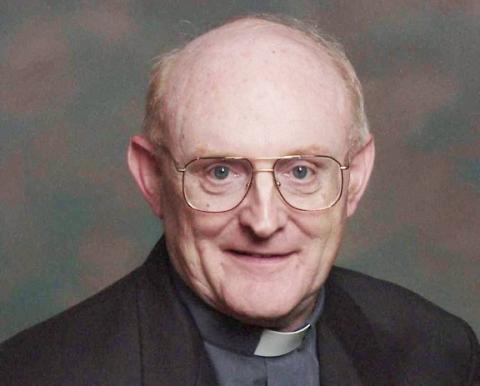
DAVID JOSEPH FELMING, S.M.
Superior General of the Society of Mary,
Missionary Apostolic, to all his fellow Marianists throughout the world.
THE LIFE OF PERSONAL PRAYER
Dear Brothers,
As we move into the twenty-first century, interest in spirituality and mysticism grows daily. At the same time, preoccupation with religious doctrines and organizations declines. This may be paradoxical, but it is a fact.
More than ever before, only those who communicate an authentic God-experience will be accepted as credible witnesses of faith. Our life of personal prayer has a special capacity to help us interiorize and personalize such an experience of God. That is why I have chosen the life of personal prayer and meditation as the theme of my letter for our patronal feast this year.
I will not attempt to touch all aspects of Marianist prayer life. To be complete, I would need to speak of community prayer, liturgy, shared prayer, and many other aspects of spirituality. All are necessary for a wholehearted Marianist prayer life. Yet I believe that personal meditation deserves special emphasis and holds a certain primacy among the forms of prayer. Fr. Chaminade called it the “pivot” of Christian and religious life (Letter no. 1269). I will begin by listing a few of the reasons that have led me this year to focus on this topic.
REASONS FOR CHOOSING THIS THEME
1. 1998 has been designated by the Church as the year of the Holy Spirit, a time to reflect on the surprising and dynamic presence of the Spirit in our lives and in our world.
In a way that was quite unusual for his time, Father Chaminade spoke frequently of the role of the Spirit as the principal agent of our formation, of our growth as individuals and community. He was convinced that the Spirit is the primary agent in our formation under Mary’s influence into the likeness of Jesus.
The Spirit is the source of our unity as a Marianist Family. We are composed of varied and interacting Christians from all walks of life, races, states of life, cultural and educational backgrounds. The Spirit is the bond of love that keeps us together.
It is the Spirit that unleashes and channels the dynamism of our mission, the constantly renewed creativity of Mary’s response through us to the needs of each time and place. Fr. Chaminade was confident that the guidance of the Spirit would direct the universal thrusts of the Marianist mission for all time to come, as successive generations would try to “do whatever He tells you.”
The Spirit transforms us from educators and social workers and religious professionals into witnesses to God and proclaimers of His Reign on earth. Without the breath of the Spirit our religious life becomes empty and meaningless. There is a danger of such spirit-less professionalism in our work today.
I was impressed by the way in which the Special Synod on Asia, in which I recently had the privilege to participate, spoke of the Spirit’s work from the first moment of creation and throughout the history of salvation, culminating in Jesus Christ, and carrying on God’s plan until the Lord Jesus comes at the end of time. It stressed the role of the Spirit everywhere, among all peoples, no matter what their religious background, sowing the seeds of truth and grace in their philosophies, cultures, religions, and in their daily experience.
We need to recognize the work of the Spirit still planting numerous seeds of truth and grace among the concrete peoples we know and serve today - Christians, post-Christians and followers of other religions - even when their religious attitudes and practices are weak, nonexistent, or at any rate different from our own,. This mentality of contemplative openness to the varied work of the Spirit was already expressed in the old Marianist Constitutions, which said that our formative, educative mission is “to sow and not to reap,” and which insisted that we should “not reject as bad what is not absolutely good.”
The Spirit wells up within us in the life of prayer. The Spirit develops the “faith of the heart” that the founder knew to be the “beginning, the foundation, and the root” of all holiness. It is only through steady and faithful personal prayer that Marianists can develop a faith which is a life and a heartfelt conviction, not just a set of abstract principles. In this prayer of faith, we attend to the quiet but insistent promptings of the Spirit.
What better way to celebrate this “year of the Holy Spirit” than to reflect on the development of the life of personal prayer?
2. The theme of personal prayer is in continuity with my circulars of the past two years, which have focused on our mission and its vitality. It is also a needed complement to them. Real vitality in mission ultimately depends on our depth of God-experience. As our Rule of Life explains it (art. 56), contemplation and mission must be integrated in our lives, for ours is an apostolic spirituality. Otherwise we lose our urgency for mission altogether, or we become “booming gongs” and “clashing cymbals.” Without prayer our so-called mission becomes no more than external display, a facade without depth, and our enthusiasm and vitality only animal spirits or camaraderie. To be effective in mission, we must be people of holiness and prayer who have a real experience of God. At the same time, for our prayer to be authentic, grounded in reality, we need to learn to read the signs of God’s presence in the people around us.
3. This coming year we hope to see the appearance of a new book on Marianist prayer, prepared over a period of some years under the leadership of Fr. Arnaiz, with the collaboration of a group of Marianist scholars and teachers of prayer. This book should do for our time what Fr. Simler’s Guide for Mental Prayer did for previous generations of Marianists. At the same time, Fr. Jean- Baptiste Armbruster has been publishing a series of very interesting notes and offering study sessions on “The Spiritual Method of Father William Joseph Chaminade.” I hope that this circular will whet your appetite for delving into these new materials.
4. One of the propositions from the Asian Synod reads as follows: “In the Asian context, God-experience is highly valued and those who have it are sought out by religious seekers as their spiritual guides. Hence the important task of every Christian is to deepen his/her experience of God in a daily encounter with him, especially in prayer, in the sacraments and in the Word of God, as the source of one’s witness and missionary proclamation.”
Again, speaking of a spirituality which allows us to encounter people of all religious heritages and which is to under gird all ministry, the Synod said: “the work of justice, charity, and compassion is inter-related with a genuine life of prayer and contemplation, and indeed it is this same spirituality that will be the wellspring of all our evangelizing work.” These statements have an Asian flavor, but they are clearly of universal application.
5. I have also felt prompted to reflect on prayer this year by the visits and contacts I have enjoyed with Marianists across the world:
- There is a depth of God-experience, a thirst for greater deepening, a longing for genuineness in prayer, among many Marianists everywhere.
- In most Marianist communities, presence at community prayer is a hallmark of fidelity, and the liturgy of the Eucharist and the hours is highly valued.
- At the same time, many confess that they find prayer difficult and even puzzling. It is hard to remain faithful, day in and day out, and to keep growing in the life of prayer. Many reduce their time of personal prayer to a minimum.
- Some complain of a low level of experience, and settle into routines of mainly external presence, or personal devotions, or intriguing religious reading.
- A few give up completely, but many more struggle on, in uncertainty. Many times most of us experience dryness and distraction.
- With time, our experience of prayer grows and changes, and it is not always easy for us to discern what is simplification and progress, what boredom and ossification.
- Yet it is also clear that we have among us some outstanding men of prayer, people who patently live by a deep awareness of God’s presence and communicate that sense of presence, without any ostentation, to those around them.
TEN COMMON OBSTACLES TO THE LIFE OF PRAYER
The Rule of Life says it beautifully in article 59: “In every Marianist community we aim to live in such a way that the presence of God is felt.” Yet what most impedes our growth today is our failure to create an atmosphere, either individually or in community, that disposes us to the life of prayer.
I am convinced that our problems are less with prayer itself than with a life-style that impedes it. A life of prayer is not possible without preparing for it and being willing to devote to it a generous amount of time. We will probably grow in prayer less by trying out new methods and styles than by focusing on the conditions that make prayer possible.
Here is a list of ten obstacles that commonly impede prayer today:
1. Prayer will be vacuous if a person’s life-experience itself is vacuous. How can we relate to the God we do not see, if we remain at a cool distance from the people we see around us? Where will we find God, if we never meet needy and hurting people? What experience do we have to bring to God in prayer if we remain detached from the reality of our world, from the joys and sorrows, hopes and aspirations of the people we meet?
2. We often feel a tension, rather than an integration, between prayer and ministry. The needs and possibilities of mission are in fact immense. Most of us Marianists are generous and zealous in responding to the calls of those we serve. But sometimes we do not know how to discern what God is really calling us to do. It is easy to think that the salvation of others (or, more often, the success and good reputation of our many works) depends to too great an extent on what we do and don’t do. Both western and eastern spiritualities also recognize the validity of activity as an approach to God (apostolic spirituality, karma yoga). But, if it is to be a way to God, activity must be selfless, done for its own sake, not for the results or the consolations we draw from it. Sometimes our seemingly urgent activity, for which we claim the facile justification of apostolic spirituality, becomes an excuse for not praying. Father Chaminade was aware of this tendency in his own time, and every version of our rules since 1839 has insisted that “any occupation, employment, or relaxation which habitually interferes with the practice of personal meditation is incompatible with Marianist religious life” (Rule of Life 4.4).
3. It is easy to become careless or minimalist in the observance of our vows of poverty, obedience, chastity, and stability. Without thinking much about these vows or directly and flagrantly breaking them, we become accustomed and attached to a high level of possessions and comforts, we set up our lives in such a way that we can hardly be expected to respond to new challenges, we develop self-centered relationships, we rarely think of the Marianist ideal. The witness of our vows grows stale, and few remark any prophetic witness in our lives. In such a situation, prayer is likely to become more an external routine, easily omitted in our busy lives, rather than a heartfelt experience.
4. The life of prayer cannot flourish if our minds are filled much of the time with the sensational and unnecessary but intriguing things we constantly absorb from television, radio, light reading and the Internet. The modern media have great potential for our own growth and for our mission. But we get fascinated by the ephemeral. The moments we try to devote to personal prayer are dominated by the flotsam and jetsam of our minds, the detritus of our daily round of interesting distractions. The masters of yoga describe all these as “mental itchings, ” and declare that the aim of spiritual discipline is to stop or at least control them. Our Founder spoke of the “inner silences”- of the mind, the imagination, and the passions - in the same context. We need these inner silences more urgently than ever before.
5. The experience of holy people of all times and places shows that there is a deep link between the life of prayer and a sane bit of leisure. Yet our world has become very fast-paced. Instant gratification of every desire is increasingly possible, instant information is to be had at the click of a mouse on the Internet. We don’t know much about patient waiting and striving, or about quietly reflecting on what is truly good and desirable. Many of us rarely take time for a bit of quiet, silence, leisure and natural contemplation. How will we find time for prayer? Or, if we “squeeze it in,” how will it become a freeing experience, and not just another item on our list of “things to get done”? Eastern religions teach a discipline of the breath (pranayama) as a prerequisite for prayer: taking a few deep breaths and quieting down is a simple first step towards creating a more prayerful rhythm of life.
6. Pondering the scriptures, spiritual reading and religious study do not seem to be high priorities in the lives of many of us. Perhaps we think we know it all already. And it is probably true that we have more religious information, have listened to more viewpoints and insights, than any previous generation. The scriptures should illuminate our life; life in turn should evoke prayer and direct us back to search the scriptures more. But the quiet and leisurely lectio divina that interiorizes spiritual truths in this way is often lacking.
7. Consumerism has gotten quite a grip on us. Everybody wants more, covets the kind of good life that is broadcast everywhere by the media. It could hardly be otherwise in today’s world, and this phenomenon is evident in the poorer countries as much as in the richer. As individuals and communities, it is easy for us to squander a lot of attention on what we will buy, use, consume. These things become more fascinating than the slow and unspectacular growth of the life of prayer.
8. Addiction is an increasingly important theme of reflection in modern life. We are more conscious than ever before of the way little or big addictions - to work, food, drink, smoking, relationships, or anything else - can dominate lives. Typically, we tend to overlook our own addictions, while being quite clear-sighted about those of others. Our quirks, personal interests, and addictions easily become the real focus of our hearts, rather than the treasure of God-experience.
9. Sometimes our bodies are ill-disposed to prayer. We cannot do much about physical ailments and discomforts - other than trying to take better care of our health and accepting our limitations. We can, however, do our best to dispose ourselves physically for fully attentive prayer. The yoga teaching on asana (postures) is not intended as a form of gymnastics but as a predisposition to contemplation. The eastern Christian monks developed similar disciplines in their teaching on centering prayer (hesychasm). But in many Marianist communities we are rather careless about our posture and our attitudes of reverence. These details have more importance than we know. Often the mind and heart follow the disposition of the body.
10. The life of prayer is a clear-sighted and loving mindfulness of the truth - the truth about the world around us, about ourselves, about our companions, about God. But sincerity does not come easily to us. It is more convenient and comfortable to live amid many little human hypocrisies, those white lies that seem to make life less challenging. In the presence of God these hypocrisies crumble and our defenses break down. Sometimes, quite naturally, we prefer the little lies.
Traditionally we have spoken of matters like these as “remote preparation” for personal prayer. The same truth is expressed in the teachings of oriental religions about yama and niyama (obeying the commandments and the disciplines). I believe that these are the roots of most of our difficulties in prayer. If we want to enrich our prayer today, our first attention needs to be directed to these matters, so that we can truly “live in such a way that the presence of God is felt.”
HALLMARKS OF MARIANIST PRAYER
Thanks to writings about our Marianist heritage by experts, we now know more about the spiritual teaching of Father Chaminade and Mother Adele than ever before. Mother Adele’s heartfelt invocations (e.g. “O my God, prepare my heart to receive your grace” - Letter 137) and her fervent bits of advice complement the constantly reworked systematic theological presentations of Fr. Chaminade. The writings of our origins remain rich sources of guidance and motivation.
Our Founders saw indifferentism and pervasive secularism as the major challenges to the Church’s mission in their time. It is clearer than ever that similar attitudes remain our biggest problems today. The life of prayer is the only way to counteract the subtle inner impact indifferentism and secularism have on each one of us.
Today, all branches of our Marianist Family, religious and lay as well, in their assemblies and mission statements, repeatedly stress the importance of personal prayer. For example, the Marianist Lay Communities, in a statement on mission adopted at the meeting at Lliria last year, said: “To be sincere, generous and faithful in our mission, it is essential for us to be men and women who are ‘strong in faith, secure in hope and constant in love.’ We seek this strength in prayer...”
Our Founders wanted the prayer of Marianists to be:
- focused on conformity with Christ
- the common and unique source of all virtues
- a prayer of faith
- a prayer of the presence of God
- a prayer in union with Mary.
I would like to say a word about the relevance of these five characteristics today.
Conformity with Christ, transformation into Christ, is for us the goal of all holiness. We are not seeking to reproduce an abstract, moralistic ideal, but a personal oneness with the Lord. The prayer of Christ was at once contemplative and apostolic. In our prayer we try to look at our world with his eyes, particularly seeing human suffering and misery with his compassion. Prayer for Marianists is meant to be, not a technique for concentration, but a dynamic experience of oneness with the Lord, intimately linked to mission.
Prayer was for Chaminade the “common and unique source of all virtues,” transforming us into people who are aware of others and their needs, ready to respond to them in justice, compassion, and selfless love. Thus Marianist prayer becomes apostolic. Contemplating the Lord in prayer and dedication to mission are meant to flow together in our lives. If we have sweet experiences in prayer but remain mired in self-centeredness, we are living an illusion. If, on the other hand, like quite a few saints, we find prayer difficult and dry but experience a genuine growth in likeness to Christ and in readiness to reach out in mission, we can be sure that our prayer is a gift from God.
More than ever, faith of the heart is a necessity for us. Many around us deny all truths of faith, or maintain an attitude of indifference and systematic skepticism. Others pick and choose beliefs that appeal to their fancy rather than oblige them to commitment. Still others use the truths of faith coldly and even brutally, as weapons in a battle, truths to be imposed, sources for a fundamentalist rejection of our times. Faith of the heart goes much deeper, transforms us and gives us a loving, creative stance to the world around us.
About frequent remembrance of the “presence of God”, Fr. Chaminade writes this beautiful text: “I am more thoroughly immersed in the immensity of God than a fish is in the ocean, a bird in the wide expanse of the air; I am in God as my thoughts are in my mind....If our faith be great, we shall soon feel ourselves dwelling in God, and we shall, as it were, feel God within us; we shall experience that in God ‘we live and move and have our being.’” (Writings on Mental Prayer, 379a and b). Such an awareness is far from being a kind of spiritual escapism. In fact, our failure to live in this presence often leads us to frustrations in our ministries, to selfishness, both to frantic messianism and to lazy sins of omission. If I could, like Mother Teresa, see the face of Christ in every person I meet, no matter how much he or she is distorted by evil and suffering, I would become a source of life for everyone.
By being united with Mary and attentive to her in our moments of prayer, we seek to take on her “style,” entering into her receptivity, her faith, her wholehearted simplicity, her empathy with others in their struggles, and the “warmth of welcome” she extended to God and to others (Rule of Life, art. 8). Mary was, first of all, a great contemplative, one who “sums up the longing and searching of the whole human race for God” (art. 7). In contemplating with her, we learn the way of mission, for she invites us to collaborate “in her mission of forming in faith a multitude of brothers for her first-born Son”(art. 6).
DISTRACTIONS AND PURIFICATION IN PRAYER
Despite our desire to realize this Marianist ideal of prayer, most of us, most of the time, have to struggle with distractions and periods of dryness. We are busy and active people, and the events of our day, our hopes and worries and plans and multiple interests, crowd in on us when we try to quiet our minds and focus on the Lord. We find other thoughts, other interests much more appealing, and the things of the Lord seem perplexing.
As for distractions, Christian specialists on prayer always have much to say about them. Hindu and Buddhist teachings also recognize this problem, placing pratyhara (detachment from mental cravings) as one of the key challenges on the path to contemplation. The main bits of advice, both East and West, are:
- to be patient,
- to analyze the causes,
- to try again and again to empty the mind of all that is extraneous,
- to center one’s attention, gently to shift the focus back on the Lord,
- if possible to integrate the matter that is causing distraction into our prayer,
- not to become discouraged.
All this is wise advice. The very effort to spend time with the Lord, daily, perseveringly, despite its difficulties, points to a genuine God-centeredness in our lives, opens up the space for a deeper action of God.
But purifications are something deeper still. Experts in mystical theology used to consider them as trials reserved for the great souls, the “nights” that signaled a rare call to a much higher form of contemplation. But today these dark nights seem more generalized, perhaps we could say “democratized,” experiences that in some way touch the lives of most religious who seek to live a life of prayer.
Quite a few of us entered religious life from a settled world that appeared to be firmly
established in eternal truths. As recently as forty years ago, our Church, our Society, our governments and perhaps even our families seemed to be wholly dependable, predictable and almost immutable. Even the style of our buildings spoke of something that had stood the test of time and was meant to last for the ages.
Today, only a few decades later, many of those rock-solid buildings have been razed, and our style of life - civil, ecclesial, congregational, familial - has been greatly altered, some would say almost beyond recognition.
The initial years of change seemed exhilarating to many of us. But with time there came a confusion, often a depression or anger, a persistent state of anxiety and frustration. There did not seem to be much to hold on to. Many left the Society, and others remained but found their real focus of interest and vitality elsewhere.
Many became more aware of, more involved in, the struggle against misery and injustice. Facing the grim realities of our time may have only increased the depressive mood. We wondered if our earnest efforts had any real results.
The resultant shocks to our psychic and spiritual systems can be viewed in many ways, but perhaps one of the most profound is to see them as a purification of faith. Ecclesially, religiously, I believe many of us have been called to live out a large part of our lives in mystery, in a “cloud of unknowing,” in a “dark night.” Rich and comforting certainties about God, about the world and Church and society, have often paled into confusion. We have been asked to learn that “God is always greater than our concepts,” that some of our past assurance may have masked a bit of idolatry.
We have been prodded to let go of what we think of as success and security, in order to follow the Lord “in ways we perhaps would not have chosen”(Rule of Life, art. 31). The Rule of Life is quick to assure us that these mysterious ways have the potential to “overcome selfishness and lead to joy, love, and the freedom of God’s children”; but often in our prayer experience we feel the darkness and confusion for a long time before we get to the freedom and joy.
I believe the Lord is often at work in this experience, as if he were waiting for us to trust him more, to let go of some of our tightly held consolations and certitudes.
The fragility of which we often complain today in old foundations and new ones, our
disappointments and unfulfilled dreams, the tentativeness of some of our plans and ideas for the future, the inability of the young to feel they are on solid ground and of the old to feel very successful in handing on their heritage to future generations - all of these may be signs that God is calling us to abandon ourselves into his hands, to live by faith and not by sight. The challenge of the revitalization of Marianist religious life in our time is thus ultimately a purification of faith. Father Chaminade had very similar experiences in his own time; no doubt that is why he placed “confidence in God” and “distrust of self” as the first of the purification virtues.
Dialogue and corporate reflection, evaluations of our communities and works, restructuring efforts, renewal programs and discernment sessions - these means may provide some help in dealing with our realities. But ultimately such a purification can only be faced in prayer, and its solution can only lie in surrender and abandonment to the workings of the Lord. St. Paul frequently recommended makro-thymia (big-heartedness, magnanimity) for the early Christians who faced such situations. He also exhorted them to hypo-mone (staying power, persevering trust). Like theirs, our problems are most deeply problems of faith and prayer.
GROWTH AND SIMPLIFICATION IN THE LIFE OF PRAYER
One of my little frustrations with many Marianist spiritual writings is that, despite their
richness, they seemed to be aimed mostly at beginners. In the early years of the Society, when many of the basic teachings of our charism were first articulated, it was natural to focus on those who were just beginning the life of prayer and growth in virtue. Fr. Jean-Baptiste Armbruster’s studies of Fr. Chaminade’s “spiritual method” have begun to focus on later texts of the Founder that point the way to a spirituality for those with some years of experience. But still today we do not seem to have reflected enough on the special needs of those who have been at it for quite some time.
This is not to say that those who have tried to pray for some years are necessarily at a higher stage of development. Just as the virtues and the experiences of prayer take time to develop, so do the vices and infidelities. The “noon-day devil” only sets in after some years. Arid and skeptical laxity rarely appears before mid-life.
But there is a more positive side. The testimony of all spiritual masters is there to tell us that we should expect growth and change in the life of prayer. It is not a static reality. There may be some plateaus, but if they last too long they are likely to signal a problem. Too often we act as if the same nostrums of spiritual hygiene are appropriate for all, no matter what their age and experience. We need to recognize that good advice for beginners may not always apply to those who have been at it for some time, and vice versa.
Normally the person who is faithful to personal prayer for a few years begins to experience a certain simplification. There is no longer so much need for analysis and reasoning. In the better moments of prayer, the heart begins to flow quite readily, and the experience of God wells up inside more spontaneously. Faith descends in a more felt way from the head to the heart. The time of meditation consists increasingly in a peaceful, perhaps joyful stillness of mind, an absence of thoughts. Eventually even the distinct emotional moods become less predominant and one arrives at a simple but rich kind of prayer a little like that described by the Curé of Ars: “I just look at God and he looks back at me.” And I go out from that wordless mutual contact energized for mission.
These consoling experiences normally alternate with moments of more darkness. St. John of the Cross is a master at describing such states of mind, and he felt they were normal for many people. Such people no longer feel any inclination to make considerations and affections. A spiritual longing and nostalgia may fill their hearts, but they find it hard to define their object, and often they feel a certain aridity and vagueness. They sometimes wonder if they have been unfaithful, or if God has abandoned them. Instead of developing certainties, they seem to live increasingly in mystery. They wonder if their apostolic efforts are worth it. The line between vagueness and mystery is not always too clear to them.
Those who have persevered through such experiences assure us that they can signal growth. These experiences require regular consultation with a sensitive spiritual guide. They usually call for a new, simpler method of meditation - perhaps “centering prayer,” the repetition of a sacred word or phrase over and over, or the wordless focus on an icon, a cross, or some other sacred object. The appropriate method of prayer will vary according to one’s inclinations and the style of one’s experiences, but what is important is to persevere and to have confidence that God is inviting us to growth. Thus the life of prayer becomes an ongoing experience, a slow, gentle, gradual progress - not simply a daily routine.
Father Chaminade was deeply aware of the Christian spiritual tradition, and he knew such a process of growth and development in his own life of prayer. I know many Marianists today who seem in their own way to experience a similar process, but often they find it disorienting. Not enough spiritual directors, within the Society or beyond it, are skillful at helping them through these stages of growth. It is natural that we be discrete about our prayer-experience, and we should not worry about charting developments. Yet we should not fear to share our experience and our questions with an experienced guide, so that we can be faithful to the call of the Spirit at each moment in our life-journey. Our weakness in seeking spiritual direction is at the root of much of our mediocrity in prayer - a mediocrity which spills over into our ministries.
CONCLUSION
The aim of this circular has just been to invite each of you to reflect on your own experience of prayer and to encourage you to cultivate to the full the graces that God is giving you at the present time. The Spirit of God is always at work, everywhere - including in our own hearts. With Mary’s searching and receptive attitude and with the help of our rich Marianist spiritual heritage, let us ask that we may become people of genuine God-experience, who can radiate this sense of God to the searching people of our time.
Fraternally,
David Joseph Fleming, S.M.
Superior General