
Click here for a downloadable PDF version of this article.
[Copyright © 2014 by NACMS, Dayton, Ohio. All rights reserved.
The North American Center for Marianist Studies (NACMS) has a Copyright Compliance Policy for its products. Please review the material below for specifications on requesting permission to use NACMS resources, including printed, computer-generated, or audiovisual materials. NACMS retains copyright of its products, in compliance with the laws established by the United States Congress. It is imperative that anyone wishing to reproduce NACMS material, including in an electronic or paper format, send a written request for permission to do so. (Note: This policy applies to all Marianist institutions, members of the Marianist Family, and the general public.) For those seeking permission to reproduce NACMS products, either printed documents or electronic material, please fill out a "Permission Request Form." A NACMS staff member will be in contact with you about your request. (Acknowledgement of the copyright permission received should be posted on any reproduction.) For scholars conducting original research, permission to use NACMS material in your research is not required, unless a large portion of a specific product is cited. If this occurs, please fill out a “Permission Request Form,” located at www.nacms.org/legal-and-privacy-policies.]
1. An Odyssey
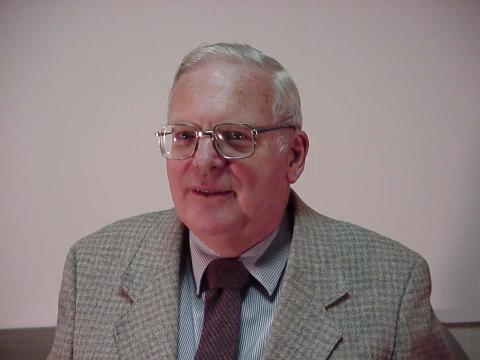
My Marianist life began at age 14 when I joined the Sodality at Chaminade High School in Mineola, New York. There I met then-Brother Robert Mackey (who is now “with the ancestors,” as they might say in Kenya), who initiated me into the ways of being a missionary of Mary. We were all asked to sign on to “her big job” (bringing Christ to everyone and everything). It was really thrilling, at least to me!
But then, of course, the initial excitement morphed into more intricate engagements and more developed understandings. I learned it was because Mary was and is the Mother of Jesus that she had this great mission, because in a way, he is the mission. I know you could argue with that last statement, but let’s leave it at that for now. I am trying to convey something of how I felt about these things at the tender age of 14.
Yes, it was true. I too was a son of Mary because I had been made one with Christ. He was the vine; I was a branch of the vine. I learned about this through Father Emil Neubert’s classic My Ideal, Jesus Son of Mary, my primary source of wisdom for at least ten years—even after I became a novice and a young brother. My Ideal was a very demanding work. It asked for a total handing over of the self that did not fit easily within the contours of the teenage world. Yet, at that time and in that context, it gave passage into a more expansive dedication to Mary. She was my mother, and I was her son precisely because we were both “in Christ.”
Many years later, when I was seeking to initiate university students into a more mature Sodality adventure than the one I had grown up with, I learned that few of them could come to a relationship with Mary the way I had. Most of the time we had to concentrate first on social change, then discover the need for a community as backup, then come to revere that community as the Body of Christ, and only afterward could we find Mary in the heart of the Body. This was a very indirect way into the mystery of Mary and her motherhood of us—an insight that still has application to the world we find ourselves in today, as I hope will become clear in later chapters.
Mary in a Time of Cultural Dissonance
Everyone over fifty has special remembrances of “the Sixties”—the explosive time from around 1965 through the 1970s and just grazing the 1980s. “The Sixties” appears to have been a worldwide rupture in human culture. In the United States it spawned the Civil Rights Movement, “the summer of love,” “flower power,” “Kent State,” the Vietnam War protests (“Hell no, we won’t go!”), Betty Friedan and Ralph Nader, among many other things. It divided American Catholics as much as any other group, causing a wholesale exodus from religious life and the priesthood and even the departure of a few bishops. It was a time of extensive questioning of authority figures and traditional teachings by a great many people. “The Sixties” could, perhaps, best be characterized as a rebellion initiated by the young against the world and especially the values bequeathed from previous generations, which was eventually joined by many middle-aged and some elderly people as well. Its consequences were and are far reaching.
For American Catholics these years often included the marginalization of Mary as a force in Catholic piety and theology. This marginalization arose not so much from outright opposition as trivialization. Women especially found it difficult to make a place for Mary because, in those tumultuous times, Mary often functioned as a symbol that seemed out of touch with changing mores about women’s place in society. Marian devotions practically disappeared from much of the life of the Church in the United States. It often was difficult to find an appropriate way of speaking about Mary, and most of the once-popular Marian hymns became an embarrassment for many, men as well as women. I recall how a Marianist lay community I was associated with faced this conundrum by placing a large bowl of still water in the center of the room as a Marian symbol at each meeting. During prayer the community would spend several minutes in quiet attention before the bowl. No words were spoken, no songs were sung. This went on for several months. Finally, someone placed a lone flower to rest on the water to symbolize fruitfulness and hidden growth, and the community began a diligent search for more appropriate expressions of its Marian dedication.
Far Away
After some time I felt the need to “go apart” for some spiritual rejuvenation. This led eventually to an unforeseen outcome—a doctorate in theology with a concentration in spirituality from Fordham University. Here I rubbed shoulders with other graduate students in midlife, whose concerns and issues were much the same as mine. We had many excellent conversations; being based in New York City, we also benefited from the visits of prominent scholars from across the world. As a result, at bottom, I came after awhile to understand the developing global culture as at bottom a shift in attitudes toward the Divine or at least toward transcendence in some form. This meant spirituality was at the heart of the uncertainties, the discontents, and the reaching out for new visions that have accompanied the present cultural transformation.
My years of study especially meant encountering the intellectual side of this cultural shift. I did not deal directly with Mary but with currents and questions that were percolating then and seeking to situate them within the traditions of Christian theology. I recall doing a paper for a seminar on “the absence of God” or “the death of God,” a grave concern for many in the post-sixties generation. Theologian Gabriel Vahanian was most helpful in probing these things. Vahanian did not treat “the death of God” as a metaphysical matter but as a cultural one. For him, what were dying were cultural symbols that represented God and mediated our paths to the divine. Western Christians were forced to live, he thought, without these symbols—it was a test of faith, a sort of “dark night” for the Christian community. This was an important issue for spirituality and seemed to speak to the struggles many people were having and their attempts to work them through. I thought, of course, of the Marianist lay community silent before the bowl of clear water: it was their “dark night,” not a rejection of Mary but a humble recognition of their inability to speak.
Spiritual Masters
My primary mentor during my Fordham years was Dr. Ewert Cousins, general editor of the 25-volume World Spirituality series and chief consultant for the multi-volume Classics of Western Spirituality put out by Paulist Press. He passed on to me a great many valuable insights. Some of the most memorable pertained to the relationship between psychology and spirituality. Cousins saw the great masters of modern (originally European) psychology as founders of schools of spirituality who owed more than they realized to the delicately-etched understandings of the human found in the works of people like Bernard of Clairvaux, Richard of St. Victor, Bonaventure, Teresa of Avila, John of the Cross, John Ruusbroec, etc. He discerned spiritual stirrings in them, especially in Jung and his followers, but he realized (I think) that most of them stopped long before they reached anything like a serious engagement with the transcendent.
For myself, the most absorbing encounter with all of these things—one in which Cousins didn’t play much of a part—occurred when preparing for the comprehensive examinations. I chose as my “minor” topic St. Gregory of Nyssa, the fourth-century Father of the Church. In reading some of Gregory’s works and trying to absorb the more recent scholarship about him, I was amazed to discover how far he had delved into ideas about the human that I had always believed were creations of twentieth-century psychology. Gregory teaches that humans create their own selves through the choices they make. As they move on through life, they continue to become more and more—they move “from glory to glory,” according to what gives them delight. What is distinctive about Gregory—in contradistinction to modern authors—is that he grounds these insights in a profound metaphysics: it is because they are creatures, who at any moment can never be all they can be, that human beings must do this. In other words, Gregory’s psychology is grounded in a metaphysics of creaturehood. And so he insists the human response to God, precisely because it is a creaturely response, can only be to always become more and more. And this forward movement goes on forever—even in heaven. Acceptance of these ideas revises our understanding of “eternal life,” and it has many implications for spirituality. Among other things, it elevates the unfamiliar to a new level of spiritual importance.
This is a very quick look at some currents in my midlife pursuit of the intellectual life. Clearly they do not address Marian thought and still less Marian spirituality. Yet for me, as I presume for every serious Marianist, Mary stands in the background of everything, and so the working-out of a mature relationship with her is influenced by the significant theology of one’s own time.
Good Times in Louisiana
I move on now to the next “glory” in my life—and it really was a “glory,” too. I found myself at Xavier University of Louisiana in New Orleans, North America’s only black Catholic university, which had been founded by St. Katharine Drexel and staffed by her Sisters of the Blessed Sacrament. A faculty member from the theology department was away on a year’s sabbatical, and I signed on to take his place. I was teaching an introduction to the Bible course, and I quickly found that my students, 95 percent of whom were African American, really needed no introduction to the Bible—it was part of the fabric of their lives, like eating, sleeping, and “messing around.” What I was introducing them to was the historical-critical approach to the Bible, which was like a foreign body to them.
At this point, I must stress that, despite its quasi-hedonistic reputation, New Orleans is actually a rather conservative city, especially religiously. My students had a tough time with some of the notions I was feeding them. But I was amazed at their openness, their willingness to engage, and their simplicity. Once in awhile something I said would pierce the fabric of someone’s faith, and he or she, other students, and I would “mix it up” in a search for wisdom/truth. I remember once a student becoming alarmed at something I had said and forcing me to make a profession of faith before the whole class. It was great!
My year in New Orleans included memorable out-of-class experiences, too. A particularly important one occurred at a political gathering where an African-American politician was, in effect, campaigning for Congress. I got into a lengthy conversation with a middle-aged lady about life, politics, and the possibilities of intercultural understanding. Suddenly, with a lot of emotion, she blurted out, “You are black!” I took this as a great compliment, more valuable than any academic degree or prize. She was saying to me, “You are one of us!”
A New Glory
My New Orleans experience turned out to be a prelude to an unsolicited adventure with the Marianist enterprise in Eastern Africa. There I was engaged in developing an African version of Marianist community life and in teaching theology in various seminaries in Nairobi, Kenya. I did teach some Mariology at a seminary, but for the most part Mariology was not considered a subject worth serious attention, undoubtedly because Africa still learns its theology mostly from the West.
The years in Africa proved particularly significant because they forced me to work through my Christian and Marianist values in a culture very different from my own. I came to believe Africa’s rich cultural traditions offered extraordinary opportunities to express Christian faith in a new and creative way. This seemed especially true about the Marianist relation to Mother Mary. Considering the major role mothers play in present-day African life, it is not difficult to see how Mary could become an icon of faith in that part of the world and how the African Marianist experience could enrich us all.
I hope that this brief look at my religious, cultural, and intellectual trajectory can serve as a background to the interpretations I wish to offer about Mary’s place in contemporary Marianist life. Somehow our Marianist theology has to interact with these and similar experiences if it is to speak strongly to us in our present circumstances. We shall see where this may lead in the chapters which follow.
2. Mary Our Mother
This book concerns one of the pillars of the Marianist foundation—the conviction that Mary is our Mother in Christ and that being formed by her to the fullness of Christian life is the primary way of grace for us. Let us listen to Father Chaminade on expounding this teaching in an early retreat conference, given to the brothers in 1827, as preserved in some disciples’ notes (in the Spirit of Our Foundation, vol. 1).
The Blessed Virgin Mary is mother not only, as is commonly though ignorantly believed because she has adopted us as children, but she is our mother in reality because she has given us birth spiritually as she has truly given birth to Jesus Christ…. We all have life in Christ: Christ took life in the womb of Mary. We are one with Christ. Hence, we also took spiritual life in Mary. Whenever we visit the chapel, we should recall the text of the Apostle: My little children, how I suffer until Jesus Christ be formed in you!—thinking at the same time it is Mary addressing us in these words.
Is it possible to appropriate this teaching today, to take it to heart in a social world that is very different from the one in which it first found a home? Is it possible to see ourselves as Mary’s “little children” or to imagine she is in an agony of birth pangs and that this very agony is what gives solidity to the Marianist mission? That is what we seek to explore.
Mary, Mother of All
Father Chaminade insists Mary, in conceiving Christ, conceived the whole Christ, because the members are inextricably bound to the head. “Whatever Mary bears in her womb,” he says “can only be Jesus Christ himself or one living only by the life of Jesus Christ. Mary, with an unimaginable love, bears us always as her little children in her chaste womb, until, having formed in us the first traits of her son, she brings us forth like him.” [1] “In the most pure womb of Mary, there was only one grain of wheat; but it is called a heap of wheat because all the elect were enclosed in this chosen grain, which could properly be called the firstborn among many Brothers.” [2] Father Chaminade draws from the Lukan disclosure that Mary brought forth her firstborn son, the conviction that all of us are included in bringing forth. He says that “in consenting to the Incarnation, the Blessed Virgin contributed in the most powerful way to the work of our Redemption, and by the very act of consent she devoted herself to our salvation in such a way that we can say that she carried all men in her womb as their true Mother.” [3]
Because of these fundamentals, Father Chaminade believes Mary has the task of educating us all in the ways of Jesus Christ and assisting us to enter into his mystery so that we can truly say, “he is the vine, and we are the branches.” We who are her “children” experience the opposite side of this process. By entrusting ourselves to her care and learning through her direction, we grow up from an initiation as children into the “full stature” of Jesus Christ. All growth in all communities of the Marianist Family comes down to this—the community processes aim at facilitating this formation and this direction.
Mary and the Mysteries of Christ
Such a perspective is possible because Father Chaminade believes Mary shared in all the mysteries of Christ and, therefore, has a thorough understanding of the fullness at which all Christian life is aiming. It is because of this same sharing that Mary is bound to all the members of Christ’s body who are called to grow in all the mysteries throughout human history and so to mature into the fullness of Christ. Hence, Christians, in Paul’s enigmatic language, are called to fill up what is lacking to Christ” (Col 1:24). This means they are called to grow ever more in the mysteries of Christ and so, again in Pauline language, to become Christ—for me to live is Christ (Phil 1:20). And this means not only as individuals but also as a community—to become ever more fully the Body of Christ.
Father Chaminade is caught up in these faith convictions. Among all the mysteries of Christ, he also believes the one that holds pride of place is his condition as the Son of Mary. Jesus Christ, in becoming the Son of Mary, is manifesting in ordinary human experience his eternal relationship with the Father—the fact that he is from the Father, that the Father has sent him into the world to do the Father’s will, and that he is bringing the whole world back to the Father from whom it has strayed. So this mystery of Christ’s sonship, which on Mary’s side becomes the mystery of her motherhood, becomes a kind of center which tends to link all the mysteries together and provides a point of entry into them for the would-be disciple. These convictions constitute a theological rationale for what Marianists have often called “consecration to Mary.”
Let us listen to some of the Chaminadean testimony that gives witness to these convictions:
It is of Mary that Jesus was born. Nourished and reared by her, he did not separate himself from her during the whole course of his mortal life; he was submissive to her, and he associated her in all his labors, in all his sorrows, and in all his mysteries. Devotion to Mary is, therefore, the most salient point of the imitation of Jesus Christ; and in devoting itself to the imitation of this Divine Model under the well-beloved name of Mary, the Society intends having each of its members reared by her, as Jesus was reared by her care after having been formed in her virginal womb. [4]
Jesus Christ in the womb of Mary prepared her by a profusion of grace to be the mother of his mystical body; for he wished that we should receive from her the life of the soul; that we should depend upon her for the maintenance and growth of our spiritual life as he depended upon her for the maintenance and growth of his corporal life. [5]
Questions from Today’s Christology
These Chaminadean understandings of the mystery and the mysteries of Christ, which come out of the French School of Spirituality, are not easy to grasp today, especially in the Western world. They presume a greater integration between spirituality and theology than is often the case nowadays and a manner of approaching Scripture that puts more emphasis on “spiritual senses” than our more scientifically-schooled age often finds palatable. In fact, some of Father Chaminade’s language about being borne in Mary’s womb is clearly mystical: it demands a consciousness that takes symbolic expressions of faith as normal and that sees the mystical as the expected flowering of the Christian life.
The dominant mode of explicating the mystery of Christ today—originating in the West but fanning out all over the globe—draws heavily upon “the historical Jesus.” “The historical Jesus” has its origins in a scientific way of thinking. It attempts to reconstruct “Jesus as he was”—i.e., as a historical being—through a close study of texts, a careful investigation of the background of his times, and a recourse to archeological discoveries and the like. It seeks to plot a trajectory of Jesus’ own growth in understanding his identity and mission and a similar growth in his followers. It asks questions such as the following:
- Did Jesus know he was God?
- What in the Gospels as we presently have them goes back to Jesus himself?
- What is the later creation of the disciples who came to believe in him?
- What circumstances led to Jesus’ crucifixion?
- How did he himself interpret his own death?
There is a presumption in historical Jesus thinking that because Jesus is a historical being like any other, we can have access to him through the modes of historical investigation that have become commonplace. There is an expectation that believing Christians will anchor their faith in the total mystery of Christ, which for them is more than the historical Jesus, in the plausibility of trajectories created for Jesus’ historical existence and the influences that moved his immediate followers.
Such a way of approaching the mystery of Christ also tends to foster a certain kind of spirituality. It might be called the spirituality of humble beginnings. You assume only the reality of what you can establish by careful investigation and go from there. This puts many limits on you—accepting the limits and the meager fare they often allow tends to regulate your way to God. This can be very humbling. A very wide gap may appear between what your faith somehow holds onto about Jesus Christ and the degree of explication you are able to produce. This can create its own form of poverty as well as its own appreciation of the relative insignificance of the would-be disciple.
Within the Whole Mystery of Christ
Such is not the way of the French School, however. The latter presumes the disciple is already wholly within the mystery of Christ, that she lives by it despite appearances to the contrary. Turning her attention successively to the different mysteries of Christ and drawing life-giving sustenance from them is the way she “grows up” into what she already is—i.e., realizes and enacts a true identity throughout the length and depth of her being. Such a spirituality has a basis in the historical because most of Christ’s mysteries were first lived through pre-Easter events. But it believes that what Christ once lived in a fleshly way, he continues to live in a more exalted manner. Further, it believes his total living of all his mysteries was and is for our benefit, that each of his mysteries continues to be available to us, that it is possible for us to live them too (not historically, of course, but “spiritually” or mystically), and that this living should be the true aim of our lives.
Though it may seem strange to many of us, Father Chaminade simply took for granted such an approach to the Christian life, even though he was somewhat reserved in his manner of teaching it. That was why he could say so firmly and uncompromisingly, “Mary shared in all the mysteries of Christ” as the first and greatest of Jesus’ disciples. How could it be otherwise? That was also why he could say that Jesus did not separate himself from his mother throughout the whole course of his mortal life—a statement that is simply absurd if one is thinking historically but which can yield a great harvest of meaning if the French School’s preference for a plunge into the whole mystery of Christ is taken seriously.
Finally, Father Chaminade appropriates the Pauline teaching that it is the Holy Spirit who binds all the members into the Body of Christ and creates the union by which the whole Body lives. This, of course, includes Mary’s distinctive place within that mystery, especially her central formative role. Father Chaminade says of this that Jesus Christ is united to his body and governs it through the influence of his Spirit. As he expresses this:
This great union is formed by the Holy Spirit, whom Jesus Christ received in all fullness and whom he communicates to all his members in the proper measure. The Spirit is the soul of his great body, giving it animation and life…. As the Holy Spirit is a spirit of union, the substantial charity of the Father and the Son in the Holy Trinity, uniting the divine persons to one another, so this Holy Spirit, spread from the Head in the members, unites the faithful to Jesus Christ, so that they make with him only one body and only one man, and so that they all together have only one heart and one soul. [6]
Consequences
Consequences follow from this overview. The greatest is that the whole mystery of Christ is simply present and available as our inspiration and life. It is there to be accepted and lived. It does not have to be approached from afar, assiduously worked for a little at a time. Still less does it imply a prior moral cultivation, a toning up of inner resources to prepare a space that is fit for Christ. It is simply itself, without any prerequisites.
Such a spirituality is both communitarian and individual, as well as an integration of the two. It concerns not only communities and their growth into the full stature of the Body of Christ but also the maturing in Christ of each single person. The tensions these differing emphases create are resolved in this spirituality primarily by a return to the beginnings, by a renewed resolution to become what one already is—the one Christ, whole and entire.
The work of asceticism accompanies these primary emphases, but it should never take charge of them. Indeed, the opposite is the case. Asceticism does not control the general outlook or dictate the directions to be taken, especially in the early stages. If I suffer from a bad temper, rather than emphasizing the need to put my passions in order, I unite myself to the missionary Christ and his ways of relating to people; in his company I gradually come to absorb his empathy and his attractiveness, and this soothes my anger, often without my even being aware of it. If I take pride in my achievements and look arrogantly upon others, instead of working hard to humble myself, I rather concentrate on the extensiveness and the inclusiveness of Christ’s (and Mary’s) mission and seek to be all things to all people. Inevitably, this will create an awareness of the relative paucity of my own contributions and foster an appreciation for the gifts of others.
And of course in this spirituality Mary is at the center of the Christian life by virtue of her privileged position as the one who shared (and shares now) in all the mysteries of Christ. She has an extensive and intensive formative role in the whole Body, and so she is the mother of all. Relating to this becomes the central fact of Marianist dedication.
How Shall This Be Done?
This overview presumes the continuing validity of these Chaminadean insights. But it recognizes the task of appropriating them is more complicated than it was for many of our forebears.
The importance of culture for theology is one of the great twentieth century insights, and the cultural dimension of both theology and spirituality will continue to challenge us throughout the twenty-first century. Culture is a marked effect of our life-with-God: it mirrors our sharing in the Divine Creativity. Our culture gives expression to what we have learned of intimacy with God, and it also affects the steps we take to reach the Divine. A warrior culture will have to do battle in and for God and perhaps even with God. A culture that stresses the inviolability of the family and familial relations will use home-like metaphors to express the Divine Bounty. A culture that emphasizes human rights will see the Divine Encounter happening in the midst of the struggle to enlarge the possibilities of the human. When Father Chaminade set out to teach the Society of Mary the meaning of the Marianist vow of stability, he expressed himself as one who was at war with the Enlightenment, but it is very unlikely that battling the Enlightenment is important to any but a handful of people today.
To appropriate Chaminadean teaching about Mary’s central place in the formation of the Body of Christ—what traditional theology calls “the spiritual maternity”— it is necessary to take into account present-day cultural appraisals of motherhood, for these act as a filter that influences the reception of any teaching from the past about mothers and motherhood. It will affect both the theology and the spirituality—i.e., the understanding of what is meant and the steps to be undertaken.
This book will explore the place of motherhood in two contemporary cultures (that of the United States of America and that of Eastern Africa) and will seek to relate these cultural understandings to the Chaminadean conviction that Mary is our Mother in Christ. These particular cultures, like much of the world today, are struggling with momentous change. The United States struggled through the upheavals of the ’60s and ’70s, as we have already seen.
Because of this struggle, the inheritance of past generations was sometimes thought to be gravely defective, even demonic, and certainly oversold. It failed to provide a foundation for living or energy to face the future. As time went by, a disjunction developed between the personal and the institutional. Personal relations became more challenging as people became more aware of the hidden depths in themselves and others, and at the same time an increased drive for and a greater sophistication as accomplishment (through institutions) took hold. Often it proved difficult to keep an equilibrium between these two energies. Finally, many Americans became disenchanted with politics and politicians because of Vietnam and Watergate. The resultant feeling was that politicians were manipulators preying on the gullibility of the public. This led to a cynicism and a sense of hopelessness, a drift away from traditional American idealism, and an absorption in isolationist and self-interested attitudes. Whether the events of September 11, 2001, and the contentious war in Iraq will alter these attitudes permanently remains to be seen.
Africans, at the same time, were seeking to throw off the shackles of colonialism, to get out from under a long period of oppression, and to claim their own cultural identity. They strove more and more to participate in the emerging global culture, but on their own terms, free from the tutelage of others. This, in turn, led to a certain tension between the inheritance of long-held traditions and the new energies of an expanding world. Unlike Americans of the ’60s and ’70s, Africans, for the most part, did not reject the heritage from the past but found it increasingly hard to apply traditional wisdom to the complexities of the present moment. This tended to foster a certain malaise, a hesitation, perhaps a self-doubt. Sometimes it was difficult to understand what the problem was or to explain it to a wisdom figure who might have been able to help. This difficulty encouraged a certain separation between the generations; in the African worldview this was a particularly painful and troubling development.
Today’s appreciation of mothers and motherhood necessarily takes place within the context of these cultural movements. In the United States context, the rejection or at least the diminution of a past inheritance has sometimes meant the rejection of mother. Sometimes in an expanding sense of psychic possibilities, mother comes to be seen as one who did harm, who suffocated personal growth, who limited her children so they could not reach out to embrace cultural change, and who kept them “tied to her apron strings” for too long. On the side of mother herself, there is often a disjunction, which makes a relationship with her children much more difficult. She is likely to be in the workforce and may well be a powerful figure there. She may feel her motherly responsibilities getting in the way of her work energy, or vice versa. Under these circumstances a certain ennui can easily creep into family life and thwart a healthy symbiosis between mother and children.
In the African context, such disjunctions are much less likely to occur. While it is more difficult to generalize about African values and African mores than about Western and especially American ones, it can certainly be said that the influence of mothers continues to be central, powerful, and pervasive. A mother is one who brings warmth and harmony to the community, and the presence of a mother who brings self-sacrificing love to all her children, sometimes in the face of overwhelming odds, is an enduring experience for many Africans. She is the life-giver, the educator par excellence. In some tribal traditions, the sense of a mother as a cultural icon is so strong that any woman of the village can be called mother because all share in raising the children. Even where this custom is not followed, it is not unusual for someone other than the childrearing biological mother to be the principal childrearing agent. Once one becomes a mother, she is always a mother, even when the children have reached adulthood. There is nothing of the Freudian need to “separate from the mother” (psychologically) so characteristic of the modern West. But the tensions of a tradition-minded culture that is opening out to a wider and more enigmatic world may strain the family relationships at times. However, mothers remain a powerful force for centering the energies, for calming the fears, and for helping the necessary integration (especially if the mother herself has been able to reach out and take in new influences).
3. Primal American Values
We concern ourselves in this chapter with some of the primal values which characterize American culture. We will be interested in their historical development as well as in the twists and bends they have taken in more recent times. We want to note especially women’s part in their unfolding and in their present-day expression. And we want to position ourselves to explore Chaminadean teaching about Mary’s spiritual motherhood within the parameters set by these cultural conditions.
First we note the strong strain of self-reliance that seems to mark the American experience. A struggle for autonomy always remains a central value. The Pilgrims and Puritans who landed in New England sought liberation from the dictates of oppressive religious traditions and built their value systems around the vigorous pursuit of a “better righteousness.” All experience, they thought, was “given of God” and therefore had to have “some reason behind it.” [7] Spontaneity in human relations and communal bonding through celebratory rites had little place in their outlook. Freedom was, from their perspective, primarily strengthened through order and authority. Aggressive control secured the path to righteousness. Dissenters were banished to Europe or to other colonies, subjected to severe physical punishment, or occasionally even killed. Anne Hutchinson, one of the prime dissenters, spoke eloquently and claimed extraordinary powers of the Spirit. She inveighed against the religious impurities of the saints of Boston, was tried as a heretic, and escaped to Rhode Island. [8]
While George Washington is hailed as the “Father of his Country,” his wife Martha might well merit the title “Mother,” if her participation in the American Revolution were better known. Aristocratic and independently wealthy, Martha donned simple clothing (as a goad to other, less economically fortunate ladies), set the slaves at Mount Vernon to work knitting garments for the bedraggled Revolutionary army, and made several runs to her husband’s camps. At Valley Forge in particular, she took charge of ladies’ coveys aimed at making clothes for the freezing soldiers. As Cokie Roberts has noted in her noteworthy book Founding Mothers, Martha and other officers’ wives strove to bolster the morale of the troops by bringing food to starving soldiers, making clothing, and inducing laughter through sing-alongs. Poor and even destitute women followed along with Washington’s army: foraging and cooking for the soldiers, tending their wounds, doing laundry, etc. (Indeed, the army would have been lost without them.)
During wartime as well as peacetime, women were giving birth and raising the children, trying to hold their families together, and mourning the infants who died in childbirth or during their earliest years. Sometimes the “home front” was more dangerous than the battlefield as British soldiers came foraging through the forests, and mothers were forced to hide their children and defend the homestead themselves. Abigail Adams, wife of the second president and mother of the sixth, shines especially brightly here. While her husband was away on one of his many missions, she was not only defending the homestead but also raising the children, managing the family farm, and overseeing the manufacturing of cloth. Abigail was her husband’s greatest friend and most trusted advisor and a shrewd judge of people. She had strong opinions in political matters and shared them freely.
There were, of course, many other women who were active in the Revolution—as pamphleteers, as spies, as money raisers, and especially as morale-builders who brought a civilizing tone to the depredations that always seem to accompany warfare. Mary Catherine Goddard was a printer for the Declaration of Independence, and Mercy Otis Warren was a pamphleteer for the Revolutionary cause. The latter and Abigail Adams were great friends, and their correspondence gives much evidence of their political acumen. Margaret Corbin took over from her husband in battle, sustained gunshot wounds, was disabled, and now is buried in the military cemetery at West Point.
Self-Reliance and Economic Growth
The development of self-reliance in the United States is, of course, closely related to economic advance. The dominant economic model in colonial times and in the immediate post-Revolutionary period was the economically cooperating family—husband, wife, and children working together, whether in agriculture or merchandizing. As a more industrial economy began to take shape, at least in the Northeast, men’s occupations tended to move outside the family circle, and a separate “women’s sphere” began to emerge. This sphere was especially centered in the home and dominated by family affairs. These included the care of the children, of course, but it also frequently embraced economic matters as well (“piece work” that could be done at home, unpaid work in “voluntary associations,” crop raising for home and local consumption, etc.) With the advance of the Industrial Revolution, “men’s sphere” became increasingly mechanized, preprogrammed and specialized, and more and more competitive. While in the “sphere of women,” work was more integrated with life as a whole and more responsive to immediate human needs. As the contrast between the two spheres grew, the home came to be regarded as a kind of refuge from the rat race of the highly competitive, often dehumanizing public sphere. Thus the powerful role of women as mavens of value and as skilled practitioners of the arts of human cultivation and regeneration takes on more importance throughout nineteenth-century America. It is intensified by an increasing affluence that enables greater attention to the education of women. No wonder Alexis de Tocqueville could say in 1830, “If anyone asks me what I think the chief cause of the extraordinary prosperity and growing power of this nation, I should answer it is due to the superiority of their women.”
Even Further in Self-Reliance
In strange ways, these developments could only increase the spirit of self-reliance in each of the spheres, and this quality continues to grow. It receives an especially powerful and lasting expression in the literature of the 1840s to 1870s period. As Ralph Waldo Emerson wrote in his essay “Self-Reliance”:
To believe your own thought, to believe that what is true for you in your private heart, is true for all men—that is genius. Speak your latent conviction and it shall be the universal sense.… A man should learn to detect and watch that gleam of light which flashes across his mind from within, more than the lustre of the firmament of bards and sages.
Emerson’s friend and disciple (sort of) Henry David Thoreau is especially noteworthy for planting the idea of civil disobedience as a way to constructive change and is said to have influenced Gandhi in his struggle against British colonial rule. He was an ardent abolitionist and cried out against the execution of John Brown after the latter’s botched raid on the Federal arsenal at Harpers Ferry, West Virginia. But Thoreau’s most lasting legacy is Walden, an account of his two years and two months spent a mile outside his birthplace—Concord, Massachusetts.
Among his reflections:
I went to the woods because I wished to live deliberately, to front only the essential facts of life and see if I could not learn what it had to teach and not, when I came to die, to discover that I had not lived.
♦♦♦♦
To be a philosopher is not merely to have subtle thoughts, nor even to found a school, but so to love wisdom as to live according to its dictates, a life of simplicity, independence, magnanimity, and trust. It is to solve some of the problems of life, not only theoretically but practically.
♦♦♦♦
I see young men, my townsmen, whose misfortune it is to have inherited farms, houses, barns, cattle, and farming tools; for these are more easily acquired than gotten rid of. Better if they had been born in an open pasture and suckled by a wolf, that they might have seen with clearer eyes what field they are called to labor in…men labor under a mistake. The better part of the man is soon ploughed into the soil for compost. By a seeming fate, commonly called necessity, they are employed, as it says in an old book, laying up treasures which moth and rust will corrupt and thieves break through and steal.
♦♦♦♦
There can be no very black melancholy to him who lives in the midst of Nature and has his senses still.
Other powerful expressions of self-reliance come from the pen of Walt Whitman, one of America’s premier poets. First there is “Song of Myself”:
I celebrate myself, and sing myself,
And what I assume you shall assume,
For every atom belonging to me as good belongs to you…
Creeds and schools in abeyance,
Retiring back awhile sufficed at what they are, but never forgotten,
I harbor for good or bad, I permit to speak at every hazard,
Nature without check with original energy.
And then:
“When I Heard the Learn’d Astronomer”
When I heard the learn’d astronomer,
When the proofs, the figures, were ranged in columns before me,
When I was shown the charts and diagrams, to add, divide, and measure them,
When I sitting heard the astronomer where he lectured with much applause in the lecture-room,
How soon unaccountable I became tired and sick,
Till rising and gliding out I wander’d off by myself,
In the mystical moist night-air, and from time to time,
Look’d up in perfect silence at the stars.
Walt Whitman was a complicated man. He was, alternately, teacher, printer, editor for different magazines (some of which fired him because of his strange work habits), carpenter, avid reader, and determined walker. He volunteered as a nurse during the American Civil War and experienced first-hand the brutality of that terrible conflict, which he preserved in his realistic poem “The Wound-Dresser.” In this poem and in others, he evolved a down-to-earth style that was out of step with the tastes of his age.
“The Wound-Dresser”
Bearing the bandages, water and sponge,
Straight and swift to my wounded I go,
Where they lie on the ground after the battle brought in,
Where their priceless blood reddens the grass, the ground,
Or to the rows of the hospital tent, or under the roof’d hospital,
To the long rows of cots up and down each side I return,
To each and all one after another I draw near, not one do I miss,
An attendant follows holding a tray, he carries a refuse pail,
Soon to be fill’d with clotted rags and blood, emptied, and fill’d again.I onward go, I stop,
With hinged knees and steady hand to dress wounds,
I am firm with each, the pangs are sharp yet unavoidable,
One turns to me his appealing eyes—poor boy! I never knew you,
Yet I think I could not refuse this moment to die for you, if that would save you.On, on I go, (open doors of time! Open hospital doors!)
The crush’d head I dress (poor crazed hand tear not the bandage away,)
The neck of the cavalry-man with the bullet through and through I examine,
Hard the breathing rattles, quite glazed already the eye, yet life struggles hard.
(Come sweet death! Be persuaded O beautiful death! In mercy come quickly.)
The mid-nineteenth century in the United States thus becomes a time of deepening and strengthening the sense of self, a movement that continues to impose itself on American mores for the next hundred years, until it comes to clash with the increasing bureaucratization demanded by a more complex society.
Orientation Toward “The New”
Not without reason have Americans often thought of their country as “the New World.” The early Europeans who crossed the ocean often believed they had to start all over again, to create a new path almost from scratch. This seemed to imply a weak link with tradition and sometimes a total banishment of it (at least on the conscious level).
The Declaration of Independence, which in 1776 formally expressed the American determination to sever its bond with Great Britain, gives voice to a desire for a new kind of government and for a new kind of world. It spoke of inherent and inalienable rights and said that it was to secure them that governments were instituted: “deriving their just powers from the consent of the governed” and that “whenever any form of government becomes destructive of these ends, it is the right of people to alter or abolish it and to institute a new government, laying its foundation on such principles and organizing its powers in such form as shall seem most likely to them to effect their safety and happiness.”
Thomas Jefferson, the Declaration’s author, pushed creating and recreating government structures about as far as anyone could. He came to believe that no generation should bind the succeeding ones and that it was probably a good idea if each new generation would rethink the American enterprise in government and remake it to suit its own requirements. In other words, the structures embodied in the United States Constitution should not be thought of as permanent fixtures. Jefferson believed in maximum freedom to try out new things. Of course, such flexibility was only possible because he thought of the whole country as heavily agrarian and bound to the plantation way of life so common in the Virginia Tidewater region of his day. It must be acknowledged that Jefferson’s visions of freedom and openness to the new continues to influence the United States of today, but the country has neither followed most of his recommendations about healthy political and economic structures nor continued his idyllic sense of the “good life.”
Openness to “the New”—a preference for experimentation and innovation—also has had an ambiguous effect on the American approach to tradition and past commitments. Americans tend to have cultural amnesia. This sometimes can be a wholesome influence: as when, after World War II, the United States turned toward its formerly hated enemies—Germany and Japan—with benevolent intentions and assisted them in recreating their governments and regaining respectability in the world. But it also can lead to policies insufficiently thought out: as when the country did not pay enough attention to the troubled history of Southeast Asia (including the occupation by the French) before it committed itself so deeply in Vietnam.
Americans have sometimes pushed devotion to “the new” to the ultimate. Millennial thinking has influenced its policies and aspirations. A focus on “the millennium” has its origins in the “thousand-year reign of the saints” described in Revelation 20:1-6. “Geologian” Thomas Berry believes groups of Americans have taken it to heart; when the thousand-year reign did not come about through divine agency, they have sought to propel it into existence through human endeavor. Berry believes much of the environmental degradation of the North American continent has been powered through belief in the millennium.
Myth of The West
In John Steinbeck’s great story The Leader of the People, an old man arrives on a visit with his daughter, her husband, and their son Jody. In the evening by the fire, the old man narrates once again his tale about crossing the Western Plains to reach the Pacific Ocean. No one is really interested (having heard the story so many times) except the boy, who likes to hear about “Indian fighting.” In the human drama that unfolds the old man winds up in Jody’s company trying to explain why he tells the same story over and over.
It wasn’t Indians that were important, he says, nor adventures, nor even getting out here. It was a whole bunch of people made into one big crawling beast. And I was the head. It was westering and westering. Every man wanted something for himself, but the big beast that was all of them wanted only westering….We carried life out here and set it down the way those ants carry eggs. And I was the leader. The westering was as big as God, and the slow steps that made the movement piled up and piled up until the continent was crossed.
Steinbeck’s delightful story captures in a beguiling way “the myth of the West,” which for many Americans truly is “as big as God.” Taking many forms, it is as old as the country itself.
Historian Joseph J. Ellis finds this myth at the core of President George Washington’s famed “Farewell Address,” in which he pleads with his countrymen to avoid “entangling alliances” with European powers and to keep as much of a distance as possible from the affairs of Europe. While Washington undoubtedly is concerned that the new nation stay away from controversies—and especially wars—that it is not yet equipped to handle, he also has more far-reaching aims that relate to the Western lands, or so Ellis believes. In his early military campaigns, Washington had acquired concrete knowledge of the vastness of the interior, of its unspoiled and unsettled character, and of its promise for launching a new kind of society. Washington wanted his compatriots to direct their energies toward building up this national endowment. He did not want to see these energies frittered away jousting with the “great powers” of the day, in which the new nation could only wind up a loser.
Thomas Jefferson, who became the third president, carried these concerns still further. It is one of the great ironies of American history that this firm believer in “strict construction” of the Constitution and of limited executive power should have become the one who pushed the new country farthest into the Western lands. The occasion was Napoleon’s need of money to finance his wars with Great Britain. He offered to sell the “Louisiana Territory” (which the French had just acquired from Spain) for a paltry fifteen million dollars. “Louisiana” included all the territories west to the Mississippi Valley, including the vital port of New Orleans, and further territory west and south. The boundaries were imprecise, and Jefferson and his successors would push them as far as they could. As a result of the sale, the land area of the United States more than doubled overnight.
Of course, the American Constitution gives the President no authority to acquire foreign territory, and this lack of authorization greatly troubled President Jefferson, the strict constructionist. What was it that propelled him to complete the sale in such haste? One thing, undoubtedly, was Napoleon’s mercurial temperament and the rumors the emperor was having second thoughts. But more than this, it seems, was the hold “the myth of the West” had on the third president. Jefferson saw the Western lands as a vast reserve stretching out in limitless fashion that could enable the idyllic, agrarian, republican settlements he favored, the opposite of the commercial enterprise zone that was New England and that the United States eventually became. To Jefferson’s mind this was what the American Revolution was all about, and he undoubtedly thought he was striking a bargain for future generations that transcended the ordinary requirements of legal observance.
Women and the Settling of the West
A particularly vivid portrayal of “the myth of the West,” especially in its effects on women, appears in the novels of Willa Cather—particularly in her early Nebraska novels, O Pioneers! and My Antonia. In these works the great prairie lands that border the Continental Divide assume the force of a character calling out for human habitation. Alexandra Bergson, a Swedish immigrant and the central figure of O Pioneers! becomes the primary cultivator who makes the prairie bloom. She succeeds where many others fail because she respects the land and can envision its possibilities. She also generously works with her collaborators, paying them well and delighting in the diverse customs of the Czechs, the French, and the Scandinavians among them. As the years roll on, she tends to draw them closer into an extended family relationship. This is especially true of Ivan, an elderly, eccentric Norwegian who lives in a cave on the borders of society. When he loses his farm through mismanagement, Alexandra takes him into her own household, and he becomes her trusted friend and advisor. Something comparable happens to Carl Lindstrom, her future husband, who is coaxed out of his low self-esteem through Alexandra’s enterprising spirit.
My Antonia is told from the viewpoint of Jim Burden, a lawyer for the railroad that passes through the prairie on its way west. We see him revisiting the plains after twenty years away in New York and reconnecting with the landscape and the people that had meant so much to him in his Nebraska childhood. Though professionally accomplished, he is trapped in an unhappy marriage, but he still retains enough boyish bounce to delight in the company of his childhood friend, Antonia Shmerda, who has come out to meet him.
Antonia, originally an immigrant from Bohemia, has thrived on the plains, while many others have given up. Her first years in Nebraska, when she was only a little girl, were harsh indeed. The family was forced to live in a cave and only gradually emerged into a world of cultivation and, ultimately, to a family farm where it was possible to enjoy “the goodness of planting and harvesting and tending.” Antonia, from her earliest years, is exhilarated by the challenge of bringing to life the interminable red-clayed earth. In this she differs from her harsh, self-satisfied mother, her lazy brother, and especially her father, who pines for the gentility he has left behind in Europe and who is numbed by the harsh winters on the plains and eventually commits suicide.
Jim Burden tells Antonia’s story, which is also partially his own, through a memoir he is writing. For him Antonia is the embodiment of all the values that continue to give his life meaning, and he seeks to renew them through memories of their childhood together. Chief among them is his remembrance of a day he sat alone in a garden. Jim said of this in his memoir:
I was something that lay under the sun and felt it, like the pumpkins, and I did not want to be anything more. I was entirely happy. Perhaps we feel like that when we die and become a part of something entire, whether it is sun and air or goodness and knowledge. At any rate, that is happiness; to be dissolved into something complete and great.
As Jim became a teenager and moved into a nearby town, his interest in girls took greater shape. But eventually, he largely withdrew from social occasions and concentrated on his studies, eventually gaining a law degree from Harvard. As he reunites with Antonia, the differences between the paths they have taken could hardly be more stark. Antonia is married to a man who shares her love of the land and family, and they have brought forth an amazing fruitfulness in agriculture and in family life. Their personalities complement each other - Antonia the initiator, her husband the pragmatist. She has many children, both boys and girls, and obviously enjoys them and they her. She has become the mother of a life-giving family.
Both of these novels show in great detail how the creation of the “family farm” is what fructified the “Wild West” for those who made a go of it. The “family farm,” like the “small town,” is part of American folklore—the sense that the “old-fashioned” virtues that brought enterprise and family life together in a mutually-enforcing relationship are what the country was built on. That the reciprocity between family and work this myth celebrates depends on “economies of scale” meant that it was destined to be displaced in the era of mass production, with all the inner turmoil such displacement implies. What will happen to these misconnections in the “Information Age” is a question waiting to be answered. How it is addressed will affect how we can approach the concerns being addressed in this publication.
Feminism
As we approach the United States of the twentieth century and especially the United States from the 1960s onward, we encounter revolutionary impulses on an even greater scale. The one that most affects women, particularly women as mothers, is undoubtedly the feminist revolution.
The full force of feminism can perhaps best be dated from the publication of Betty Friedan’s 1963 bestseller The Feminine Mystique. In this book the inhibiting effects of a motherhood that is only grudgingly accepted, without serious consideration of other choices, is highlighted. Friedan castigates the then-prevailing ideal of middle-class wife and mother, noting a pervasive ennui in the life of American women and insisting that women should not be defined by assumed sex roles. Her book led to a wide-ranging critique of the tendency to identify women purely and simply with motherly or homemaking roles.
And so there develops a drive to liberate women, to overcome “patriarchy”—i.e., rule by men, a world arranged according to the values and standards of males, for the benefit of males. The intent comes to be to encourage the individual female person to be all that she can be (though some feminists give attention to the individual male person as well).
Certain feminists have championed a radical separation for women, at least for a time—“women must be able to live, love, and work free from the interference of men.” This point of view leads to a stress on the financial independence of women. Women have the right to labor, and their financial independence should be guaranteed by the state. Women must become true producer-citizens who are governed by self-discipline, hard work, and sobriety—just as men are expected to be. Otherwise, they always will suffer from domination and subjection.
Another critique of the dominance of woman-as-wife-and-mother has tended to focus on the harmful effects that the frustrated mother has had on her children’s upbringing. This critique has castigated the nonproductive wife and mother who, having become the family boss, tyrannizes her children, robs them of a proper independence, and creates lifelong dependencies in them. In this case, the frustrated and inhibited mother is passing on her own inadequacies to her children.
It should be easy to see why the feminist perspective has taken such a hold in the United States, for it builds upon cultural values that have been dominant from the beginning—self-reliance; openness to “the new” with its emphasis on innovation and creativity; and even on “the myth of the West,” if “West” is seen as a symbol of any terrain or horizon that has to be mastered through driving force.
4. Through the Magnificat to Cana
It may seem difficult for modern people, especially Americans, to assimilate Father Chaminade’s vision of Mary’s bringing us forth in Christ because of the cultural ambivalence that attaches to mothers and mothering. What is to be done? Common sense suggests we look for an entry into the mystery of Mary that is more attuned to present-day theological and cultural interests and see whether we can move through that toward an appreciation of Mary’s motherhood in the full Chaminadean sense. That is what this book will attempt to do. We will take up accepted interpretations of Luke 1:46-55 (Magnificat) and John 2:1-11 (Marriage Feast of Cana) as starting points and go from there.
Current interpretation tends toward a liberationist or a missionary view of the Magnificat, and these perspectives seem to have struck a chord in contemporary piety. From their point of view, Luke 1:46-55 is a song of deliverance, of Yahweh’s acting decisively to overturn the forces of oppression and bringing about a reign of righteousness. Mary becomes the one who announces this divine intention, and by this very fact she becomes a central figure in its success.
Some liberationist interpreters of the Magnificat draw upon an ancient tradition that sees Luke 1:46-55 alternatively as a song of Mary herself and of the whole people as well. It becomes the song of the “poor of Yahweh” and of all Israel proclaiming her deliverance, and Mary stands in the midst of her people and acts as their spokesperson.
Song of Liberation
Some recent interpreters, Richard Horsley especially, believe the Magnificat goes back to the early Jesus movement. Horsley has noted that the language and style suggest an intense conflict. He believes it recalls a whole tradition of victory songs and hymns of praise celebrating God’s overthrow of the oppressors of Israel. Ivone Gebara and Maria Clara Bingemer concentrate on Mary as the image of the whole people, who receive God in their womb and who become God’s dwelling place (the Shekinah). What is underway is the birth of a new people, which is going to restore God’s justice. Mary is, therefore, the image of the people made fruitful by the Spirit, of the people begotten by God.
The Song of Mary appears as a war chant because Yahweh is doing battle in human history through his new people. Yahweh is struggling to establish egalitarian relationships—why Mary sings of confounding the proud, deposing the mighty, feeding the hungry, and sending the rich away empty. It is fitting that this revelation be proclaimed through the mouth of a woman because a new people is being born from the womb of a woman. Mary’s faith is Israel’s faith in the Mighty One, whose gracious care extends through Abraham, Sarah, Hagar, Moses, Miriam, and the prophets, and is now realized in Mary. “This is the same God who brought about the Exodus and who gathered up his people after the Exile.
Let us look at the text of the Magnificat (Jerusalem Bible translation) with these insights in mind:
My soul proclaims the greatness of the Lord
and my spirit rejoices in God my Savior
because he has looked upon his lowly handmaid.
Here “my soul” does not refer to “soul” as distinguished from “body”: it means rather “my whole being” or “all that I am” with a connotation of openness to the Spirit. “His lowly handmaid” or “my low estate” (in some translations) is read by liberationist interpreters as including political and economic powerlessness. In fact, as Richard Horsley has ably shown, the Lukan infancy narratives, like most of the Bible, know nothing of a “religious realm” that is sharply distinguished from sociopolitical affairs. Lowliness in Luke 1:48 refers to the whole of life, not excluding the political and the economic. Yahweh’s looking upon Mary’s “lowliness” means that the great reversal inaugurated by the birth of Jesus (“the last shall be first and the first last”) has already begun in Mary.
Yes, from this day forward all generations will call me blessed,
For the Almighty has done great things for me.
Holy is his name,
And his mercy reaches from age to age for those who fear him.
“All generations shall call me blessed” suggests that throughout a long stretch of history that people will look back on these events and recognize them as decisive. The One Who Is Mighty has raised up the lowly Mary, and his hesed (mercy) will touch all those who live under his direction. Hesed here is really richer than the English “mercy.” It refers to God’s everlasting covenant love, which never fails despite human weakness and infidelity. Thomas Merton has characterized hesed in this way:
Hesed (mercy) is also fidelity; it is also strength. It is the faithful, the indefectible mercy of God. It is ultimate and unfailing because it is the power that binds one person to another in a covenant of hearts. It is the power that binds us to God because he has promised us mercy and will never fail in His promise…the hesed of God is a gratuitous mercy that considers no fitness, no worthiness, no return. [9]
This hesed of God, especially realized in the coming of Jesus, is Yahweh’s great “yes” to his people through all historical times. But it necessarily also involves a “no.”
He has shown the power of his arm;
He has routed the proud of heart.
He has pulled down princes from their thrones and exalted the lowly.
The hungry he has filled with good things, the rich sent empty away.
He has come to the help of Israel his servant, mindful of his mercy—according to the promise he made to our ancestors—of his mercy to Abraham and to his descendants forever.
Here Yahweh is clearly the revolutionary champion of Israel, whose liberating power includes unmistakable political and economic dimensions. His “mighty arm” is the same one that scattered his enemies and delivered Israel in his righteousness, as in Psalm 89:10, 13 and in Psalm 118:15-16. The “routing” and the “pulling” meant nothing unless the Old Testament understanding of poverty as a condition of unjust oppression continues into the New Testament. God’s righteous overthrow of these unjust conditions through his everlasting hesed brings the song to its rousing conclusion.
Yahweh a Tender Mother
Yet a more meditative approach to the Magnificat yields other dimensions as well. Antonio Sicari, in an article in Communio, [10] indicates “His mercy (i.e., hesed) reaches from age to age to those who fear him.” Taking this paraphrase of Psalm 103:17 as key, he then invokes the whole psalm as a way of interpreting the Magnificat. This psalm reminds us that:
Yahweh is tender and compassionate,
slow to anger, most loving…No less than the height of heaven over earth
Is the greatness of his love for those who fear him:
He takes our sins farther away
Than the east is from the west.So Yahweh treats those who fear him…
And tenderly as a father treats his children
Yahweh’s love for those who fear him
Lasts from all eternity and forever.
As Sicari points out, the psalmist is extolling the grace of the covenant and the maternal tenderness of Yahweh. Grace spreads itself like a protective mantle of the heavens over the earth and extends across the whole arc of time. The Father “knows how we are formed and remembers we are dust” (v. 14), but the psalmist is present to him in a contemplative gaze upon the immense fragility of the human creature.
Sicari believes the Magnificat is alluding to all this. Mary’s song announces the fullness of time in which the hesed of God, with all its intensity extending in all directions, is poured out upon the children of God. Sicari sees this as the definitive manifestation of the paternity of God.
A Maternal Mission
But Mary is at the heart of this intervention in which Yahweh shakes the whole world precisely because she is the mother of her child. This points to a not uncommon biblical view: bringing forth a child who is to execute the mighty works of Yahweh is in itself a great influence upon the world. And the back-and-forth movement of the poem between Mary herself and the whole People of God in which, in the interpretation of Gebara and Bingemer, Mary becomes an image of the whole, the one in whom the grace given to the entire People is first concentrated, so that it may be poured out upon all, correlates with the integration of what traditional theology calls the divine and the spiritual maternity—and the mission emphasis throughout lends itself to the Chaminadean vision of Mary’s being at the heart of a mission that is universal.
Further reflection can suggest that the mission itself is a maternal one. It involves a bringing to birth, a raising up of a new team of apostles, and an educating of them in the ways of Jesus Christ. It teaches a maternal way of being present to people—a long incubation, an extended “formation in faith,” a patient bearing with the foibles of the children. A long suffering in the manner of Paul’s Galatians 4:19, “My dear children, I am in agony until Christ be formed in you.” This is an emphasis on creating an environment that is conducive to faith (“the contagion of good example”).
We can see how this maternal manner of mission inspired Father Chaminade and many later Marianists. For example, the Founder greatly expanded previous Sodality traditions by establishing protective environments for those weak in faith or otherwise handicapped and surrounded them by “the contagion of good example” and the attentions of lay leaders who had been trained by him. He did not demand too much of them and encouraged them to advance by little steps much as a mother teaches a handicapped child to walk. He favored a long period of formation in Christian faith within his Sodalities and other associations, and out of this experience he formulated his understanding of “permanent mission,” which finds particularly forceful expression in one of his great letters. [11] As Father Chaminade says there, “Perhaps the word ‘mission’ may tax the imagination of several who imagine that to be a missionary one has to go about preaching from city to city, from one parish to another. Such have not formed the idea of a stable and permanent mission.”
Perhaps by examining the Magnificat, we can glimpse Mary’s missionary self-understanding and upon later reflection come to savor the maternal qualities of her mission. And some may even be led to discover the presence behind the activity.
Cana
The story of the Marriage Feast of Cana (Jn 2:1-11) is important to Christians, especially Catholics, most especially to those who claim a special devotion or consecration to Mary. In this story Mary is a major figure, even if her initiatives seem rather enigmatic, suggesting a variety of interpretations and spawning an outpouring of spiritual reflection and application.
Traditionally, many Catholics have read the Cana story as a parable of the power of Mary’s intercession. They note her particular sensitivity to the needs of the bride and groom, her concern over the potential for embarrassment, and her active intervention on the couple’s behalf. Believing that Jesus seems at first to rebuff her, they see in Mary’s persevering attentiveness and particularly in her word to the stewards an unwavering confidence in her son’s power, a confidence that persuades Jesus to change his mind and grant his mother’s implied request. Other interpreters have stressed the significance of the presence of Jesus, his mother, and his disciples at a wedding feast…their celebration of friendship and their willingness to participate to the full in these very human values. Others attribute sacramental symbolism to the story—they see it as pointing to the Eucharist or to the sacramentality of marriage.
Marianist tradition has laid great emphasis on Mary’s words to the stewards: “Do whatever he tells you.” These have called Marianist interpreters to be open to whatever needs and potential enterprises Providence may be pointing to in each successive age.
All these interpretations have some plausibility, though the “Mary-as-intercessor” perspective is weak and potentially dangerous. It presumes a rather literal reading that seems at variance with the overall themes of the Gospel. It also runs the risk of contrasting a caring, sensitive Mary with an inattentive and disinterested Jesus—a view which finds no support elsewhere in the New Testament and which cannot be reconciled with Christian faith. We can never say, “Mary is our way to Jesus” if we imply by that that Jesus is not enough.
Johannine Perspectives
To appreciate the Cana story properly, we must take into account certain meanings and symbols that are particular to the Gospel of John. In this Gospel, Jesus is unmistakably one who comes “from Above”—his origin is from God and in God—and he is himself the Incarnation of God (1:14). He is sent by the Father into the foolish world that it may know the truth of God. His life and destiny are entirely in the Father’s hands. These images point back to his origin from the Father and ahead to his eternal destiny in and with the Father. His miracles are presented as “signs,” i.e., they point beyond themselves to the eternal glory Jesus has with the Father and manifest this glory under earthly conditions.
Within this perspective, Jesus’ “hour” becomes the time when he does his great work, that which he was commissioned by the Father to do…as in:
Father, the hour has come:
Glorify your son so that your son may glorify you,
And through the power over all mankind that you have given him,
let him give eternal life to those you have entrusted to him.
From this Gospel’s point of view, Jesus’ great hour is the time of his passion and glorification. This whole phenomenon is, in the Fourth Gospel, Jesus’ great glory—i.e., his supreme manifestation, in earthly conditions, of “the glory that I had from the foundation of the world.” All these considerations must be kept in mind when interpreting Jesus’ words to Mary at Cana: “my hour is not yet come.”
Another important symbol in 2:1-11 is the wedding feast itself, as well as the flow of rich wine. In all other Gospels, Jesus speaks of a wedding feast as an allusion to the coming of the Kingdom of God (e.g., Mk 2:22; Mt 22:1-14, 25 and 25:1-13; Lk 12:36), and the flow of rich wine becomes a symbol for the messianic days. These symbolic understandings are the reason why the biblical author can refer to the event at Cana as “the first of his signs” and say that “they saw his glory and came to believe in him.” The symbolism reaches far beyond the mere overcoming of an embarrassment without, of course, denying it.
Messianic Dialogue
The dialogue between Mary and Jesus at Cana defies easy interpretation. “[T]he mother of Jesus said to him, ‘They have no wine.’ Jesus said, ‘Woman, why turn to me? My hour is not yet come.’”
Modern-day interpreters agree Jesus takes his mother’s statement—“They have no wine”—in the full messianic sense—i.e., as referring to the messianic outpouring that inaugurates the Kingdom. That is why he dismisses her remark, asserting that this is not the hour that the Father has determined for him to manifest his glory. Mary does not fully grasp this, but neither does she feel rebuffed. She expects something to happen. Otherwise, her words—“Do whatever he tells you”—make no sense.
What is happening here? Jesus is calling his mother into a new depth of faith and hope—the coming of the Kingdom defies all earthly understanding, even hers. But there is no reason to suppose she is ignorant of the messianic significance of her remarks. “They have no wine” carries the nuance that this is the time. Mary has sensed this gathering provides an opportunity for the inbreaking of the Kingdom. Jesus asserts that this is not so. But the mother of Jesus still believes that somehow it is so. Otherwise, her actions make no sense. Jesus confirms her response by working the miracle that is the sign of his glory, the glory that will be more fully manifested in the Great Hour yet to come.
That hour is fulfilled on Calvary. Mary reappears in 19:25-27 beneath the cross, the only other time she is present in the Gospel of John. Jesus addresses her by the same title he used at Cana: “Woman.” “Woman, behold your son,” he says, referring to the Beloved Disciple. And he says to the Disciple, “Behold your mother.” As many commentators have pointed out, there is little or no possibility these words are intended to reflect Jesus’ concern that his mother be cared for after he is gone. The Fourth Gospel shows no interest in Jesus’ family life or domestic arrangements. Clearly, the formal address, “Woman,” is intended to parallel the title that opens the dialogue at Cana. Now that his hour has fully come, Jesus invites his mother into full participation in his messianic ministry. The messianic days are coming to birth, and sorrowing birth pangs accompany their arrival. In John’s Gospel, the Church also comes to birth on Calvary, symbolically portrayed in the blood and water issuing from Jesus’ wounded side. The Church, which is to carry on Jesus’ messianic ministry, is represented by the Beloved Disciple who followed Jesus faithfully and who most probably had a major role in the foundation of the Johannine community. Thus, Jesus’ giving Mary as mother to the Beloved Disciple is intended to place her at the heart of the coming-to-be of the early Christian community and to give her a caring role over the early disciples.
Marianist Interpretations
The primary value of the Cana story as an opening to the Chaminadean vision of Mary as our Mother in Christ lies in the overarching vision of the Fourth Gospel. It provides an environment, a background, that is supportive of Father Chaminade’s vision. The Johannine perspective on events and wonderworks as signs that point beyond themselves into the Eternal Life of God, that make that Eternal Life operative in human history, leads easily into the French School’s interpretation of the mysteries of Christ. And 2:1-11 and 19:25-27 together open us at a depth level to Mary’s participation in these mysteries and so provide a foundation for her bringing us forth in Christ. This Johannine perspective is necessary for a faith that understands how “He did not separate her from himself during the whole course of his earthly life” and believes that “He associated her in all his activity, in all his sorrow, and in all his mysteries.” If we enter into this perspective in a contemplative-mystical way, we will already begin to experience Mary’s motherly influence in everyday life.
Cana has missionary significance. It shows how a great mission unfolds when the Mother of Jesus is at the center of things. We tend to associate mission with “going out” (“Go and make disciples of all nations,” as Matthew 28:19 has it.) Undoubtedly such a “going out” plays its part in the Marianist sense of mission, especially today, when Marianist communities sometimes support a diversity of works and ministries. But underlying all the outward movement, the professional engagement, the “going out” is the energy of “drawing in,” which is what is celebrated at Cana. In the opening chapter of John’s Gospel, Jesus calls his first disciples, those who are going to follow him wherever he goes. But it is at Cana that they “saw his glory and came to believe in him,” i.e., that they actually became disciples. They were drawn into the mystery of Christ through the action of Mary. It is in the drawing-in process that formation in faith especially takes place, that visions are enkindled, and that the disciple comes to appreciate his/her gifts and grows into an effective apostle. It is here the mother of Jesus can be most influential in her unobtrusive ways, as the Cana story so well illustrates.
The “fulfillment” of Cana in John 19:25-27, where the mother joins with the son in the sufferings of Calvary and the dying Jesus confides her to the care of the Beloved Disciple, emphasizes the long suffering that accompanies the birth of the Christian community. If Mary is to stand in the midst of this community, she especially must endure the birth pangs.
This reflection suggests one of the anomalies of Marianist asceticism. When the disciple reaches the summit of Marianist engagement—when he/she is most fully into the mission—he/she is invited to grapple with the “virtues of consummation.” Humility, modesty, self-abnegation, and renouncement of the world (to use traditional terminology without necessarily endorsing it) are the supreme qualities of the missionary. It is when they are most in evidence that the mission is best accomplished. That surely is a great paradox. The paradox can best be savored when the mission is understood as a maternal one.
5. African Traditions and Values
We come now to an exploration of African cultural values, particularly those which concern motherhood. Immediately we face obstacles stemming primarily from African realities themselves. No two Africans are likely to agree on what “African culture” encompasses, on what should be included and what left out, and on what needs to be emphasized and what toned down. While similar things might be said of all peoples, they are especially pronounced in Africa.
An African is likely to place great store on the customs surrounding birth and upbringing, on the rituals particular to clan or tribe, on the protocol to be followed in the choice of a marriage partner (or partners if polygamous), in the rites of burial peculiar to his village, on the importance or nonimportance of circumcision (different tribes have different traditions), on the duties of children toward parents and vice versa. The sense of the “local” is much stronger than it is, say, among Americans. An excellent illustration of this is “the Nairobi story.”
Nairobi is a teeming international city of more than two million inhabitants and a major center of economic life in Eastern Africa. Yet few of its citizens were born there and few will be buried there. Home, the center of life and value, is somewhere else, and it continues to be “my place” even if they spend most of their adult life in Nairobi.
These characteristics make it somewhat difficult to describe authentic African traditions, especially if one is not an African. No matter what is presented, someone is certain to say, “That does not apply to us” (my village, my clan, my tribe). This chapter will try to negotiate this difficulty by laying out a set of widely accepted African traditional values. It will presume that not all the values will be accepted by every African, but the great majority will apply somehow. Then we will attempt to deal with the fact that no culture is static and will briefly look at such factors as the colonial experience, the coming of Christianity, and the present growing-together of the world’s cultures, which brings in values once considered “foreign.”
Whole and Vital Force
Africans have a strong sense that all of reality is one whole and that this whole is manifested in all the experiences of daily life. If Western culture is especially marked by the ability to distinguish and to abstract, African culture sees the whole and, therefore, emphasizes the connectedness of all things.
This connectedness is the result of what many African thinkers have called “vital force,” an ontological concept elaborated by Placide Tempels in his well-regarded book Bantu Philosophy. “Vital force” is the forward rush of life, continually passed on and continually erupting in new expressions and meanings. Human beings are the best reality that exists within this force. They find themselves in an everlasting harmony with all things, and maintaining and cultivating this harmony becomes their continuing responsibility. Suffering exists in the world because they have broken their relationships with others—with other people, with the ancestors, and ultimately with God. If continuing relationship is the very stuff of life, now all relationships imply suffering.
Connecting with the vital force is only possible by belonging to a community, especially a tribe. Because of this belonging, community members are able to participate in the vital force of the ancestors (the founders of the community) who exemplified its values and elaborated a code of conduct that would link all the members to the force and extend its influence through all the passing times.
“I Am Because We Are”
In such an understanding, the “we” is the foundation of life—or as Kenyan religious scholar John Mbiti expresses this in his African Religions and Philosophy, “I exist because we exist.” One is only human in relation to the others. I loses itself in the you and the you in the we. And so when one wishes to identify a particular person, he does so by describing him as coming from a certain tribe, village, or family. Whenever one speaks of a particular person, he always has the others in mind.
Inevitably, this makes the family (kinship) central to all life. Nothing can diminish the respect and friendship between blood brothers of the same father or mother—not even a lack of virtue or a betrayal. The family relationships always extend out so as to include all those who venerate the same ancestral roots. Even a friend or a stranger may become part of the family, and then he or she is considered a brother or a sister by all the family members.
Of course, the mother is at the heart of family life. From the earliest years, she carries her little child on her back so that the child does not experience any form of isolation and can participate in all that is happening and share in the circle of adult acquaintances. This bond is touchingly brought out in a song in which a mother from Rwanda is singing to the child on her back:
Hush, child of my mother,
Hush, hush, O my mother.
God, who gave you to me—
If only I could meet him,
I would fall on my knees and pray to him.
I would pray for little babies,
For little babies on my back.
You came when the moon was shining,
You came when another was rising.
Hush, field that we share,
That we share with Imana!
God, who gave you to me,
May he also bring you up for me. [12]
In this poem the child is a “child of my mother” because of the child’s strong relation to the grandmother, and she calls him the “field that we share with Imana (God) to accentuate that both she and God are cultivating the field together.
Meaning of Sorrow
This process of cultivating the field inevitably involves suffering. The mystery of suffering, a central concern in many world religions, is discovered through failures in relationship. These failures result from inattentiveness or bad will or simply from human limitations. One has offended someone else, especially a family member, or disappointed one of the ancestors or angered God. In African tradition, great care is taken to discover the origins of the suffering, and to discover who has been offended so the breach may be healed and full relationship restored.
Suffering accompanies every attempt to build relationships. It affects the nonhuman world as well and often arises through cosmic events that bring destruction, like violent storms and earthquakes. Africans experience suffering in solidarity with the earth. In seeking to understand and relieve suffering, the ancestors are frequently invoked, and sometimes God is invited to join in the suffering. Sometimes it is thought that one suffers because God has withdrawn something because of human failure. God is then invited to somehow join in the human experience of suffering so as to chase it away. Thus it might be said that God himself suffers the pains of his creatures. Such an outlook has affinities in the Western world to the process thought of by Alfred North Whitehead. It also can make contact with Christian faith in an Incarnate God, one who suffers and dies on a cross.
Seen and Unseen
Life, especially family life, is not confined to the empirical world. It embraces the realm of spirits and especially ancestors. In the traditional African perspective, the visible and invisible worlds imply each other. A continuing intimacy between the ancestors and the earthly community keeps the latter alive and preserves it from disintegration. Ancestors intervene in the life of the earthly community to keep all its relationships alive and harmonious, especially its relationships with the invisible world. To strain these relationships is to strain life at its very core. Illness, poverty, and calamitous happenings often imply moral failures in relationships.
Ancestors desire to be in communion with the earthly community and may use other beings as mediums. They may also enter directly into their descendants and speak to them or may make known their wishes through dreams or divination. The original ancestor continues to live through his descendants. The head of the earthly family, the tribal chief, or even the constitutional representative of the state is empowered to transmit the ancestor’s power to their respective communities and to enforce the moral order established by the ancestor. Living by the order founded by the primary ancestors, earthlings ensure the survival of the clan. If these ancestors were able to establish a community that survived death and then become respected senior heads, their descendants are expected to be in tune with them and to continue to foster the moral authority they originated.
But the relationship between earthlings and ancestors is reciprocal. If the one who has died has little or no moral worth, he will not be remembered by his descendants. To be forgotten is the worst fate that can befall a deceased person – he is no longer in a living relationship with his community and therefore has ceased to live a human life.
The bonds between earthlings and ancestors are very close. Earthlings may more often pray to ancestors than to God directly, an expression of “human impotence to climb up the ladder to the absolute all alone.” This is especially true in the case of the “living dead,” the departed of the last five generations, those closest to the earthly community in time. These are the special guardians of family affairs and traditions for those on earth: they act as a sort of invisible police force to keep their communities in step with the primal ancestors.
Celebration of Birth and Motherhood
In many African cultures, the birth of a child is a long process. It begins long before the child’s arrival in this world and continues until the child is publicly received into the larger community. In many tribes the first pregnancy is the sign of a complete integration of a woman into her husband’s family. The expectant mother becomes a special person and receives special treatment from relatives. She may be forbidden to eat certain foods. The biological birth generally takes place in her house or in the house of her parents. After birth, mother and child may be secluded for a certain time, and then follows the community reception of the child. The whole community receives the child as its own, and it assumes responsibility to protect, feed, and educate the child, to bring her or him up according to the community’s values, and to incorporate the child fully into its life. The mother may shave her hair to symbolize that she has no exclusive claims on the child, that the child belongs to everyone. She will carry the little child on her back so the wee one does not experience any form of isolation and can participate in all the happenings of the adults.
The process of giving birth has cosmic dimensions. It connects with the soil and its fertility, and with cultivation, planting, and harvesting. In the act of conception, new kinship relations between the visible and the invisible worlds are being forged. The ancestors, who protect all creation from malevolent destructive powers, aid the whole birth process. The African woman thus has a special relation with the invisible world when she gives birth. By participating in the cosmic processes of generations, she knows the mysteries of life itself, and so she—rather than the man—has the prime responsibility for educating in values. It is she who teaches the little child to grow in virtue, to understand the world in moral terms, and to assume his or her place in the scheme of things. African theologian Benezet Bujo has particularly developed this insight in his book The Ethical Dimension of Community. He says that, in giving birth, the woman is called “daughter of the mystical world” because she knows better than man how life comes about. She becomes the symbol of love because her tasks are more directed toward inwardness.
Woman Is Man’s Advisor
An African woman, in many tribal traditions, is often seen as man’s advisor. Perhaps this is especially true because, as mother and meaning-giver and as the principal educator of many children (not only her own biological ones), she comes to understand the ways of the human heart and so has insights into many kinds of problems. In much traditional African experience, the wise woman who stands behind the interventions and activities of chiefs and kings (the rulers of society) is a major force in the life of the community. This sharing of wisdom by mature African women is not restricted to the home and the immediate family: it extends to all aspects of life. It includes politics and business ventures, as well as religion. African women are often especially skilled in reconciling the demands of different ethnic traditions and of promoting harmony. This skill is especially important in arranging marriages because, in traditional African society, marriage is primarily a joining of two clans or families rather than a union of two individuals. In some ethnic traditions, African women lead the community in prayer and sacrifice and, therefore, perform “priestly” roles.
Much of the time these advisory or “helping” functions have taken place “from the background,” so to speak. The advisor does not assume a public posture (that would restrict her influence) but gives her wisdom in a way that is unassuming or largely invisible. African feminists—seeing this as demeaning, restrictive, and so unworthy of women’s dignity—have taken issue with this. At the same time African respect for the special wisdom of women continues to be an important cultural phenomenon. But there are some dilemmas about how it is to be expressed.
Death a Change of Status
In African thought and experience, death is very much at the center. It is integrally tied to life and forms a bridge between the visible and the invisible worlds. The death of an old person is a prized event in any African village. Longevity is a sign of blessing—a long life suggests a morally upright posture. Demonstrating courage and heroism in the face of death, the old person is expected to die in peace. Great attention is paid to the last words of a dying elder because they are expected to have great significance and often concern the disposition of property, the choice of successors, and maxims for good living. They often establish a tradition that remains a source of wisdom for those left behind.
On the other hand, the death of a young person (outside battle)— an “unnatural death”— often is seen as a catastrophe. It points to a moral disorder someplace: in the person, in the immediate family, or in an inheritance from long ago. A great effort may be expended to determine the source of the disorder through divination or some other means so a remedy may be found and harmony and peace restored.
Death means a change of status, especially when it occurs in a dignified old age, an end that is also a beginning. It marks the beginning of a “mystical relationship” with the entire universe and a reinvigoration of the bonds between the visible and the invisible. The recently deceased becomes more fruitfully present to his next of kin. African funeral rites reflect a dual preoccupation: a sending away and a cutting of ties to the empirical world, and a filling of those left behind with a new power and life.
“Mystical Power”: Witchcraft and Healing
All over Africa belief in and practice of witchcraft is widespread. Witchcraft is seen as a form of “mystical power,” an expression used by African thinkers Bujo, Mbithi, and Magesa. “Mystical” here does not seem to have the same sense as in traditional Christian spirituality and in the spirituality of other religions. Rather, it suggests something beyond the ordinary, unexplainable in everyday categories, intrusive and sometimes irresistible. Witches can be beneficent, but usually they are intent on evil, a major force in upsetting the harmony of the universe. In traditional African society, every evil is believed to have its origin in witchcraft. That includes illness or grave misfortune, as well as moral turpitude. Witchcraft pervades all areas of life, including the political, the social, and the economic.
The belief in and the practice of witchcraft present an immense challenge to the Christian faith in Africa. While there is increasing acceptance of scientific explanations for illness and misfortune, especially in urban areas, this does not necessarily lead to the rejection of more “mystical” explanations. Quite the contrary. And though Christian faith in a loving God and in forgiveness of sin may seem to exclude recourse to witchcraft, it does not always do so. A person may be reconciled through the sacramental practice of the Church and yet still feel a need to placate the power of witches through charms and incantations, through curses upon the accused witch or her family, or even through murder. The terrible genocide in Rwanda shows how far this can go, especially when one remembers that both sides were Catholics! Thus it is necessary for Christian faith to develop approaches to healing and reconciliation that take account of witchcraft.
Summing Up
This chapter has attempted a rapid overview of features of a traditional African worldview, particularly as they touch motherhood. These features continue to exercise a pervasive influence all over the African continent. But like other peoples, Africans are affected by changing mores coming from closer interaction with other cultures, the influence of television and educational models derived from Europe, economic dependence upon the West, and questioning from both Christianity and Islam. This creates a situation of fluidity, especially among young people. (The average age in African countries is much younger than it is in the West.)
Such a situation is a wonderful, creative opportunity for the Marianist Family. On one hand, there is the opportunity for a significant Marianist contribution to the fashioning of a new Africa, especially in what concerns the influence of mother in our life-with-God. At the same time, Marianist spirituality can be greatly enriched by being incarnated in a culture in which the divine and spiritual values are present everywhere, where the sense of community is so strong, where the cosmic sense is so great, and where motherhood plays an integral part in all of these values. In the next two chapters we will suggest some possible approaches to this incarnation.
6. Mary Our Mother in an African Marianist Context
Such a cultural moment seems to provide a wonderful opportunity for Marianists. In a spirit of “Do whatever he tells you,” this chapter will explore the reaches of Mary’s motherhood into today’s African culture.
We as the Foundation
If in the preferred African outlook the we comes before the I—the I is rooted in the we and receives its power only because of the we—a good starting point is the we of the Christian life, the we who are the Body of Christ.
This body is a “new creation,” a gift of the Spirit. The Spirit wills its multiple gifts but in a variety that is ordered, unifying, and enriching. This variety all together is “Christ.” The members live in and with one another in an attitude of respect and admiration. This includes the building-up of the otherness of the other…“the eye is not the ear nor the ear the nose”— if there were only the eye, where would be the hearing? (1 Co 12:16-17)
All were “baptized into one body” (1 Cor 12:13)—they became whole, more truly themselves, more fully “Christ.” All set aside their old lives and entered upon a new way. This new way is especially characterized by freedom—to be “in Christ” is to be free of the entanglements and dependencies that cluttered life before Baptism.
Digression on Freedom and the Law
If to be baptized into Christ’s body means to be free to live in Christ and for Christ, such freedom has particular resonances for African Christians. To suggest some of these, we will attempt to understand the dialogue between African traditions and Christian freedom on analogy with the dialogue between Mosaic Law and this same freedom as it is expounded in Paul’s letters, especially Galatians and Romans.
Paul’s teaching about freedom and Torah (which is the preeminent expression of God’s will for the Jewish people) is subtle and intricate. It can easily be misread as setting up a dichotomy between Law and freedom so that growth in Christian freedom implies a diminishment and even an annihilation of the Law. In this view, Christians must move away from Torah if they are to be “in Christ.” To a considerable extent, this is what Christians have in fact done, and a misreading is encouraged by the twists and turns of history.
In this chapter we will use the Torah as a metaphor for the received African religious traditions—concerning community, kinship, ancestors as mediators, witchcraft, etc.— and ask how African Christians are to relate to them. If we interpret Paul as saying we must set aside the Law in order to be free in Christ and if we think of Torah as a symbol for any real pathway to God, we will be forced to believe that in order to live freely and authentically by Christian faith in the African context, we must discard, ignore, or condemn African religious traditions to be faithful to Christ.
But Paul’s teaching does not demand this. He is telling us that to live “in Christ” is to be free—to be free of/free from any other pathway to God, i.e., not to be dependent on it, not to be mesmerized by it, not to need it in a clinging way. But that does not necessarily demand that we must oppose or condemn it. To be “free from” or to be “free toward” only asks that we take Christ as our source of wisdom or insight and that we discern in his presence the proper stance to take to different religious traditions and expressions. Such a stance could imply a total embrace (but a free embrace, not a “necessary” one) or a partial setting-aside or a reinterpretation and reinvigoration or a total rejection. The fact that the Christian Church has largely rejected the Torah (as a way for its own members) is undoubtedly greatly influenced by the fact that very early in its existence, the Church became almost entirely Gentile and that therefore the Torah was not seen as an appropriate expression of faith. Had there continued to be a large Jewish component (as there could have been had the historical circumstances been different), it is quite likely its attitudes toward the Torah would have been more complicated.
Marianist Mary for Africa
With this digression as a guide, let us seek with Christian freedom how we might appropriately express Marianist convictions about Mother Mary in an African context. Starting with the we, as we must, we can presume Paul’s rich teaching that “we together are the Body of Christ” as foundation. From the side of traditional Marianist theology, we also can presume the Mother’s place in the heart of the Body and therefore her central role in enabling all the members to grow into the fullness of Christ. As Father Chaminade puts this, “the Blessed Virgin acts in our regard as she acted toward Jesus Christ,” [13] and “Jesus Christ has willed that after his death the Blessed Virgin be the governess of his Mystical Body, of his Church, of his members, of all the faithful, and the steward of his treasures.” [14] “By her consent to the Incarnation of the Word, the Blessed Virgin contributed most powerfully and effectively to the work of our redemption and by this very consent, she devoted herself so completely to our salvation that it may be asserted she bore all men in her womb as a true mother does her children.” [15] Concerning the whole Body of Christ, “She conceives it, she gives it birth, and she forms it until it shall reach its fullness of age.” [16]
Family as Elastic—Extended Family
The African Synod, a gathering of all the African bishops in April and May of 1994, portrays the African Church as the family of God. The Synod states the following:
You are the family of God.… Jesus Christ comes to meet each person in the cultural path inherited from the ancestors—he travels with each to throw light on his traditions and customs—to reveal that these are a prefiguration of him, the New Adam, the Elder of a multitude of brothers …the extended African family is a sacred place where all the riches of our traditions converge…the witness which transforms us from the inside. [17]
As a participating member of this family, the African Christian can feel at home, his other deepest self and aspirations affirmed. As the Synod expresses this, the image of church-as-family emphasizes care for the other, solidarity, warmth of relations, acceptance, dialogue, and trust. It shows how authority is exercised as service in love.
Benezet Bujo has suggested what some of this might look like. He believes Church values need to be deeply grounded in African traditions. For instance, he thinks the challenge of discovering the truth of the Gospel can be best secured through “palaver”—a traditional way of exploring a subject in a back-and-forth, easygoing, unhurried, and open-ended manner. In the course of the palaver, Bujo explains, the Word is not only listened to and analyzed but also chewed and digested until it really nourishes the participants and engages the whole community. The truth of the Word is proved in the doing of it.
In the matter of the exercise of authority, hierarchy is deemphasized, says Bujo. The chief authority figure is seen as an elder brother. He does not decide without palaver with all those brothers and sisters affected. He has a council of elders to advise him on all matters, and he consults with them often and listens openly and with humility to their wisdom. It is in the conversation itself, the palaver, that the truth of the Word is best revealed, Bujo believes. (This is a viewpoint that accords fully with the Church’s understanding of itself as the Body of Christ.) The prevalent Catholic view of authorities as specialists in deciding important matters of doctrine and Church discipline—“the magisterium”—is derived from the more individualistic and self-contained ways of Western people. A truly African Church could and would approach decision-making with different expectations and presuppositions (provided its leaders are not more Roman than the Romans).
How can the Marianist heritage relate to these traditional African values? The Marianist understanding of mission has many facets, but the deepest ones engage these values very well. Marianist communities, lay and religious, seek to embody the church, i.e., to show forth what it is. That is the origin of such Marianist features as “mixed composition,” exercise of authority by the most able (brothers ruling over priests, women ruling over men in some African lay communities), inclusive membership (“all ages and all classes”). Marianist communities seek to be a goad to others to “become church” (“a spectacle to the world for its confusion”). Such values draw on the Franciscan theological tradition of exemplarity. Marianist communities seek to become exemplars of Gospel living.
It should be second nature for such communities to engage in palaver and to exercise authority as open-ended, as seeking wisdom from all community members as well as others. If the community is to serve “all ages and all classes,” it must seek insight on many issues from different sources. In Africa this includes relating to different tribal traditions with different language bases and different rituals. Somehow the Marianist Family can engage these differences and draw them into an ever-expanding “extended family.”
In such a vision, the person is foundational. Relationships are at the center—structures exist to solidify, deepen, and extend these. Here we enter into the special giftedness of woman. Mother Mary is one who cultivates good relationships and who binds different communities, traditions, and individuals together so that the Body of Christ may become whole. Her grace holds contradictions or apparent contradictions together until they ripen and find harmony with what once set them apart. Thus “mission” is especially characterized by extending, going out, and enlarging the family, a process that also implies a deepening. The process of deepening the family values as new persons and challenges come always has been a Marianist tradition—as in “The priest is the light and the salt of the Society” in previous SM Rules or in the more intensive communities at the heart of the Bordeaux Sodality known as “the State of Religious Living in the World,” “the Reunion,” and similar things.
Pain and Suffering in Establishing Relationships
If the heart of mission lies in extending and deepening relationships, we must confront the massive human experience of pain and suffering associated with almost all relationships. Various African spiritual traditions have different ways of doing this. One way is to stress that suffering plays a large role in renewing relationships that have been damaged by our limits and faults. Such renewal brings us face to face with the essential dimensions of life. Martin Nkafu Nkemnkia even quotes a traditional proverb: “The one who does not suffer is not a man.” Behind this seems to lie a vision which says that one comes to human maturity by passing through a dialectic of opposites: pain-joy, death-life, etc. F. Eboussi Boulaga suggests that going through suffering and death is necessary to take part in life in its fullness.
This reality is seen in the mother-child relationship. A mother often experiences much joy in bringing new life to birth, and the bond between mother and child helps to secure the stable conditions that protect the child’s growth. A mother must also sacrifice much for the child, especially the sacrifice of “letting go” to encourage the child’s independence. In all the vicissitudes of the growing-up process, she demonstrates an unshakable fidelity, a being-there for him or her.
In the ongoing ties that develop, the mother grows in wisdom from listening to the child and from helping him/her to face the world. She gets to see the world through the child’s eyes and so to participate in it in a new way. During these tumultuous times, when established values are often questioned, when the traditions that come from the ancestors seem to be fading, and when the world seems to be a more uncertain place, a mother needs more attentiveness. As her child grows older, he/she is likely to be more intuitively aware of newer questions and opportunities, and the mother needs to work harder to find the proper path to the future.
Mother Mary has lived this adventure herself. After “bringing forth her firstborn son” and joining in the welcome of the shepherds, she receives, according to Luke’s testimony, in the mystery of the Presentation in the Temple, a prophecy about where her future relationship with her son will lead. The upright Simeon tells her, “Your own soul a sword shall pierce” and her child “is destined for the fall and the rise of many in Israel, a sign that shall be contradicted.” This suggests a division, a rupture in relationships. It points to Jesus’ later proclamation that he has not come to bring peace but a sword, to divide. “From now on, a household of five will be divided three against two and two against three: father will be split against son and son against father, mother against daughter and daughter against mother, mother-in-law against daughter-in-law and daughter-in-law against mother-in-law.” He will cause his future disciples to make divisive, life-threatening decisions.
These reflections can relate to the Chaminadean teaching that Mary, as Mother of the whole Body of Christ, continues to bring forth her children “in travail” so that they can reach the fullness of Christ. To speak in such a maternal way of the Christian mission has its echoes in Saint Paul, who calls the Galatians “my children,” even while he is upbraiding them, and who can say, “I am in labor until Christ be formed in you” (Gal 4:19). This same Paul reminded the Corinthians that he had begotten them in Christ Jesus and that they needed to identify with him and his teaching.
But is it possible to say that Mary, who now lives in full resurrected life, suffers the agony of giving birth to us, her “children”? Perhaps this is analogous to the question of whether God suffers anguish for us even now. From our perspective, resurrection, “heaven,” “beatific vision,” and the like seem to exclude suffering. But if resurrection is taken to mean (among other things) the most exquisite refinement of the human possibility of being with and for another—the total putting-to-death of all egotism—then Mary’s agony or travail in giving birth to all her children is in no way incompatible with the greatest joy or bliss—even if this link is beyond the possibilities of our experience.
African experience with ancestors can reinforce these convictions. Ancestral intervention in everyday human life and the many practices associated with it did not arise out of Christian faith and undoubtedly contain features that are incompatible with a mature Christianity. A careful discernment is needed. African Christians need to sort out the wheat from the chaff, Marianist Christians included. If they do, they are likely to discover ways in which ancestor mediation can relate to and express Mary’s travail in giving birth to us, her “children” (both from her point of view and from ours).
Calvary and Mary’s Motherhood in an African Perspective
Father Chaminade’s teaching about Mary’s bringing us forth in Christ involves two stages. The first, discussed in chapter two, speaks of Mary’s conceiving us when she says yes to Gabriel and of her bearing us in her womb. The second takes place on Calvary when Mary gives birth to us in suffering, consummating the self-donation begun with the Incarnation of the Word. As Father Chaminade expresses this, “It is properly there (i.e., on Calvary) that Mary, in whose chaste womb we had been spiritually conceived at the time of the Incarnation, brought us forth to the life of faith.” [18] You only see Mary’s sorrow at the time of the passion, and you do not remark that the sacrifice of Calvary is for Mary, as well as for Jesus, only the consummation of a sacrifice started at the Incarnation.” [19]
The significance of this “consummation” is vividly expressed in John 19:25-27.
As Jesus, now close to death, speaks from the cross to his mother and the Beloved Disciple, “Woman, behold your son…son, behold your mother.” Modern Scripture scholars tend to see this bequest in highly symbolic terms in such a way that the Church is coming to birth in the persons of Mary and the Beloved Disciple.
Considering this coming to birth and especially Mary’s collaboration with her son in bringing forth his “brothers and sisters” must be understood as mystical rather than biological, how can this be expressed with the aid of allusions about the birth process, giving life, and the connection to family?
Consider these reflections from Benezet Bujo: “the female task of bringing life into the world and of defeating death exceeds the purely biological aspect…the African woman has to promote and develop life in a variety of its forms. Hence, she also has a special relationship with the invisible world—viz., with the ancestors and in a very special way also with God, because God is the original source of life…the woman is also—and to a higher degree than the man—the one who shares the knowledge about the mystery of life and who shares in the activity of generation, the one whom God and the ancestors prefer to involve in the task of giving life.” [20]
Or this contribution from Laurenti Magesa: “For Africans, conception and birth in the human species correspond very closely to the same activities in the plant and animal species. They correspond also to human contact with the soil and its fertility, that is, cultivation, planting, and harvesting.” [21]
These observations suggest that Mary’s “bringing us forth” on Calvary has implications for healing the world’s human relations, now and in the future, which includes the bonding connected with political and economic institutions, as well as the health of the whole cosmos. The powerful self-offering of Calvary thus grounds Marianist missionary efforts in a global world on a wide scale.
Contra Witchcraft
A Marian missionary presence to Africa necessarily has to take account of witchcraft. Witchcraft seems to arise from obsessive fears before the breakdown of harmony between God and the spirit-world, the ancestors and the earth-bound humans. A great fissure appears that the best human efforts cannot comprehend or contain. Hasty diagnoses attribute the cleavage to strange forces operating through some marginal person or group. Responding to this challenge is an important component of the Marianist missionary presence in Africa.
This response could well begin with Mother Mary’s capacity to hold all her children within her heart, even those with strong deviant tendencies. This gives her an orientation toward harmony. It also gives her a proper appreciation of “the other”—the one who is so different from us, the odd one, the outsider. For her, as the new “mother of all the living,” there are no outsiders. From her own wisdom of growing up in all the mysteries of Christ, she is able to break down the fear that easily arises in the presence of the stranger or the peculiar person. It is out of this fear that the lure of witchcraft often takes hold. The despised other becomes the repository of the strange forces that are afflicting the peace of the community. We have to “get” him or her, or the clan can never rest.
Mother Mary can show us how to appreciate the other properly—the other is Christ in a way that we can never be, or at least he/she is called to become Christ in new, unforeseen ways. She also can show us how to accept the other’s weak spots and perhaps to see them in a new light—one that can appreciate the pain of the other, one that can arouse our sympathies rather than cause us to draw back in horror.
Above all, she can lead us to greater faith in Jesus so we can see beyond the destructive forces in the world and discover God’s purposes for creation and our own part in bringing them to light.
7. Reconnoitering
If chapter 6 seeks to stake out some African directions for a spirituality of Mother Mary, chapter 7 wishes to revisit some of the above insights with a nod toward contemporary theology.
The Meaning of “These Times”
What is the meaning of “these times”? Or, to say it differently, in the phraseology made famous by Vatican II, what are the “signs of the times?”
If the reader will bear with me, I would like to begin in what might seem like an odd place—the dominant way time is experienced in Africa. Any expatriate who has spent time there (I, of course, am one) can tell stories about people coming to keep their appointments several hours late or even days and occasionally weeks after the scheduled time. There is a famous story about an African airline that had delayed its scheduled departure because the pilot had spread out a picnic lunch on the runway to enjoy some free moments with his family, which he had not seen for weeks. The story is probably apocryphal, but like all good stories, it conveys real insight.
“Clock time” is not at the center of life in Africa. Rather it is said that you always have enough time for what you need. You create your own time. Really, that means your time is you. And so it is filled with meaning, your meaning.
There is great wisdom here. “These times” are really our times—the happenings, the tempo, the significances are really a human creation, our human creation. This elemental insight is often obscured by the dominance of “clock time” over most of the world most of the time. What most of us call “time” may once have been—many centuries ago—seen in more human terms. Now it is artificial, imposed from without. Wholly functional, it enables us to “get things done” in an efficient and well-regulated way, but it also tends to obscure the human impulses that ground these same things. It fails to express the subjectivity of individuals and communities. And it especially obscures the fact that history is created by human beings—from their joys and hopes, their pain and anguish, their impetus toward the new—from their freedom.
As many commentators have pointed out, history is written by the “winners”—i.e., the prevailing historical traditions, which aim to legitimize the powerful people and institutions that set the rules and establish the boundaries. In Walter Brueggemann’s trenchant words, “Some people never made the lists,” even in biblical history. Who are the real history-makers, he asks, and what is their relation to the “official history,” Breuggemann thinks that to a considerable extent the latter is a make-believe tale designed to protect the monopoly of the power centers and to make the pain they inflict less visible. The real history is mostly hidden and inscrutable, he believes.
And the real history does not move in a straight line—or even in a smoothly curved one. Its developments are mysterious and often idiosyncratic. There are voices from the underside, and there are prophets who push against the tide. And there are times and places where history seems to pause, and then there is refreshment and promise and the opening up of new possibilities. The Bible calls such intervals “the fullness of time,” and Paul Tillich speaks of a kairos.
For Tillich, kairos is “a moment of history…pregnant with a new understanding of the meaning of history and life…the right time, the time in which something can be done…a moment of maturity in a particular religious and cultural development…in which the Kingdom of God manifests itself in a particular breakthrough.” [22] The eternal appears within the movement of historical time in a particularly luminous way.
To apply these insights to the African situation, one has to take account of what Anglican theologian John Mbiti, as we have already seen, refers to as “the living dead.” [23] The “living dead” are recently deceased members of African communities who, according to traditional wisdom, often continue to affect events. Included in the concept of the “living dead” are many of the following ideas:
- Ancestors survive after death and continue to interact with those left behind.
- An ancestor is on a journey from his earthly beginnings farther into the spirit world and toward God.
- An ancestor survives because he or she is remembered by earthly relatives and friends. This “remembering” is very important for his or her continuing happiness, as well as for the well-being of those left behind.
- An exchange continues to go back and forth, especially from the ancestor to the earthlings.
- An ancestor sometimes functions as a mediator with God.
Small Digression
I need to make clear my own attitude toward “the living dead,” mediating ancestors, and similar concepts. Both my native culture and my theological preferences lead me to ignore such concepts, if not to reject them outright. But as a guest in another’s land, I tried to remain open to the ideas, feelings, and expectations of my hosts. Provided a more “scientific” explanation for apparently strange happenings is not ruled out in advance (which it seldom is, in my experience), I did not see why my Christian faith should compel me to reject the ancestor tradition out of hand. Furthermore, I could not really assert that such beings do not exist or such things do not happen. How do I know? As time went on, I began to see some very positive values in these beliefs for a mature Christian life.
But the ancestor tradition works only if the primary focus is on life in community rather than on the individual person (the prime reason why “ancestors” have no religious significance in the West). A person of mature Christian faith who wishes to probe the ancestor tradition must be careful not to fall into a notion of God as one who is far away and that a journey toward God means going away from ordinary human life. If mediators are needed because God is far away or otherwise unapproachable, we have a neo-Platonic vision, not a Christian one. And mediatorship always must be understood as in Christ,” i.e., as a participation in Christ’s own mediating activity. To gain this understanding, the Christian disciple needs to be immersed in the theology of Colossians, through which he or she is directed to pay no attention to the “thrones, ruling forces, sovereignties, and powers,” so important to the “principles of this world.” Rather she or he is summoned to live life in Christ, to “be rooted in him and built up on him,” held firm by the faith one is taught. The African equivalent to the “thrones, ruling forces, sovereignties, and powers” might be malevolent spirits, witches, and even ancestors if they have malevolent intent. They all have been subdued by Christ, “the head of every sovereignty and ruling force.”
Finally, the disciple must beware of idolatry, of the temptation to focus so heavily on the mediators that the divine transcendence is compromised. The test of this is how much the ancestor journey leads to a real openness to God and to a real freedom in approaching the divine. To be overcome by withering fears in the divine presence is a sign of superstition, not of faith.
New Call?
So we may wonder whether a new kairos is emerging, whether we are to experience “the fullness of time” in a way that moves our apostolic reach toward a “new gathering of fishes.” In this time of globalization—the growing together of the world’s peoples—it may well be that Christians in the Developing World, Africans especially, are being called to a new missionary creativity: to place human relationships at the heart of mission. Mission is not primarily buildings or works, not even primarily preaching or teaching others. It is first of all a gathering of the people. The centrality of this insight was brought home to me in a very striking way when I learned that the Diocese of Ngong, adjoining the Nairobi Archdiocese, had no cathedral. The bishop could not justify even a modest structure for his far-flung diocese when so many of his flock were poor and there were so many basic needs that had to be met. Rather, he erected a platform in the middle of an open field that was encircled by small woods, and people would gather there for liturgies and other diocesan events. It is amazing how outdoor gatherings encourage an easy familiarity with earth and habitat and with one another. And the ubiquitous drums, which can be overpowering in a large church structure, are set free in an open space.
If mission is first of all a gathering of the people, it should be immediately evident that its core person is a mother. Who else has such links with the heart and soul of personhood? And the myth of the “earth mother” or “mother earth,” so prevalent in many cultures, reminds us motherhood has an important cosmic dimension. Mothers, charged with bringing new life into the world and guiding it to full maturity, develop understandings of the inner workings of their children, even when they are not the “biological mothers.” And African mothers, who are often engaged in planting and harvesting, also teach their children to care for the needs of the earth, for they recognize the earth belongs to everyone and is somehow full of the footprints of God. Mothers teach their children to celebrate the coming of the rains and to endure patiently through times of stress or scarcity. They mitigate the effects of wars by showing respect and compassion for “the others.” As a mother holds all her children “in her heart”—even those who are most difficult, most awkward, or intransigent—so she often acquires insights into the settling of disputes and the promotion of harmony. She may often understand—better than men—the spiritual values of the soil and of planting and harvesting, and she may be best able to initiate her children into the local rites to celebrate these things.
She is intensely involved in the blessing of birth and death in the community, and her wisdom and experience could give the worldwide Church better ways of dealing with abortion. Should she be one of those who also wields economic influence beyond her local community, she also could be attuned to how the globalization process could better protect the “little ones”—the sick and the frail, the have-nots, those who have cultural gifts that are not easily “marketable.”
Mysticism and “Mystical Power”
We already have examined the appeal to “mystical power” as an important factor in African life according to some major African theologians. In this section I wish to suggest the great benefits that could result from a serious confrontation between African Christianity and the Christian mystical tradition.
What is the understanding of “the mystical” that emerges as the Christian tradition continues to develop? Of course, there are divergences and sometimes questionable conclusions. But, in general, I think most students of the spirituality traditions would understand “the mystical” as an experience of immediate and intense union with God—a union without intermediary that is beyond concepts, images, and feelings—that is always the direct intervention of God, who gives his gifts as he wills. Christian mysticism (as opposed to mysticism in other religious traditions) always happens “in Christ” and “with Christ” and so emphasizes the interpersonal. Even though the Christian mystic may experience an overwhelming sense of being absorbed in God, there also is an awareness of radical distinction and so of creaturehood and absolute dependence. Extraordinary physical phenomena such as levitation and ecstasy are secondary and unnecessary, although there may be some differences of opinion here among experts.
For our purposes, what is most important is that the mystical, rather than being something odd or exceptional, is simply a normal flowering of Christian life and perhaps of all human life. So it is not alien to us and tends to buoy our hope. Perhaps this is why African sages, religious leaders, and theologians use the word “mystical” more easily than Western people, who tend to be more reserved and sometimes even disdainful of it.
Christian mysticism belongs to a larger whole—all Christian faith and practice, persevering prayer, the sense that God is directing one’s life, etc. It cannot be isolated into a special, sealed-off compartment. For this very reason, it is situated in the heart of life and culture. It shuns faraway places and strange fantasies.
But historical and cultural factors influence mystical experience, even if they do not determine it. The fact that St. Augustine was steeped in neo-platonic philosophy moved him to seek God by exploring the depths of his own soul. Book 7 of The Confessions shows that the Platonists led him “to return to my own self, and, with you to guide me, I entered into the innermost part of myself, and I was able to do this because you were my helper. I entered and I saw with my soul’s eye (such as it was) an unchangeable light shining above this light of my soul and above my mind.… He who knows truth knows that light, and he who knows that light knows eternity…. Love knows it. O eternal truth and true love and beloved eternity!” [24] St. Francis of Assisi’s playfulness in a world of troubadours and wandering minstrels encouraged him to seek God in the natural world and find kinship with Brother Sun and Sister Moon, as well as Brother Death. His cosmic mysticism receives its most classic expression in his “Hymn to the Sun,” from which a few excerpts follow:
Praised be You, my Lord, with all your creatures, especially Sir Brother Sun,
Who is the day and through whom You give us light. And he is beautiful and radiant with great splendor and bears a likeness of You, Most High OnePraised be You, my Lord, through Sister Moon and the stars, in heaven You formed them clear and precious and beautiful
Praised be You, my Lord, through Brother Wind through which You give sustenance to Your creatures
Praised be you, my Lord, through Sister Water, which is very useful and humble and precious and chaste
Praised be You, my Lord, through Brother Fire, through whom You light the night
Praised be You, my Lord, through our Sister Bodily Death
Blessed are those whom death will find in Your most holy will.
It should be easy to see that discernment is necessary to determine the authenticity of mystical experience, a discernment on the part of the individuals involved and those close to them (e.g., spiritual directors) and ultimately by the larger Christian community (because mystical energies have influence beyond the individual self). In the spiritual life, authenticity is determined by the fruits—how well authentic Christian values are exemplified, how well the central teachings of Jesus are given flesh, and how much we can recognize genuine fruits of the Holy Spirit.
I would like to conclude this explication of “mystical power” with an imaginative reconstruction of what a burst of mystical energy in Eastern Africa might look like. It is not intended as “prophecy,” still less as “prediction,” but rather as an invitation to be attentive to mystical energies and themes.
Certainly, we would not be surprised to find God’s mystical presence in the midst of family, especially the Church-as-family elaborated by the African Synod. As the Synod expresses this, “The mystery of the love of the Triune God is the origin, model, and purpose of the Church (LG 4; AG 2; GS 40), a mystery that finds suitable expression for Africa in the image of Church-as-Family. For this image emphasizes care for the other, solidarity, warmth of relations, acceptance, dialogue, and trust. It shows also how authority is exercised as service in love.” [25]
This Church-as-Family is a “new family”—i.e., it is beyond ordinary expectations, beyond what we could have imagined or even desired for ourselves. Of course, it presses upon us “sharing,” that great African value, but for Marianists this sharing is imbued with the “spirit of Mary”—a spirit of faith, humility, and simplicity that is a gift of the Spirit. It pushes us toward a great self-giving for the other and the others, a self-giving that can initiate an unexpected bond of union, one that makes demands of which we would never even have thought. The spirit of Mary may encourage one to move beyond a harshness left over from childhood (as a result of having to scour to survive), another to overcome the need to put on a false front in order to “be somebody” (as many Kenyan men are tempted to do because they do not feel firm in their proper contribution to modern African society).
In truth, “mystical power” may more often resemble a kind of powerlessness. The presence of Mary often demands waiting for the right moment to arise to bring forward important matters so that the bonds of union can strengthen and deepen. (“Mary kept all these words, pondering them in her heart.”) When we want to push on into mission and Mary wants to hold us back, a great paradox is aborning. Living and working with its seeming ambiguity can move us to a deeper faith because we first need to be purified of some of our grandiose ideas about mission. The power-in-powerlessness may expand into a new way of God’s dwelling in the midst by which we may recognize and engage one another’s gifts more fully and thus bring about a new fruitfulness.
Mary’s Bringing Forth Her Children in Travail
As has already been said, St. Paul sometimes describes his missionary strains in maternal terms. This comes out most strongly in the Letter to the Galatians, when he is upbraiding the Galatians for their fickleness and cries out, “My children, I am in labor once again until Christ be formed in you” (Gal 4:19). In the First Book of Thessalonians, he speaks about living among the Thessalonians “like a mother feeding and looking after her children” (1 Thes 2:7). And he tells the Corinthians that when he first came to them, they were “still infants in Christ,” and he “fed them with milk and not solid food” (1 Cor 3:2).
Father Chaminade, as we know, applied these maternal metaphors to Mary and her care for all her children, ourselves especially. Invoking the Gospel of John—“Woman, behold your son…son, behold your mother” (Jn 19:25-27)— he spoke of Mary on Calvary bringing forth the Body of Christ (i.e., the Church) in pain. And so she “began to be the Mother of the whole Church in a particular manner.”
Father Chaminade’s own attitude is theologically dense here. He envisions Mary as joining in Jesus’ offering of himself on Calvary—as Jesus offers himself to his Father, Mary participates as a maternal figure—which brings life to all who accept it and thus is engaged in bringing forth a new community of faith. That is why he can say, as St. Paul does of himself, she brings forth her children in great suffering. But does she still suffer now in her maternal role of raising us up, forming us into Christ? Much of the Catholic tradition—Father Chaminade included—seems to assume she does, but in speaking this way, it assumes a devotional attitude rather than a strictly theological one. In other words, apart from the mother’s joining with her son in the offering of Calvary, the sense of her bringing us forth “in great travail” is a matter of metaphor, an exercise in poetic imagination.
I would like to suggest Mary really does suffer the birth pangs of bringing forth the Church right now… a necessary extension of her self-donation on Calvary. Certain currents in contemporary theology enable us to move in this direction, provided we proceed with care and do not push the language too hard.
Important Digression: On “Impassibility”
A long tradition in Christian theology holds that God is impassible—i.e., God is beyond suffering and the frailties that seem to go with it—and that if Jesus Christ suffers on the cross, he does so in and through his human nature, not his divine nature. This assertion always has seemed necessary to protect the divine transcendence. But in recent times, some respectable theologians have come to question it. The dissenters point out that the notion of impassibility comes from Greek metaphysics, not the biblical witness, and that it is difficult to reconcile with the biblical God who acts in response to the setbacks of his people with much feeling. While I believe many of these critiques are too quick to turn the Greeks into scapegoats and tend to simplify a most difficult question, I think they are moving in a good direction. Why do I bring this up? Because if it is possible to say that, in some way or other, God suffers in the sufferings of God’s children, it is easier to accept that a person-in-resurrection (Mary) might, at least in some sense, suffer too.
Without getting too caught up in these intractable matters, let me draw out some implications of the directions that are taking shape. They set off from the central New Testament tenet that “God is love,” and they try to draw some consequences. If to be “in love” is to be with and for another, to be God in the Christian understanding means that the Divine Persons are with and for one another when they act “beyond” the Godhead. They in fact are in, with, and for one another in all that they do. They are, in other words, always in relation. And this quality of the Godhead makes an imprint upon the created world. In good Christian theology, creation is “from” the Father, “through” the Son, “in” the Spirit. And in the Johannine account, Jesus says he is “in the Father, and the Father is in me.”
Eschatological Love
To show how these insights may shed light on Mary’s experience of bringing us forth in Christ, let us attempt a careful reflection on the New Testament’s great paean of love—in 1 Corinthians 13—making many applications to Mary’s motherly care of us. “If I speak in the tongues of men and of angels but have not love, I am a noisy gong or a clanging symbol.”
Paul is mocking the Corinthians’ fondness for “speaking in tongues,” which he regards as a genuine gift from God but one of which the Corinthians make too much. He also proclaims that the same is true if they have “prophetic powers” and “understand all mysteries and all knowledge” but are deficient in love. Understanding “all mysteries and all knowledge” most likely refers to what we would today call spirituality—i.e., a knowledge of the ways of spiritual advancement (much greater today than then), a grasp of what you have to do to be Christian. “Prophetic powers” are readily understandable, but it may be difficult to divine how one could have “faith to move mountains” and still be without love. Perhaps Paul is exaggerating a little to make a point; he may simply be saying that some of the Corinthians have genuine faith, but they have not allowed that faith to express itself in real concern for their neighbor’s welfare.
What we notice here is a processive approach to the Christian life. Paul treats love from the perspective of its need to grow. There are truly good fruits in Corinth, but the Corinthians are called to much more. There is a strong contrast between now (what is) and later (what the Corinthians are called to become). The approach is very eschatological.
At this point it may be worthwhile to shift the attention back to Mary’s work of bringing us forth in Christ and to revisit what has been said from a Marian point of view. We might imagine Mary’s rejoicing in the Spirit’s gift of tongues to the Corinthians and of her taking it in and consciously embracing it. But because she envisions what might yet be and wishes to encourage movement in that direction, she does not fixate on the tongues phenomenon as the Corinthians apparently do. We also may presume she experiences their frivolity, their complacency, and their tendency to wrap the gift around themselves in an idolatrous fashion. This must cause her “pain,” “suffering,” or at least a certain emptiness. How is this possible?
Perhaps an eschatological perspective may help us. Mary sees her children—the Corinthians—as they are now and accepts them totally. But she desires their true welfare, their growth “in Christ.” She rejoices in what God already has worked in them, appreciates their generosity, and enjoys their babbling as much as any mother delights in the first peeps of her child. But she also recognizes the danger of lingering over these easy start-ups and notices how the Corinthians are stirring up a storm over not very much, which blinds them from appreciating the ways of prophecy and “knowledge” and makes their love virtually nonexistent, perhaps because their attitude toward the gifts is so self-referencing.
Mary’s motherly tasks are associated with the maturing process of the Christian life. She must bring the Corinthians to a love that “is patient and kind” (1 Cor 13:4), not castigating the weak (1 Cor 8:9), that “does not insist on its own way” (1 Cor 13:5), like the sexual ascetics of chapter 7, and that does not “rejoice at wrong” (1 Cor 13:6), like those who tolerate incest, etc. (1 Cor 5:1-8). This requires that she relates with the person in his or her weakness and that she somehow takes that weakness into herself so she really can be of “one heart and one soul” with the person. In other words, I think that if we interpret her engagement with us eschatologically, it not only can include darkness, inadequacy and trembling before the demands of God but also great light, empathy with those less gifted, courage in the face of uncertainty, and continuing self-sacrifice.
Witchcraft and the Marianist Mission—A Marian Perspective
The Marianist mission in and to the African continent must take account of witchcraft, for it remains a wide-ranging phenomenon, and attempts to eradicate it do not appear to be as successful as they might seem.
To understand the significance of witchcraft for African life, it may be helpful to review some characteristics of the African worldview. Africans stress the connectedness of all things—the divine, the spirit world, the human, the natural world, and the cosmic. There is an especially strong interpenetration of the world of spirits and the human world. It is simply taken as a fact of life—i.e., too obvious to be denied—that there is a vast reality beyond the empirical. Life is truly mysterious. Forces are at work that we cannot understand.
Witchcraft is a way of explaining and exorcizing the prevalence of evil in the world. Aylward Shorter, in his influential book Jesus and the Witchdoctor, locates it in a belief in a vast cosmic conspiracy that mobilizes human agents as actors. According to Shorter, survival consists in unmasking the bad and retaliating in kind. He considers this a form of auto-salvation.
Witchcraft has had a long history in Europe and North America. The perfidious witch trials of Salem, Massachusetts, caused thousands of women to be burned at the stake at the behest of male judges in a Calvinist theocracy. And St. Joan of Arc suffered a similar fate in the Catholic world at the hands of the Inquisition.
In Western countries witchcraft has been pushed to the margins…crowded out by a rationalistic and often manipulative approach to life that does not leave much space for mystery. But it reappears from time to time through cult leaders and their strange rituals, which have sometimes claimed thousands of followers and led to human tragedies of boundless scale.
The primary difficulties witchcraft presents for Christian faith lie in its destructiveness toward human freedom and in its terribly unjust condemnations of so-called “witches,” which are simply irreconcilable with Christian love. As Shorter points out, witchcraft thrives on pervasive fears arising from collective nightmares, tragedies that seem to defy explanation, and physical disasters that continue to prey upon human beings. When these fears and responses so overwhelm communities that both accusers and accused are robbed of their greatest dignity, catastrophe results. The possibility of human self-direction is crippled, and people become slaves of their basest passions.
To call someone a “witch” is a grave injustice. The great affliction that has befallen us is held to arise solely from the presence among us of this defiled person. The condemnation is arrived at, not through any kind of “due process,” but simply by the mere presence of “peculiarities.” These may be purely physical—such as a crooked nose, a missing finger, a strange “birthmark” on the skin, a hoarseness of the voice, or a limp. Or they may be more psychological or cultural—such as coming from “the other side of the mountain,” having wicked ancestors, having unacceptable mannerisms, or being either too outspoken or too taciturn. The “witch” is seen as “over against” us and as a perpetual disturber of community peace.
Afterword
We have attempted to show that Mary is still our mother who forms us into Christ, even in the midst of the complexities of contemporary conditions.
In the West, in the United States especially, feminism sometimes has seemed to challenge or at least to weaken this traditional conviction. Its insistence that every woman should be free to be all that she can be seems to cast motherly responsibility into second place—behind the individual woman’s desire for realization according to patters most pleasing to her.
Previous reflections in this book have endeavored to show that, in the United States anyway, feminist convictions amount to a radicalizing of the traditional American appeal to self-reliance, openness to the new, and the “myth of the West.” All of these customary American aspirations presuppose the primacy of the individual over communitarian obligations. All therein lies a stumbling block.
As the thought of Raimon Panikkar has shown, in reality, the personal is not identical with the individual. [26] For him, individuality is based on a certain characteristic of the person in order to provide a “center of operations” and to get things done efficiently. And the community is person-in-the-plural, according to Panikkar, and here “the organization” assumes a pragmatic role similar to that of the individual. It slices off certain features of community life so as to become a “center of operations” and accomplish things in the most efficient way. But it cannot simply be equated with communitarian personhood.
If we look at things this way, both the Western-American and the Eastern-African approaches are valid—i.e., we either can begin with the individual person and move toward the community, or we can do the opposite—but neither is sufficient by itself. To put this another way, we are in the process of both expanding and deepening our understanding of the human, and the long-term result is likely to be a vision that transcends without denying all our previous understandings. If this is so, we have no reason to underplay anything as central to our Marianist self-understanding as Mother Mary’s bringing us forth in Christ. The only caveat seems to be the importance of being open to newer understandings—or to put it in more negative terms, to avoid clinging to outmoded theological positions when mature reflection seems to demand setting them aside.
Sources and Notes:
- Marianist Direction, vol. 3, “The Society of Mary Considered as a Religious Order” (Dayton, OH: Marianist Publications, 1969), p. 124ff.
- Ibid, p. 125.
- Ibid.
- Constitutions of the Society of Mary of 1839, art. 5.
- William Cole, The Spiritual Maternity According to the Writings of Father William Joseph Chaminade (Cincinnati, OH: Kaye-Schooley & Associates, 1958), p. 71.
- Marianist Direction, vol. 3, nos. 155-56.
- Michael Zuckerman, Almost Chosen People (Berkeley, CA: University of California Press, 1993), p. 86.
- She and several of her children were killed during an “Indian” raid while living in New York.
- From “The Good Samaritan” in Seasons of Celebration.
- Sees Lk 1:50 as the key to interpretation.
- Chaminade, Letters, no. 725 to Chevaux; vol. 3, pt. 2, pp. 240-42. See also Rule of Life of the Society of Mary (1983), article 63.
- Quoted in Aylward Shorter, African Christian Theology: Adaptation or Incarnation? (Maryknoll, NY: Orbis, 1977), pp. 119-20.
- Thomas A. Stanley, SM, The Mystical Body of Christ, According to the Writings of Father William Joseph Chaminade: A Study of His Spiritual Doctrine (Fribourg, Switzerland: St. Paul’s Press, 1952), p. 133.
- Ibid, p. 134.
- Marianist Direction, vol. 3, “The Society of Mary Considered as a Religious Order” (Dayton, OH: Marianist Publications, 1969), p. 125.
- Stanley, p. 133.
- The African Synod: Documents, Reflections, Perspectives (Maryknoll, NY: Orbis Books, 1996), p. 77.
- William J. Cole, SM, The Spiritual Maternity of Mary According to the Writings of Father William Joseph Chaminade, A Study of His Spiritual Doctrine (Place of publication not identified: Kaye-Schooley & Associates, 1958), p. 127.
- Ibid, p. 130.
- Full reference not provided. The original source is from Benezet Bujo’s African Christianity in Its Social Context (Nairobi, Kenya: Paulines Publications, 1992), The Ethical Dimension of Community (Nairobi, Kenya: Paulines Publications, 1998), or African Christian Morality at the Age of Inculturation (Nairobi, Kenya: Paulines Publications).
- Full reference not provided. The original source is from either Laurenti Magesa’s African Religion: The Moral Traditions of Abundant Life (Maryknoll, NY: Orbis Books, 1996) or Anatomy of Inculturation: Transforming the Church of Africa (Maryknoll, NY: Orbis Books, 2004).
- Paul Tillich, Systematic Theology, vol. 3 (Chicago: University of Chicago Press, 1963), p. 369ff.
- John Mbiti, African Religion and Philosophy (New York: Praeger, 1969).
- St. Augustine, The Confessions, 7:10.
- The African Synod: Documents, Reflections, Perspectives, proposition 8 (Maryknoll, NY: Orbis Books, 1996), p. 89.
- See Hugh W. Bihl, SM, The Marianist Person at the Dawn of the Twenty-first Century (Madrid: General Administration of the Society of Mary, 2001). This book is volume 5 of the Modern Theology & Marianist Spirituality series. See also Raimon Panikkar, Myth, Faith, and Hermeneutics (Bangalore, India: Asian Trading Corp., 1977), p. 377ff; and his Blessed Simplicity (New York: Seabury, 1982), p. 68ff.