
Click here for a downloadable PDF version of this article.
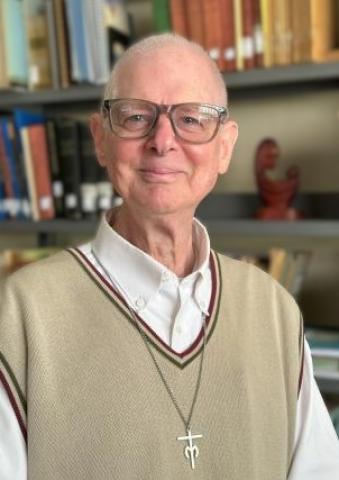
(Editor's note: Brother Tom delivered this keynote presentation at a Marianist Charism Day for the Society of Mary’s Region of Eastern Africa.)
Introduction
Today’s gathering on “Mission and Ministry in Our Marianist Charism” is one of the efforts in this Year of Renewal in our Region. As Brothers Erick Otiende, Tim Phillips, and I (members of the Eastern African Center for Marianist Studies team) chose the theme of mission and ministry, some well-established ideas came to mind. For example, mission is the visionary reality; it’s the overarching purpose of our Marianist life. Ministry is how we live this out, and it’s the external expression of our mission.
The three of us—and, hopefully, all of us here today—can shift from just thinking about God and thinking about our mission (a head-centered approach) to a more heart-centered approach, an affective response in relating to God and the charism that Father Chaminade entrusts to us. Maybe another way to state this “affective” approach is for us to hear Jesus’ words anew, “As the Father has loved me and sent me, so I have loved you and sent you” (Jn 15:9; 20:21). We know that any true relationship demands a mutual presence, an openness, and a responsiveness by both parties; this is a hint at a true and engaging prayer.
Let me share a story to set the stage for us to come to a deeper understanding of God and our mission. In my 13-year career as a high school religion teacher, I had a tenure of eight years at one school. I found it amazing watching two sets of students move through their four years of secondary school; these students came in as young kids and developed into young adults. Each year for them was a time of passage that supported their intellectual development and growth in identity and social interactions. How a student viewed themself impacted how they behaved and related with others. I offer this as a focus statement for our day; our understanding of God impacts how we will live our lives. And, how we view ourselves as Marianists and understand our Marianist charism will impact how we live out this mission through our ministry.
1. Placing Our Marianist Charism Within a Larger Picture
As we consider our mission and ministry, I suggest we place our Marianist charism within a larger picture—the huge, overall plan of God. God shared GodSelf through the Word; “Light” and creation began. God saw this as being very good! Building on creation, continuing the plan of God, is the Incarnation, God’s Word, “light” living among us in the person of Jesus of Nazareth.
A rich phrase in the Preface prayer for Advent states, “Jesus is the fulfillment of the plan that God established long ago.” Jesus is the faithful one who embodies both the faithful, loving response to God the Father and embodies the Divine loving presence to humanity. God’s original plan is relational, and Jesus of Nazareth is the perfect expression of this relationship. Thus, the Incarnation is central to understanding God’s plan, which is indeed very large!
A. Our Marianist Incarnational Spirituality
Father Chaminade based our Marianist spirituality on the Incarnation. As Father Joseph Lackner, SM, writes, “Of the two great mysteries that constitute Christianity—Incarnation and Redemption—Father Chaminade focuses primarily on Incarnation.”[1]
Let us consider here the rich thinking of Father Edward Schillebeeckx, the brilliant Dominican scholar, who offers interesting insight about the Incarnation.[2] He states that the Incarnation of God’s Word is not a static event, like a one-time event that happened at the Annunciation to Mary or in the birth of Jesus. In other words, the Incarnation is not merely “a Christmas event.” The Incarnation is an unfolding process involving the whole life of Jesus, from his conception in Mary’s womb (through the workings of the Holy Spirit) to his birth and life of words and actions, which is completed in his death, resurrection, and ascension, where he is in intimate presence with God the Father. The Holy Spirit is sent during this intimate presence between God the Father and God the Son. At their essential core, all these aspects of the person and life of Jesus together form the single, enduring mystery of salvation.[3] This view of the life and the mission of Jesus is much larger than “Jesus came to die for our sins.” As true as that statement is, all the aspects of the life of Jesus form the single, enduring mystery of salvation.
According to Father Schillebeeckx, the Incarnation is a prolonged, everlasting, and uninterrupted event that continues to invite us into an ever-deeper relationship with God and with each other. Let me repeat: the Incarnation is a prolonged, everlasting, and uninterrupted event that continues to invite us into an ever-deeper relationship with God and with each other.
B. Source of the Incarnation
Here is one more insight from Father Schillebeeckx. Within the Triune God, the Father and the Son are pure giving and receiving, and this mutual love is so intense that within this One Divinity is the Holy Spirit of God. This Holy Spirit of God is the energy of love between God the Father and God the Son.[4] This Holy Spirit of God is shared with humanity!
God’s plan is understood in the context of a holy relationship modeled by Jesus in both his faithful relating to God the Father and in his loving relating to us. The plan of the Incarnation requires that, from the moment of his ascension, an everlasting presence is to be among us. Jesus established the Church to continue his presence on earth, and we rightly call this sacramental presence of Jesus on earth “the Church”: the Body of Christ.[5] The mission that God the Father gave to Jesus is now given to the Church to embody—this mission has a Church. The words of the Risen Jesus are quite appropriate here, “As the Father has sent me, so now I send you” (Jn 20: 21).
In summary, we stated that the conception, birth, life, suffering, death, and resurrection of Jesus, along with his ascension and the sending of the Holy Spirit, together reveal the fullness of God’s plan. The whole picture of the life of Jesus, seen first in human form, reveals the redemptive plan of God flowing from within the Holy Trinity. This relationship within God, within the Immanent Trinity, is made manifest through the life and person of Jesus, who is the absolute generosity that is the Holy Trinity.[6]
Like our students in high school, who slowly grew in understanding new concepts, we continue to grow in faithful belief of the Incarnation as an event that encompasses not only the earthly life of Jesus but reflects the entire plan of God, flowing from within the wholeness and pure love of the Holy Trinity!
2. Considering the Beginning of Our Marianist Spirituality
The Christian life, like the life of Mary, is an Advent experience. This experience is not a passive waiting but a meaningful encounter with the living, risen, ascended, and glorified Jesus, the Christ.
Integrating our Marianist spirituality into the rich insights of Father Schillebeeckx, we see that Mary has a unique place in God’s overall plan. Our Marian dedication prayer for Saturdays underlines this reality: “Virgin Mother, inspired by the example of your total acceptance of God’s plans and your place in them, we entrust to you our disposition to live the most faithful imitation of Jesus, Son of God and your own Son.”[7]
A. Saragossa: Two Graces to Father Chaminade
All that we have stated about the Incarnation invites us now to take a closer look at our Marianist mission. Father Joseph Simler, SM, in his biography of the Founder,8 wrote of the two graces Father Chaminade received through the intercession of Our Lady of the Pillar during his exile in Saragossa, Spain (1797-1800):
- the sanctification of the apostle (our own holiness) and
- the salvation of souls—our ministry—which is carried out in the following ways:
- It is done in the name and under the care of Mary,
- It is done through community,
- which is to reach all classes of society.
Father Jean-Baptiste Armbruster, SM, a Marianist scholar, has a wonderful line that integrates these two graces. “The holiness of the Apostle is a prerequisite for the success of any apostolate.”[9] In other words, “the essential is the interior”; we cannot model what we do not live; we cannot give what we do not have.
B. Saragossa: Two Graces for Marianists Today
Thus, the reason for our existence as Marianists, our Marianist mission, is to respond to God’s invitation to live out the two graces that Father Chaminade received while in Saragossa. Here is a deeper insight into these two graces.
- Our own holiness—to be caught up in this intimate love that Jesus experienced and shares with us, to grow ever deeper in these words of Jesus, “As the Father has loved me, so I have loved you.” Being caught up in this love of Jesus is experienced through prayer and is the source of our holiness.
- To work at the salvation of others, to be this loving presence of God in the world through our lives and ministries; thus, we incarnate Jesus’ command, “As the Father has sent me, so I send you.”
Whether we are a vowed religious or a lay Marianist, these two graces from Saragossa hold true for us. Let us consider how the Daughters of Mary and Society of Mary state these graces from Saragossa. First, from the Rule of Life of the Daughters of Mary,[10] we read in Chapter 1 (“Spirit and End of the Congregation”):
I.2 By the profession of the evangelical counsels we commit ourselves to follow Christ, to be transformed into His likeness, to work in the Church for the coming of His Kingdom, and thus to strive together for the fullness of charity.
I.3 Our commitment is a response to the invitation of Christ Who loved us first. It finds its origin and its dynamism in Baptism, the wellspring of true life flowing within us.
In the Constitutions of the Society of Mary (1839) we read:
By the grace of God, each of its members rises to religious perfection. This perfection consists essentially in becoming the most exact image possible of Jesus Christ, God’s Word made human, in order to serve as a model for humanity. The second object is to labor in the world at the salvation of souls, which is the most faithful imitation of Jesus Christ.[11]
And from the Society of Mary’s present Rule of Life, Article 2 states it quite simply and quite clearly:
In calling us to be Marianists, God asks us to follow in a special way Jesus Christ, Son of God, become Son of Mary for the salvation of all. Our goal is to be transformed into his likeness and to work for the coming of his kingdom.[12]
To be transformed into the likeness of Jesus means,
- to be caught up in this love between God the Father and God the Son; “As the Father has loved me, so I have loved you.” (This is the essence of prayer.)
- to be an active presence in the world for this transformation, “As the Father has sent me, so I have sent you.”
Next, we cite articles from the Rules of Life of the Daughters of Mary and the Society of Mary that reflect this second grace, being sent by Jesus. From the Rule of the Daughters, in Chapter VIII, “Apostolic Life,” we read:
I.64 By the will of our Founders we are essentially missionaries. Our vocation commits us to the mission of Jesus Christ received from his Father and entrusted to His Church: to proclaim the Good News to all people. The Congregation received its mission from the Church; no matter what the tasks of its members, it is always the Congregation which sends them on mission.
I.65 Through our alliance with Mary we share in her mission as Mother of the Church. Like her, we wish to live in faith and openness; we seek to make her known and loved, for if Jesus Christ came to us through her, it is also through her that the human race will find Him.
And in Chapter Five, “A Community in Mission,” in the Society of Mary’s Rule of Life, we read:
Whatever our tasks, we act in the name of Jesus, announcing the redemption of all in Christ and the transformation of the world into his kingdom. (Article 64)
The community itself is a primary instrument to fulfill our mission. We know that the quality of our life has greater impact than our words. (Article 67)
Whatever our service, we know that the saving grace of Christ has no limits. (Article 70)
Integrating these two founding graces from Saragossa may remind us of the words of Father Armbruster, the holiness of the Apostle is a prerequisite for the success of any apostolate.[13]
3. Essential Core of the Incarnation
We have considered the insights of Father Schillebeeckx that the Incarnation is an unfolding process that involves the whole life of Jesus, from his conception in Mary’s womb (through the working of the Holy Spirit) to his birth, words, and actions, which are completed in his death, resurrection, and ascension, where he is in the intimate presence with God, the Father. The Holy Spirit results from this intimate presence between God, the Father, and God, the Son. The essential core of the Incarnation is that all these together form the single enduring mystery of salvation.
A. Vocation of Mary
Father Armbruster, among other Marianist authors, cites Mary’s mission, her vocation, with these two points.[14]
- Her specific place is in conceiving and giving birth to the Word of God and then being involved in all the mysteries in the life of Jesus.
- Her spiritual maternity is forming us into the image of her firstborn, Jesus.
Integrating the rich insights of Father Schillebeeckx into this Marianist statement (Mary was involved in all the mysteries of Jesus), we come to understand in a deeper sense her ongoing maternal intercession for us. Through her Assumption, Mary continues her spiritual maternity in our lives. Again, citing Father Lackner, “Mary plays a pivotal role in each successive incarnation, just as she had in the first one. This continuing incarnation configures all the elements of Marianist spirituality.”[15]
Integrated with the graces of Saragossa, our Marianist mission is to live these words of the Risen Jesus, “As the Father has loved me and sent me, so I love and send you.”
B. Ongoing Event of the Incarnation within the Marianist Family
As Father Schillebeeckx connects the Incarnation to the whole person of Jesus, let us consider how the Incarnation is happening within us collectively as the Marianist Family, for the Incarnation is an essential part of understanding our mission. The General Chapter of the Society of Mary in 1971 produced the wonderful document Response. This General Chapter came in the middle of the 20-year process (1961-81) of the rewriting of the Constitutions. Instead of focusing on the “letter of the law,” this General Chapter considered the “spirit of the law.” From the first document in Response, “Marianist Objectives,” we read:
To be honest to ourselves we must find our place in our time as Father Chaminade did in his. This is a task destined—and happily so—to be repeated again and again, and to be approached with the humility of those who know their weakness yet continue to seek God and the welfare of others. It is important that every Marianist seek to match his [or her] life and work with the Gospel, and his [or her] projects with the needs of others.[16]
As Father Chaminade incarnated the two graces received at Saragossa, so must we live these graces, incarnate these graces, and make them part of our lives. Father Joseph Lackner emphasizes this as he states in Virtues for Mission:
Because of the way Father Chaminade read scripture and tradition, he believed the Incarnation was to be an ongoing experience in every age. God intended for the Word to become flesh in every generation, and Mary was to play a pivotal role in each successive incarnation, just as she had in the first one. This continuing incarnation configures all the elements of Marianist spirituality. It gives intentionality and direction to all those people, lay and religious, who collaborate in the Marianist project, and it provides the fundamental orientation of the apostolic activity.[17]
C. Our Marianist Mission
Our mission as Marianists is to be the most faithful image of Jesus, Son of God become Son of Mary for the salvation of others. This is living (incarnating) the graces of Saragossa so as to live in holiness and to act in the name and under the care of Mary; to work together as a community because, as a community, we will reach all aspects of society.
4. Conclusion
In summary of what we have considered:
A. The experience of high school students, who grew in self-understanding, is a model for our growth in understanding our Marianist charism as an Incarnational spirituality.
B. We considered the rich insights of Father Schillebeeckx, who explained that the Incarnation is a prolonged, everlasting, and uninterrupted event that continues to invite us into an ever-deeper relationship with God and each other.
C. We recalled the two graces Father Chaminade received in Saragossa:
- The holiness of the apostle, taking to heart these words of Jesus, “As the Father has loved me, so I have loved you.”
- The salvation of others, taking to heart Jesus’ words: “As the Father has sent me, so I have sent you.”
D. And with the great insights from Response, the General Chapter document of 1971, and the writings of Father Lackner, we come to see that the Incarnation is an ongoing event happening in us, and Mary’s spiritual maternity supports this ongoing development.
- Joseph Lackner, SM, Virtues for Mission (Dayton, OH: NACMS, 2003), 2.
- Edward Schillebeeckx, OP, Christ the Sacrament of the Encounter with God (New York: Sheed and Ward, 1963). Chapter 1, “Christ, the Sacrament of God,” 13-39, offers a rich and involved reflection on the Incarnation.
- Schillebeeckx, 22.
- Schillebeeckx, 33.
- Schillebeeckx, 54.
- Schillebeeckx, 36.
- Prayers for Marianists (Region of Eastern Africa, 2017), 22.
- Joseph Simler, SM, William Joseph Chaminade, Founder of the Marianists (Dayton, OH: Marianist Resources Commission, 1986), 82.
- Jean-Baptiste Armbruster, SM, The Armbruster Collection (Dayton, OH: NACMS, 2004), 4.
- Rule of Life. Congregation of the Daughters of Mary Immaculate (Marianists), 1984. The Marianist Sisters held a General Chapter in the summer of 2024 to revise the Rule. (At this writing, the revised Rule has not yet been approved or published.)
- Constitutions of the Society of Mary (1839), a paraphrase of Articles 2, 4, and 5.
- Rule of Life of the Society of Mary (2007), Article 2.
- Armbruster, The Armbruster Collection, 4.
- Jean-Baptiste Armbruster, SM, Mary in the Life and Teaching of Father Chaminade (Dayton, OH: Marianist Resources Commission, 1974), 61-76 offer a good explanation of Mary’s Apostolic Mission.
- Lackner, Virtues for Mission, 4.
- Response: Documents of the 1971 General Chapter of the Society of Mary, 5.
- Lackner, Virtues for Mission, 2.