
Click here for a downloadable PDF version of this article.
CIRCULAR NO. 4
19 May 2013 - Pentecost
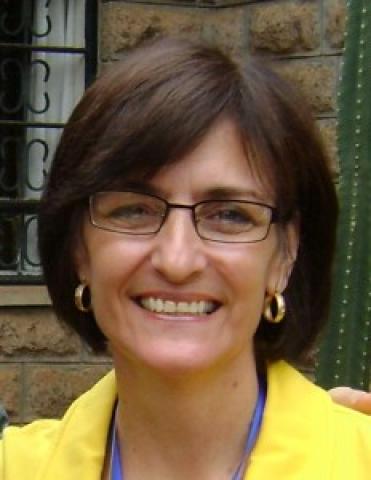
ISABELLA MOYER
President of International Organization of Marianist Lay Communities
FAITH OF THE HEART IN THE HEART OF THE WORLD
Dear sisters and brothers,
Greetings from Canada! I begin this fourth, and my final, circular with a heart filled with gratitude for our Marianist family and the charism we share. My previous circulars reflected on the reality of being family [1], our role in the new evangelization [2], and our call to be an international community of communities [3]. Thank you to all our translators who have generously made these humble reflections available for local communities. And, thank you to all who have taken these small seeds and allowed them to grow through further discussion and reflection; for this is their purpose.
This is an important year for us. We are commemorating the 50th Anniversary of the Second Vatican Council with a Year of Faith and an intentional call to a new evangelization. We have recently experienced the historical and courageous resignation of Pope Benedict XVI and the election of Cardinal Jorge Mario Bergoglio as Pope Francis. We feel a special closeness to our new pope through his friendship with our Marianist family in Argentina and his genuine simplicity and love for the poor.
We are also preparing for our 6th International Meeting in Lima, Peru from January 26 to February 2, 2014. The theme of our meeting, “Faith of the Heart in the Heart of the World”, was chosen before the announcement of the Year of Faith and the unfolding of recent events. Its timeliness is a pleasant surprise, and gives us energy and inspiration to study together this treasured aspect of the Marianist charism and the spirituality that underlies it.
My understanding of faith of the heart is rooted in my Marianist formation [4]. My experience of faith of the heart is lived in my own particular place and time. This circular is a personal reflection, to encourage your own reflection. What does this faith of the heart mean to YOUR heart? How is it lived in the heart of YOUR world? As we ponder and reflect these questions, hopefully all who come to Lima will come with hearts eager to share the experiences in your place and time, and to be inspired by the experiences of others.
Faith of the Heart
While faith of the mind is important, it is not sufficient. Father Chaminade insisted that what we believe with our mind must pass to the heart. By faith of the heart we give assent not only of our mind, but we adhere with our whole heart to what we believe. We love what we believe, and we commit ourselves to embrace it with our whole being. Faith of the mind brings us knowledge; faith of the heart attaches our person to what we believe…Faith of the mind gives us ideas about Jesus; faith of the heart gives us a personal relationship with him. [5]
The heart of our faith is not a well-guarded treasury of rules, regulations, and traditions. The heart of our faith is not physical edifices and organizational structures. At the heart of our faith is a person, the person of Jesus. God became one of us, so we may better know and love God within the Triune community of Father, Son and Holy Spirit. To know and to love God is to form an intimate and personal relationship with God.
My husband and I raised five children. Before the birth of our first child, we read many books and sought the advice of family and friends. After our son was born, we quickly discovered that knowledge can form a competent care-giver, but it is love that transforms the heart.
Love pulls you out of your bed in the middle of the night to comfort and console a crying child. Love is the guiding force during the “dark night of the soul” moments of family life. Love helps you cling to hope when peace is lost in the midst of fatigue, anger, disappointment or sorrow. Love is more than a pleasant emotion; it is a deep commitment and an intentional act of the will.
The same is true with our relationship with God. Our minds need to know and study God. Faith of the heart ponders our knowledge of God, infuses it with love, and impels us to transform that loving relationship into concrete actions in our lives.
In the Heart of the World
Try to perform all your actions in a spirit of faith. I think that is the path the Lord wants you to take: a very ordinary life, ordinary actions but with more than ordinary intentions, that is what the Lord wants. [6]
The lay faithful have an essential and irreplaceable role in this announcement and in this testimony: through them the Church of Christ is made present in the various sectors of the world, as a sign and source of hope and of love. [7]
As Marianist lay women and men, we are called to live our faith in the heart of the world. Our faith is formed, shared and nurtured in our families and in our communities. It is nourished by the Word of God and the Bread of Life in the liturgy of the Church and her sacraments. Marianists know that our faith is not for ourselves alone. We are always in mission. We are called to live our faith in the ordinariness of life; transforming the ordinary into the holy.
We do not live a dualistic life, with a line dividing the spiritual and the secular. We recognize the Creator’s hand in all of creation. We seek the face of Jesus in all whom we meet. We discern the work of the Holy Spirit in all the events that unfold around us, big and small.
We embrace Blessed Chaminade’s image of spreading the faith by contagion. Formed by Mary in the virtues of her Son, we live our faith in our homes, schools, work, and diverse Marianist ministries and projects around the world. The love grounded in faith of the heart overflows into love lived in the work of our hands. We bring the heart of Jesus into the heart of the world. This is our mission.
Faith of the Heart and the New Evangelization
Faith grows when it is lived as an experience of love received and when it is communicated as an experience of grace and joy. It makes us fruitful, because it expands our hearts in hope and enables us to bear life-giving witness: indeed, it opens the hearts and minds of those who listen to respond to the Lord’s invitation to adhere to his word and become his disciples. [8]
We evangelize with our lives that give testimony to a lived Gospel faith. We live in a state of permanent mission. [9]
The new evangelization is a call to revitalize our own faith. It is also a call to reach out to all the baptized who feel distanced from the Church. The reasons for this “distancing” are many. Some women and men experience their faith merely as a Sunday habit, not as a deep, inner conversion. Others experience a slow “drifting” away from an active faith life. Some have a genuine belief and love for their Catholic faith but struggle with the institutional structure of the Church.
During his first papal visit to the Basilica of St. Paul Outside the Walls, Pope Francis stated that “Inconsistency on the part of pastors and the faithful between what they say and what they do, between word and manner of life is undermining the Church’s credibility”. This is very true.
Many hearts and lives have been broken in our Church because of the sexual abuse scandals and cover-ups. Many hearts have been angered by a clericalism that jealously guards its exclusivity and privilege. Many hearts have been saddened by the perception that our Church spends more time and energy judging and denouncing than in joyfully proclaiming and living the gospel of Jesus.
We can no longer be a “militant” Church focused on building fortresses and forming armies of apologists to protect the purity of doctrine and tradition. This image of Church might entice a few hearts, but it also turns many away.
Pope Francis is calling us to be a poor church, for the poor. We are to move beyond the walls of the church and go into the streets. To authentically proclaim the gospel we must pray, ponder, and actively live its message. Otherwise, our proclamation is but empty words. To regain credibility, we must reach out to broken, angered, and saddened hearts.
We must show to the world a Church of compassion and love. The heart must be at the core of evangelization, a heart that not only knows Jesus but is filled with love for Him and for others. These are qualities of the Marian dimension of Church.
The Marian dimension of Church is about the call to holiness given to each and every one of us by virtue of our baptism – woman and man, lay and ordained.
The Marian dimension points us to Mary as she is presented to us in Scripture - a model of prayerful pondering and right, just, and compassionate action. She is mother and sister, seated with us at the table, praying with us and for us as we unite in her mission.
The Marian dimension seeks to bring qualities of the heart to the structural organization of the Petrine dimension. It models birthing, forming, nurturing and compassion.
The Marian dimension promotes inclusivity and communal dialogue to help build a more participatory and less hierarchical Church community.
Women and men today, especially the young, yearn to be agents of change and goodness in the world. They will more readily be drawn to a Church with these Marian qualities; a Church with a gentle power that moves hearts to embrace, love and live the gospel message in all they do.
Faith of the Heart and Prayer
To be authentic, generous and faithful in our mission, it is essential that we be men and women "strong in faith, firm in hope, and constant in love." We find this strength through prayer, continuing formation, personal and community discernment, commitment, and community life. [10]
Marianist prayer is characterized by deep interiority. It is from the heart that Marianists view the world, their personal life, and their interpersonal relationships. The Spirit of the Lord who prays in us makes our prayer arise from the heart, where the Spirit plants the love which is its principal fruit. [11]
As Marianist Catholics we have a rich treasury of prayer forms. Within our Marianist tradition we have the “Method of Praying the Creed”, “Method of Prayer of Faith and the Presence of God”, and the “Common Method of Meditation”. We are also enriched by the diversity within our Catholic tradition and among our many cultures. Different prayer forms speak to different hearts. [12] Our hearts are also moved and inspired by the deep roots and richness found in local devotions and traditions.
Our Marianist Lay Communities are a school of prayer for us. In community we are formed, inspired, and supported in our prayer life. Secure in the love, compassion, joy and intimacy of community, we learn to pray deeply and freely. Our prayer moves beyond habitual responses to a more personal journey of the heart. And, in the depths of our heart, we meet God.
In preparation for our international meeting in Lima, we are inviting all Marianist Lay Communities to share the prayers and prayer forms used in your local gatherings. These will form the foundation of an online, international collection of Marianist prayers from around the world; a dynamic collection that will continue to grow in years to come. When we gather in Lima, we will experience the unity of our prayers within the diversity of our many cultures.
Here is the prayer form used by my Marianist Lay Community.
“Our Lady of the Round Table” is a unique community, founded in 2005. We are eight women from around the world; Ireland, France, Kenya, Australia, the USA and Canada. We gather online each week-day through emails. We each pray the daily liturgical readings, using the lectio divina method. After our prayer, we compose an email to send to the community. We begin with writing the scriptural phrase that was the basis of our prayer. We then give a short explanation of how God spoke to us through this line, connecting God’s Word with our life. Finally we write a prayer based on our reflection. We also include a litany of intentions for all who have asked us for prayers.
Because of our many time zones, we receive these lectios at different times of the day. Each is an invitation to pause in our work and spend a moment in prayer.
The practice of a communal lectio divina opens up the dialogue between person and God to the whole community. As wisdom and insights are shared, the diversity of inspiration is recognized and celebrated. Enriched by this diversity, we marvel at the richness and depth of the Word of God – speaking personally to each of us, in our own place and time.
This is how my Marianist Lay Community prays together. How does your community pray?
Faith of the Heart in Alliance with Mary
Deep down, the Magnificat is an excellent example of a prayer of faith. Mary’s spirit rises joyfully toward God, whom she contemplates in the greatness of God’s mystery: admiring and celebrating the holiness of God’s name, saving power, and mercy that is extended to the faithful from generation to generation. Mary has gone out of herself to find God. From this contemplation of God, she returns to her humble inner self and recognizes that God has done great things for her, and she feels happy. She is in the presence of God who has taken possession of her. [13]
Mary remained attentive to the Word and lived the “faith of the heart,” confidently accepting the will of God in her life. Following her example we make faith the criterion for our discernment and the centre of our lives. [14]
Mary prays from the heart, connecting the reality of her life to God’s works and actions unfolding around her. She boldly names the evil in her world, but doesn’t lose hope. She recognizes God’s active presence and her spirit rejoices. Her joy echoes in her exuberant proclamation. God IS present and justice and peace will reign.
It is easy for women and men to lose hope today. We are bombarded with images and stories of violence and the destruction of human rights and dignity. Many have lost faith in God. We are called to proclaim, with Mary, that God is present even in the midst of darkness and despair.
In the midst of increasing polarity and division, we are called to promote a family spirit, not only in our communities and within the Marianist family, but also in our Church and in our world.
In the midst of disbelief, we are called to joyfully live the gospel message of love, peace and justice; to evangelize with our lives and through the gift of community.
In the midst of distrust between cultures and nations, we are called to embrace and share our experience as an international family; celebrating the unity amid our global diversity.
In the midst of unknowing, Mary pondered and invites us to ponder with her. Trusting in God’s providential love and mercy, she took the incomprehensible and the unbelievable and tucked them in her heart. What the mind cannot understand, the heart can embrace and wrap in faith, hope and love.
May the Father, and the Son, and the Holy Spirit
Be glorified in all places through the Immaculate Virgin Mary.
Amen!
Sources and Notes:
- Isabella R. Moyer, Being Marianist Being Family, 2010.
- Isabella R. Moyer, Marianist Lay Communities and the New Evangelization. 2011.
- Isabella R. Moyer, Marianist Lay Communities, An International Community of Communities. 2012.
- I am indebted to many Marianist mentors, including Carol Ramey and all the good people at the North American Center for Marianist Studies (NACMS). Many resources for further study of Faith of the Heart can be found at www.nacms.org.
- Quentin Hakenewerth, SM, The Great Design of God’s Love, A Companion to Growing in the Virtues of Jesus (San Antonio, Texas: Burke Publishing Company, 1997), 43.
- Adèle de Batz de Trenquelléon, Letters of Adèle de Batz de Trenquelléon, trans. Joseph Roy, ed. Joseph Stefanelli (Dayton, Ohio: North American Center for Marianist Studies, 1999), vol. 2, p. 529, letter no. 532.4 to Sister Séraphine Robert (Oct. 8, 1824).
- John Paul II, Christifideles Laici, 7.
- Benedict XVI, Porta Fidei, 7.
- The Mission of Marianist Lay Communities (Lliria, Spain, 1997), 5.1.
- The Mission of Marianist Lay Communities, 3.2.
- Enrique Aguilera, SM and José María Arnaiz, SM, Enfleshing the Word, Prayer and the Marianist Spiritual Journey, trans. by Joseph Stefanelli, SM (Dayton, Ohio: North American Center for Marianist Studies, 2000), p.41.
- Enfleshing the Word is a practical spiritual resource. It presents a wide range of prayer forms for both personal and communal prayer.
- Eduardo Benlloch, SM, “Concerning the Prayer of Faith (I)" (Translated by: International Center for Marianist Formation. Original article appeared in Vida Marianista, no. 51, Feb. 2007, pp. 2-3.) Available online at http://www.nacms.org/resources/concerning-prayer-faith-i.
- In Alliance with Mary (Bordeaux, France, 2005), 21.