
"Fr. Ted Cassidy addresses young adults with his writing in light of his own experiences as a spiritual director, campus minister, former pastor, and teacher. He invites young adults and other readers who are searching for meaning in their lives to a path in life that deepens their faith. . . . I have read his clear and supportive work to nourish my own life as a fellow brother and friend." –Fr. Bert Buby, SM
Click here for a downloadable PDF version of this article.
This booklet is about the five pillars of the Marianist Life. They are Faith, Mary, Inclusive Community, Mission and Family Spirit. They are the foundations or pillars of the Marianist charism. A charism is a gifted way of living the Life of Jesus Christ. I write this booklet to offer young adults the nature of the Marianist extraordinary way of living our faith in Jesus Christ. These reflections come from my own experience of living and studying this charism from my time in high school where I was a member of the Marianist Sodality, through my formation and as a member of the Society of Mary. For me it is a treasure that I want to share.
The time of young adulthood is one of discovering one’s gifts and place in the world. The Marianist way is one of family spirit based on the gospel of the Lord, in which we share in prayer, friendship, work, successes and difficulties. Family Spirit is the distinctive mark of our way of our community life, growing in the characteristics of Mary, particularly her faith, an inclusion of all, mission and growth in the virtues of and union with Jesus and the Holy Spirit.
The Marianist way or charism is a gift of God for a young person to find himself or herself, develop the skill of community and manage ways to balance the world with the call to an authentic joy of living the Christ Life.
We as contemporary people live in a world immersed in facts and information being thrown at us from cell phones and google. We are constantly being bombarded to keep busy with studies, work, new forms of entertainment and adapt new styles. Much of this is very good and creative. However, the overall effect can wear us out. Too much can keep us from being balanced and finding our unity and living in union with God.
It is so easy to let negative fears, uncertainty, doubts of self and of God’s goodness dominate our lives. Negative fears of all kinds, for example, of not measuring up to what we think we should be, or guilt can prevent the balanced life we are called to live.
The Marianist Charism is a gifted way to live in God, in Christ, in union with His Blessed Mother. It is a way based on sharing honestly and even intimately with a growing community. It helps us find purpose and strength both personally and in community.
It is based on a spirituality of the Gospel and the tradition of the Church.
The Marianist Way, spiritually, is a manner of living in the Spirit that God gives us. It is a way of living in union with the Holy Spirit. Mary is both the example and the one who mothers us to Christ.
Our Marianist Spirituality is based on what is known as the French School of Spirituality that flourished in France in the 18th century. This spirituality is one that helps the Christian live in what is known as the mysteries of Christ. Basically, this is living in union with the real presence of Christ’s life personally and with a community. This is mystery in the sense that it is beyond our human ability to create it. However, it is actually living in a very positive sense of God in Christ, and Mary constantly guides us to develop ourselves to what we are called to be and to live in a spirit of God’s love, in Christ’s love with Mary helping us.
To begin this investigation of the Marianist Way I invite you to say this prayer:
Loving and faithful God, in gratitude for where you have led me thus far in my life, I ask for the grace to grow in our love and in understanding the Marianist spirit.
I ask for the grace to be open to your Spirit working within me and with any others, with whom I share this investigation. May prayer and reflection bring us to a deeper understanding of the Marianist Way. I pray this with the intercession of Mary and in union with Jesus. Amen.
I write this after being at the University of Dayton for five years. I came here requesting to help in Campus Ministry, especially in spiritual direction. I had been ministering in parishes, high schools, a retreat house and briefly as Director of Novices. I have spent my life as a Marianist especially concerned with Marianist spirituality and social justice. I wanted to share what I have learned with students. I have come to cherish the Marianist Charism and its value to the Christian life.
Blessed William Joseph Chaminade along with Blessed Adèle de Batz de Trenquelléon and Venerable Marie Thérèse de Lamourous are at the roots of the Marianist Charism. I hope you learn more about their lives if you are not familiar with them. I will refer to them in this booklet.
I want to share with college students and young adults how this charism from the Marianist Founders, and lived by so many since 1800, gives a thrust to a way of living that is solid, prudent and glorious. A charism is a gift of the Holy Spirit to live in Christ for the enrichment of the Church and the world. I invite you to learn, live and enjoy the charism.
I would like to show the purpose of this booklet on the Marianist charism through the relationship between a Marianist Brother and one of his students. When Bro. Donald Geiger died in 2020, one of his students wrote the following about him to us Marianists Sisters and Brothers:
Dear Brothers and Sisters,I thought that you would appreciate this reflection on Bro. Don Geiger by one of his former students. It highlights the wonderful impact he had at UD.
I wanted to share condolences and reflections with the Marianist community at the University of Dayton on the passing of Brother Don Geiger. He was a treasure, and I know he will be missed! I am just one student who was in his orbit for just four short years. I can only imagine the scores more like me who benefited from his quick wit, brilliant mind, and generous heart.
While I was at UD from 1990 to 1994, Br. Don was hugely influential. I was an International Studies major with a deep interest in “protecting the Earth.” Bro. Don welcomed me into his hard-science world with open arms - showing me that the true wonders of nature are apparent only by first delving into the minutia, explaining that then, when zooming out to the system as a whole, can we mere humans begin to appreciate the design of creation. He encouraged me to take academic risks and try new things, advising me on courses, research, and life after college.
For example, after I returned from a summer tropical ecology study abroad program, I ached for field experiences and asked to tag along while he worked. He let me help on two prairie burns that year. I can still picture his silhouette in the sunset, amidst the wall of smoke and fire! We may have been right next to I-675, but it was pure nature, and pure joy. That transcendent moment led to my involvement with a yearlong independent research/soil study for the same prairie restoration project.
As I considered graduate school - law or science - it became clear that my academic talent simply did not rest with the latter! Even so, with a twinkle in his eye, Brother Don persuaded me to take an advanced level plant physiology class the last semester of my senior year. We both knew I was in way over my head, but he told me that I must at least attempt comprehension of the exact photosynthetic processes if only to deepen respect for the divine at play in the plant world. After an appallingly terrible grade on the first exam (to this day I remember, 67%, the worst grade I ever got), the pass-fail option was the way to go so my GPA wouldn’t suffer. However, I never regretted taking that course. Ultimately, I came to understand this most important of Brother Don’s lessons: Learn simply because you are curious and want to appreciate life on this Earth. I wish you all peace as you celebrate Brother Don’s amazing impact on the UD community.
Blessings, Nan Schivone
What Bro. Don did for this student is what I hope this booklet will help you find from reading it. He encouraged her to delve into the minutia of the physical world. Following her interest in creation, she explored and found what she was called to and what she was not called to be and do with her life. The Marianist Charism is a way of living in union with God and from the core of who you are.
I wish to present the charism to you by explaining the five Marianist pillars or characteristics: Faith, Mary, Inclusive Community, Family Spirit and Mission.
Chances are that if you have been involved with Marianist Laity, Sisters or Brothers you have picked up the importance of community for our charism. Community is the home of the charism. In high school, I fell in love with this community spirit. It became part of my being.
However, the charism is much more, built in the context of community. I want to show you what I mean by that in this booklet.
Mary is at the center of the charism. Chaminade enabled his first youthful sodalists to see Mary as a spiritual force. Fr. Chaminade used the word congregation (translated into English as sodality) for the name of the group of people who gathered in Mary’s name. She was for them and is for us today a companion who brings profound contentment as well as energetic striving to life. They celebrated her feasts. They consecrated themselves to her. They eventually vowed their lives to her. Can postmodern young adults do the same? I think so. To be in love with Mary is like discovering a friend with whom you can share everything. The word consecrate means to declare something sacred. For the first Marianists it meant giving themselves to God through union with Mary. We will speak of this further on.
While treating of the Marianist pillars, I will seek to show how they pertain to young adult life.
For each of the five pillars I will offer questions to consider for prayer, reflection, and resources that explain it further. Each section will end with a prayer.
Here are the questions to consider after this introduction.
Reflection Questions:
- The Marianist charism is a way to love. How have you seen a need for greater love in your circumstances these days?
- What makes love – the kind of love our great saints write about, the kind of love that inspired the Marianist founders, the kind of love to which Jesus calls us – challenging for you? What helps you in your call to love?
- What can you do, read or reflect on in the next week that might assist you in growing in love?
Closing Prayer
Let us pray:
Almighty and eternal God,
You gave the Blessed Virgin Mary,
Glorious Mother of your Son,
as a pillar of strength to all who call upon her aid.
Grant through her intercession that we may be strong in faith, unwavering in hope and steadfast in love.
May the Father and the Son and the Holy Spirit be glorified in all places through the Immaculate Virgin Mary.
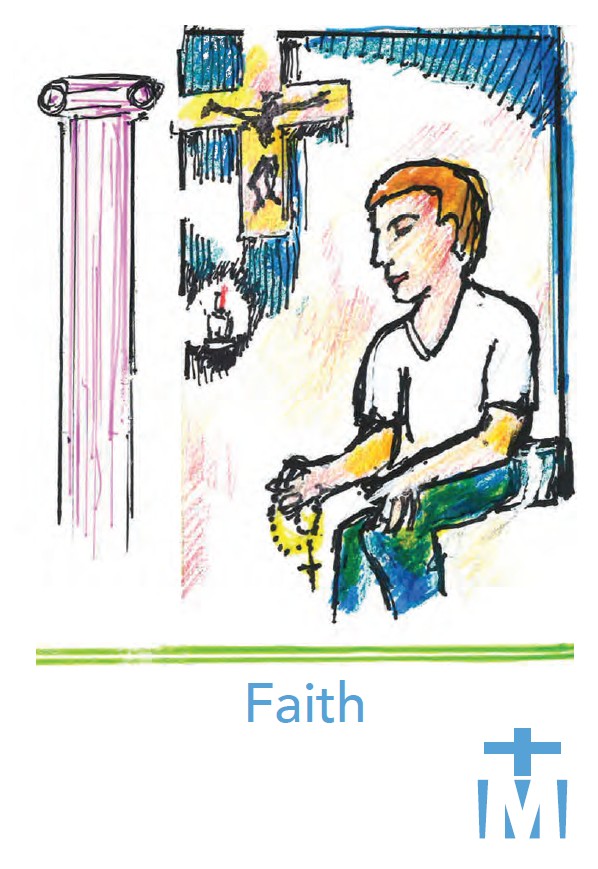
FAITH
The first Marianist pillar we will consider is faith. Father Chaminade said that faith is the heart grasping the love of God by living in Jesus Christ. Let us begin this section with a prayer.
Opening Prayer
My God, I come to praise you and to bless you, to thank you for the gifts received from you, and to beg the graces I need to be faithful today, now and at every moment of my life.
Lord, increase in me the light of faith, so that knowing you better and knowing myself always more fully, I may love you alone, think of you, and look to you in all the dynamics of my life. Holy Spirit, source of all light and grace, direct and guide me. Amen.
I want to share how a young adult can grow in a faith in Christ from the intimacy of the heart amid the many activities of young adult life. How does a person grow in this type of faith.
In my Marianist formation I was taught to grow in faith the way Chaminade taught the first Marianists. For prayer we used Sacred Scripture or the Apostles’ Creed. We prayed in chapel for a half hour in the morning and a half hour in the late afternoon. One of the novices would read a section of scripture or a phrase of the creed like “I believe in God, the Father Almighty, Creator of Heaven and Earth.” We considered prayerfully God as creator and a loving Father. Then we were in silence. Finally, we made a resolution of how we would live out this truth. For example, we could thank God during the day or praise God for the creation we live in.
The purpose of this was to deepen the truth of the faith in the heart.
This type of prayer is basic Lectio Divina, divine reading. It is reading scripture, reflecting on its meaning in our lives, listening for the Holy Spirit and then coming to a way to live it out in the practice of our lives in love.
I want to share with you something from Thomas Merton, the monk, a contemplative scholar, who wrote in the mid- twentieth century about finding God and living in union with Christ. One of the major themes he taught was the concept of the true self. The following is something he wrote about the true self.
“At the center of our being is a point of nothingness which is untouched by sin and by illusion, a point of pure truth, a point or spark which belongs entirely to God, which is never at our disposal, from which God disposes of our lives, which is inaccessible to the fantasies of our own mind or the brutalities of our own will. This little point of nothingness and of absolute poverty is the pure glory of God in us. It is so to speak [God’s] name written in us, as our poverty, as our indigence, as our dependence, as our [birthright]. It is like a pure diamond, blazing with the invisible light of heaven. It is in everybody, and if we could see it, we would see these billions of points of light coming together in the face and blaze of a sun that would make all the darkness and cruelty of life vanish completely. . . . I have no program for this seeing. It is only given. But the gate of heaven is everywhere.”[1]
At the core of our beings is a self that is unique. It is a place where the pure love of God is present in each of us. Merton lived a contemplative life seeking to find this life in God and to show others of its truth. He is saying that if we realized this life of God in each of us it would be like billions of lights coming together in everyone driving out all darkness and evil. We all have a shadow side that seeks to take over. But our true self is God living in us. We are the beloved of God. We share in the life of Christ in us. If we all recognized this, the world would be full of God’s love.
Blessed Chaminade lived during and after the French Revolution, when the Catholic Church had been terribly persecuted. He wanted to bring back Christianity. One of the major goals of his first ministry after the revolution was to help persons understand how to grow in the faith. For Chaminade prayer was an essential for growing in faith. Prayer, especially meditation on the Sacred Scripture, was the means to grow in the faith life by living our true self. Chaminade does not speak of this concept of true self, but he basically taught and trained his followers to find this true self through prayer that led to living the Christ life.
We live in two worlds. One is our human existence. The other is the life of grace. At baptism, we give ourselves to the life of grace. Grace is the life of God, the life of Christ living in us. Think of someone you know whom you admire because they live in both of these worlds. Being in his or her presence is being with someone in whom you have confidence. He or she is authentic. Such a person has developed habits that enable inner authenticity to show forth through human skills. Merton is talking about this. The life of God, the life of grace in the person is living in the humanity of the person.
Vocation has three parts. Imagine a circle. At the very center of every person is the unique life of God, at the core. Then imagine a circle around that core. In that circle is the state of life we choose—married life, single life, religious life, priesthood. Then the next circle is our profession, the work we do. The true self is growing in each of these in Christ’s love.
To explore further Chaminade’s teaching on faith I invite you to go to NACMS, Publications, Marianist Founders on Faith.
- Sharing Our Marianist Stories - Episode 9
- Marianist Founders on Faith
- Eduardo Benlloch, SM - Concerning the Prayer of Faith
Prayer: Gracious Lord Jesus Christ help me and my friends to be people of a faith that draws us into the heart of your life. Blessed Chaminade said, “Let us labor with all our strength at the work of the Lord, but let us not forget about ourselves. Recall often the counsel of St. Bernard to Pope Eugene, his former disciple: ‘Be a reservoir, not a channel.’” Help us to live in you, the reservoir of our own true self.
I hope you enjoyed this section on faith. Here are the discussion questions to ponder about faith.
Reflection Questions:
- For Marianists, faith is more than something we believe with our minds. Faith is an experience of the heart - of grasping the love of God in Jesus. What has been your approach to faith in your life? How might you be called to grow in faith of the heart?
- In our lives today, many distractions block our growth in faith. What are those distractions for you? What can help you mitigate those distractions?
In addition, here are the resources. You can find them all on the website for the North American Center for Marianist Studies (NACMS.org):
- Sharing Our Marianist Stories Podcast, Episode 2: Following Mary’s Yes in the Inner City
- Sharing Our Marianist Stories, Episode 4: Mary as Mother and Friend
- Marian Dimension of the Church, Tony Garacia (Lay Marianist)
Closing Prayer: Gracious Lord Jesus Christ, help us to be people of a faith that draws us into the heart of your life. Fr. Chaminade said, “Let us labor with all our strength at the work of the Lord, but let us not forget about ourselves. Recall often the counsel of St. Bernard to Pope Eugene, his former disciple: ‘Be a reservoir, not a channel.’” Help us to live in you, the reservoir of our own true self. Amen.
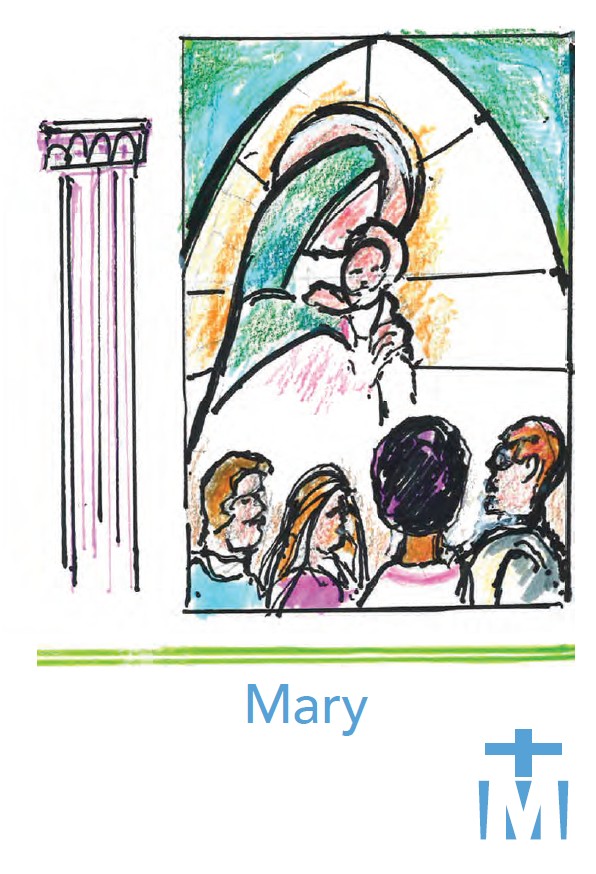
THE BLESSED VIRGIN MARY
Opening Prayer:
Lord Jesus, you gave Mary, your Mother, to the disciple whom you loved as your final gift before you died, that she should be his mother and ours.
As the beloved disciple took her to be his own, so, we now take her as our mother.
Under her influence may we be formed by the Holy Spirit in your likeness. May we proclaim the gift she is for the building up of your body, the Church, to the glory of God the Father.Amen
Thus far, we have been considering how the Marianist Charism is a gifted way to live the Christian life through faith. Now we turn to the central part Mary plays in the charism. To show her role I will explain how Blessed Chaminade, Blessed Adèle and Venerable Marie Thérèse, first lived and spread the charism and ministered primarily at first with young adults. They set up structures and organizational processes to do this, but the primary concern was the interior of the young adults. They used small groups where persons shared their faith and their activities. Young adults, and in fact all of us, discover their true qualities and learn how to share their gifts by being with others.
Chaminade established groups of young adults who wanted to live and share their faith in the Sodality, a community of Lay Catholics organized and banded together to live the Christian Life originally founded under the Jesuits. Blessed Adèle was very gifted at creating groups of young women who wanted to share what was happening in their interior lives as well as reaching out to others.
Mary was central in helping the first Marianists grow both in their interior faith lives and in finding how they were to be active. A fundamental part of the Marianist Pillar of Mary is the way we discover how she helps us balance the active and interior life.
We can grow in wisdom to deal with conflicts and differences of opinion. Part of young adult life is growing in the wisdom to deal with various political and other positions, the ability to dialogue, to develop listening skills, making judgments, the skill to state positions in clarity and in charity. Growth in these and other areas is interior growth in virtue and an openness to new experiences. This is where the Blessed Mother comes in.
Let us reflect on some basics of Church teachings about Mary. The Catholic Bishops struggled during the Second Vatican Council in the early 1960s. They also debated at length on how to define the role of Mary in the Church. Should they create a separate document about Mary aside from their document on the nature of the Church? They finally decided to place the role of Mary in the very document on the nature of the Church, The Light of the Nations (Lumen Gentium).
They proclaimed in this fundamental teaching of our faith that Mary has a central role in the life of the Church. They realized that she is already in the middle of the Church. She has been and is the Mother of the Church as she is the Mother of Christ.
A mother is one who gives birth and cares for the growth of her child in all aspects of the child’s life. This fundamental human relationship is part of the way God has designed us to be and live.
As an example of practically applying this part of the Church’s teaching, I myself very often pray with Mary. I present to her the small and larger parts of my life. I often dialogue with her in my journal. I learned this from a Marianist Marian Scholar who wrote many books on Mary, one of which is Living with Mary.[2]
After the Second Vatican Council, St. Paul VI wanted to help the Church understand more clearly the role of Mary as Mother of the Church. He wrote a very important document on the right way to have devotion to Mary called Marialis Cultus[3]. The word Cultus in Latin means a system of religious worship. In the document the pope stressed Mary’s central place in Christ’s life and in the life and his Church. As I read this document, I realized what especially stands out is her role as mother. In the Church’s life we celebrate this role she has. She is a gift that we celebrate in the liturgy. To pray the rosary is to live and act in the mysteries of Christ with her. She brings the best out of our efforts and our personalities. A young adult can share everything with her. She is a perfectly understanding parent and a best friend. She leads us to the best in ourselves.
As Marianists we consecrate ourselves to her. A number of religious congregations and lay groups consecrate themselves to Mary. This means we decide to have her as the one who guides us to Christ and to the true life we are to lead. She is the woman of wisdom who helps us settle big problems and small ones.
An essential dynamic about Mary for young adults is how she leads to union with her son, Jesus. As I mentioned above, when considering faith, the true self is who every human being is. This true self is living in the authentic life of God. This authentic self is a manifestation of God’s life, Christ’s life in us. Our life is the life of Christ, the life of God in us. However, our temptation as humans is to get absorbed into something much smaller, into needless pursuits, anxiety and unnecessary suffering. Mary as mother leads us to this union with her son. Over and over through the history of the Church, saints and mystics have shown how Mary has played this role of leading us to the life of her son.
Mary is the person who modeled the complete absorption in God. She lived the true self in God. Praying with her on various feasts helps us to grow into the true self. So much pressure today in society can draw us into a false self, but Mary, on the contrary, leads into the life of Christ where our authentic self is.
Education currently can tend to ignore the essential self, the soul. Education that leads into social conditioning can distract from or cover over the fundamental reality of the soul, the true self. Relating to Mary draws us into the essential authentic self.
Mary’s liturgical feasts that occur so frequently throughout the year help us grow in this authentic life. They lead us to living in union with Jesus, who is God’s human manifestation and the divine life of God, which we will share for all eternity.
As Mary was at Cana and at Pentecost, we pray with her because she reminds us that our authenticity is in God’s life, the Christ life.
Praying the rosary is a way to move into the life of God. We put ourselves during the rosary into the ways of Mary, and we grow into who we really are.
By singing Marian hymns, reading stories of Mary, viewing Marian art, visiting her churches, and celebrating her feast days we enable ourselves to grow in who we are.
Reflection Questions:
- How has your image of Mary changed over the years?
- How would you describe your relationship with Mary? How does this relationship affect your daily life?
- For Marianists, Mary is Mother, model, friend, and teacher who always leads to her Son and his mission. How might you grow in your understanding of Mary in these roles?
- Do you have a favorite feast of Mary? Is there an image of Mary or a devotion that you especially find helpful?
Closing Prayer
Mother of the whole Christ, you summon us to become involved in the mysteries of Christ with you and to cooperate in your apostolic mission for the rebirth of all people. We commend ourselves to your motherly care that our attitudes and actions be conformed to the will of your Risen Son who has conquered sin and death, and exalted you as a sign of hope in our pilgrimage to the Father. Amen.
Resource: Sharing Our Marianist Stories, Episode 4: Mary as Mother and Friend

INCLUSIVE COMMUNITY
Opening Prayer:
Embracing Father, God, You grace each of us with equal measure in your love. Let us learn to love our neighbors more deeply, so that we can create peaceful and just communities. Inspire us to use our creative energies to build the structures we need to overcome the obstacles of intolerance and indifference. May Jesus provide us the example needed and send the Spirit to warm our hearts for the journey. Amen.
The next essential Marianist pillar we will consider is community. From its inception in 1800, community has been at the core of Marianist life. It is in community that we find mutual support and the expansion life can offer. During young adulthood years deep friendships form. I spent my college-age years in the novitiate and scholasticate of the Society of Mary. My novitiate, the introductory year in religious life, was with about 34 others; for the most part, we stayed on one property, learning to pray, studying spirituality and the Marianist traditions, and engaging in manual work and recreation together. We had a very close life together. The next two-and-one-half years I spent outside of Dayton, Ohio, with my novice class and two older classes studying for a degree in education. We had some contact with students at the University of Dayton but not very much.
During those three- and one-half years, we grew as a community of brothers. We learned how to work together, to pray together, and to recreate together. One of my classmates died recently at the age of 80. We were together during novitiate and college. I can tell you that I deeply loved that man. He was precious to me. He was made for our religious life. He was excellent at relating with students. He was someone I could trust absolutely. Our community life together brought about a profound union for us.
To grow in community spirit has many dimensions. For Chaminade after the French Revolution, community meant accepting the equality of every person. This was a departure from the European class system.
The Marianist spirit is one of seeing the value of every person. It is trying to pull the best out of one self and those in the community. For teaching and any ministry, it means working in order to bring the best out of every person.
In college or work, one eventually finds those with whom he or she enjoys community. Friendships and relationships develop when one can psychologically be open to one’s own gifts and the gifts of others.
Blessed Chaminade often referred to the way the first Christian community found that their true lives were in sharing their gifts and by being lifted, inspired, by the presence of Christ among them. Marianist community is both the acceptance of the human gifts of the other and realizing that the life of Christ is present in the community. For me this has meant continually seeking to appreciate differences, the pain, and the needs of my fellow community members. It has meant learning what helps both the others and myself. It means not only talking out problems, but also appreciating differences. It means affirming the good and forgiving the weakness in others and myself. All this is done in the gift of the Christ life with us.
Community is foundational in the Marianist charism. On the local, the national and the international level, building community by appreciating the value of others and the life of God in others is how the Marianist charism functions.
In community, energy is constantly developing. As in a family, in a nation, in any business, in any gathering of persons, growth happens in good interaction. Community is essential to Marianist life.
Chaminade saw that the first Christians developed because they became communities.
Marianists realize that community happens when people come together, find joy in their relationships and are able to do good because of what they discover by being together. Pope Francis, in his encyclical Fratelli Tutti, On Fraternity and Social Friendships, says the following:
“88. In the depths of every heart, love creates bonds and expands existence, for it draws people out of themselves and towards others. Since we were made for love, in each one of us “a law of ekstasis” (gift of self) seems to operate: “the lover ‘goes outside’ the self to find a fuller existence in another.” For this reason, “man always has to take up the challenge of moving beyond himself.”
“89. Nor can I reduce my life to relationships with a small group, even my own family; I cannot know myself apart from a broader network of relationships, including those that have preceded me and shaped my entire life. My relationship with those whom I respect has to take account of the fact that they do not live only for me, nor do I live only for them. Our relationships, if healthy and authentic, open us to others who expand and enrich us. Nowadays, our noblest social instincts can easily be thwarted by self-centered chats that give the impression of being deep relationships. On the contrary, authentic and mature love and true friendship can only take root in hearts open to growth through relationships with others. As couples or friends, we find that our hearts expand as we step out of ourselves and embrace others. Closed groups and self-absorbed couples that define themselves in opposition to others tend to be expressions of selfishness and mere self-preservation.”[4]
An essential element of life in the Church, life in Christ, is relating to others. Christianity is incarnational. The divine life and the life in the flesh unite in one. What Pope Francis is saying is that we grow as human beings and as followers of Christ through healthy human relations. Blessed Chaminade and Blessed Adèle realized this essential aspect when they developed the Sodality and their small communities.
Honestly sharing life and prayer with others is an essential part of spiritual and human growth. To develop a spirit in a community where this prayerful sharing can take place takes grace and deliberate intention. When young people do go through the process of forming community, they acquire a treasure of the way to live that they have for the rest of their lives.
Today, in the Church, we are developing charismatic groups like the Marianists who follow a gifted charism to form communities. These larger communities are composed of smaller groups. The Church calls them Ecclesial Communities. The Focolare Movement is such a group. Another is the parish in Rome, St. Egilius, that has as its mission to help solve conflicts in various places in the world. They, like the Marianists, are a union of small communities that relate and share with each other in wider circles that have become international in scope.
Chaminade said, “I am like a brook that makes no effort to overcome obstacles in its way. All the obstacles can do is hold me up for a while, as a brook is held up; but during that time, it grows broader and deeper and after a while, it overflows the obstruction and flows along again. This is how I am going to work.”
Chaminade spent years developing community, waiting for the people he ministered with to see communities’ importance and power.
Some questions:
- In your earlier life what was a process you used to find community?
- Later on what have you found to be the best way to develop community?'
- What role does community play in your life?
- What role would you like community to play in your life now and into the future?
- What is the type of community in which you would like to be involved? How would you go about building that type of community?
- Share a story of finding community.
Resource: Sharing Our Marianist Stories, Episode 8: The Gift of Relationship (Fr. Nobert Burns, SM)
For the closing prayer for this section, I invite you to pray what a Marianist layperson composed.[5]
We thank you, God, for bringing us together to pray, to discuss, learn and grow. Be with us in the week ahead as we seek to live out the call to Marianist community. May we continue to grow in our capacity for hospitality, for understanding, for welcome and for listening. This we pray through the intercession of Mary, in the power of the Spirit and in the name of Jesus our brother. Amen.
Resources
- Sharing Our Marianist Stories - Episode 9
- Marianist Founders on Faith
- Eduardo Benlloch, SM - Concerning the Prayer of Faith
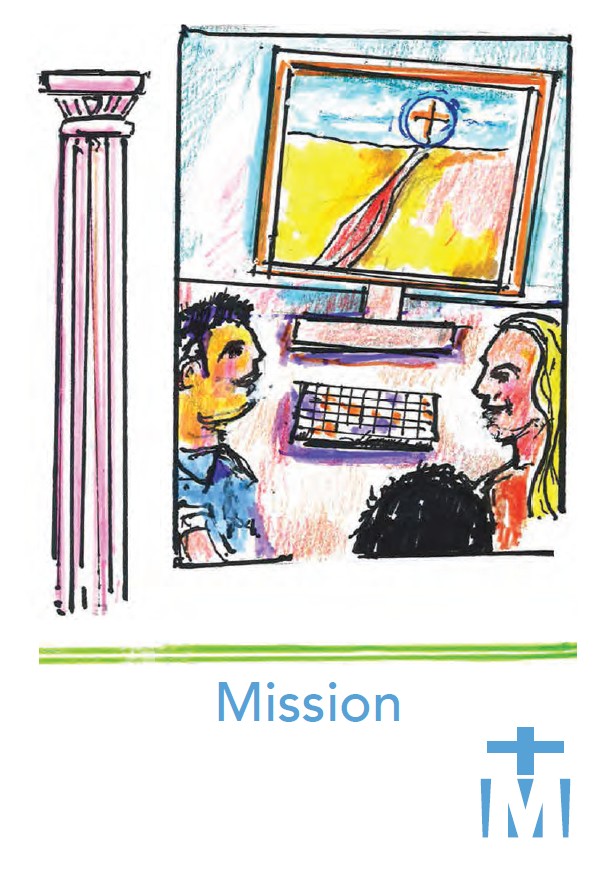
MISSION
Opening Prayer:
Mary, help us to embrace the Marianist mission with a full heart. May all that we do and all that we are continue your mission of bringing Jesus to our world. As brothers and sisters of Jesus, may we find joy in being your sons and daughters. Holy Mary, stay with us this day and help us to “Do whatever He tells us.” Amen
The next characteristic to consider is mission. The Marianist Charism, the gift of God’s life, the Holy Spirit, is a power dynamic. It is a sense of mission that gives hope, drive, purpose and creativity. This mission in the Marianist charism is absorbed into the chemistry of living. It is not something separate from daily life. It does not just give the rules to live by. It is rather like finding the home where one is comfortable.
As followers of Christ, we heed what Matthew has recorded. “Therefore, go and make disciples of all nations, baptizing them in the name of the Father and of the Son and of the Holy Spirit, and teaching them to obey everything I have commanded you.
“And surely, I am with you always, to the very end of the age.” (Matthew 28, 19-20) St. Paul said to the Corinthians (2 Cor 1:18-22) that our response to Christ is not “yes and no,” but “yes”. We seek to discover our mission and say “yes” to it. Jesus said that we are the salt of the earth and the light of the world. To be authentic we claim this dignity. (Matthew 5:13-16).
As one goes through college and young adulthood one discovers personal gifts and innate ways one desires to live their lives. As I look back when I was in the novitiate, college and a beginning teacher, I realize now that I was too passive. I worked hard in my religious life, studies and ministry, but I could have been more assertive by naming and developing what is deeply part of who I am.
Today I see young people who have a rather clear consciousness and determination to discover what is essential to them.
The main point I want to make here is that young adults can search to realize what their specific mission is in life. One may not know the particulars, but one can recognize gifts and deep desires. This is the exciting discovery of the unique and joyful personal life vocation.
Sacred Scripture depicts Mary as one who recognized her mission. The central document of the Second Vatican Council The Light of the Nations, Lumen Gentium states:
“Thus, in a wholly singular way she cooperated by her obedience, faith, hope and burning charity in the work of the Savior in restoring supernatural life to souls. For this reason, she is a mother to us in the order of grace.
“This motherhood of Mary in the order of grace continues uninterruptedly from the consent which she loyally gave at the Annunciation and which she sustained without wavering beneath the cross, until the eternal fulfillment of all the elect. Taken up to heaven she did not lay aside this saving office but by her manifold intercession continues to bring us the gifts of eternal salvation. By her maternal charity, she cares for the brethren of her Son, who still journey on earth....”[6]
Chaminade and Adèle painfully suffered the tragedies of their time. They clearly lived with the missionary spirit to help solve them. They were anything but passive. They both were very conscious of their gifts and who they wanted to be. They both went through many struggles to live out their missions.
Chaminade was in a seminary in the early part of his life with a priest who wanted to found a religious order in Mary’s name. Fr. Daries died before he could accomplish it, but Chaminade made it the dynamic of his life. He realized that the class system of laity being lower than that of the clergy and the nobility was not going to work after the French Revolution. Therefore, when he started his Sodality in 1800 he invited the young to unite on an equal basis under the banner of Mary’s Immaculate Conception. Gradually his followers grew in a sense of having a mission. By 1816 and 1817, some were ready to start the religious orders that he and Adèle founded. Others joined lay committed communities to continue the mission of the Sodality. The goal he had in mind was to help the Sodalists and the religious to be missionaries of Mary.
All his life he encouraged his followers to be Missionaries of Mary. He centered his theology, his ministry and all of his life on being a Missionary of Mary.
Chaminade said, “Our work is far-reaching; it is magnificent. If it is universal, it is because we are Missionaries of Mary, who says to us, ‘Do whatever He tells you.’ Indeed, every one of us is a missionary. To each of us the Blessed Virgin has given a mandate to work at the salvation of our sisters and brothers in the world.”[7]
God calls all to find a home where we find our passion. St John of the Cross says that we are like a log burning in a fire. The fire is the life of God consuming the log. When we find our purpose in life in God, we, the log, and the fire become one. This is a strong image, but it symbolizes the union of our true self with God.
The task of discovering this true purpose is to find the reason for our lives. In fact, we will be discovering it all our lives. However, there are stages where it becomes clearer.
I realize now, as I am older, ever more clearly my life’s purpose... I can remember I wanted to be a missionary when I was in the 6th grade. In high school, I was very attracted to the Society of Mary. At the different stages of my life, I kept discovering how to live out my call.
How does one find out one’s mission? There are processes one has to go through to find out. It may be through a calamity of some kind. We certainly do learn from difficulties. It is by growing from all our experiences that we grasp where our true selves are in this life of God for us. Young adults today face situations like racism, the environmental crisis, the wide inequity of wealth distribution, the threat to democracy. The Covid-19 epidemic has been catastrophic around the world.
The Marianist charism is a way for persons, primarily in communities together, to grow in two areas. One is in the life of Grace, the Baptismal life, and the life of developing good human habits. Mission is doing this to bring about change in society.
Blessed Chaminade and the first Marianists developed a method to grow in these two areas of human virtue and the life of grace. We call it the Marianist System of Virtues. There are a number of excellent resources available to learn of this way to grow in union with Christ that I wish we could speak of here. But that is for another time.
The questions to consider in this situation are many.
- First, how does one maintain an equilibrium, a psychic balance while living with pressures like the ones mentioned above?
- How do we maintain a sense of hope, of love and of faith having to live with them?
- What does one sense is one’s mission in difficult situations? What type of adjustment in conduct and in associations does one need to accept?
- What is the basic feeling one has on a daily basis? Does one feel a call to get involved specifically in one area?
- How do you discern the good you want to do? How can you discern that better?
- What do you see as the pressing needs in our society?
- How might you address the needs in our society?
Closing Prayer:
Mary, do for us what you did for Jesus, our Brother. Guide us so that we grow strong in wisdom and grace. Give us sight to see the talents God has given us. Help us to develop them during these years of young adulthood. Foster within us Jesus’ own vision of who we are. Instill in us the desire to learn constantly, the goodness to serve generously, and the courage to lead wherever Jesus calls. We pray for these blessings for ourselves and all peoples so that the Father, Son and Holy Spirit may be glorified in all places through the Immaculate Virgin Mary. Amen.
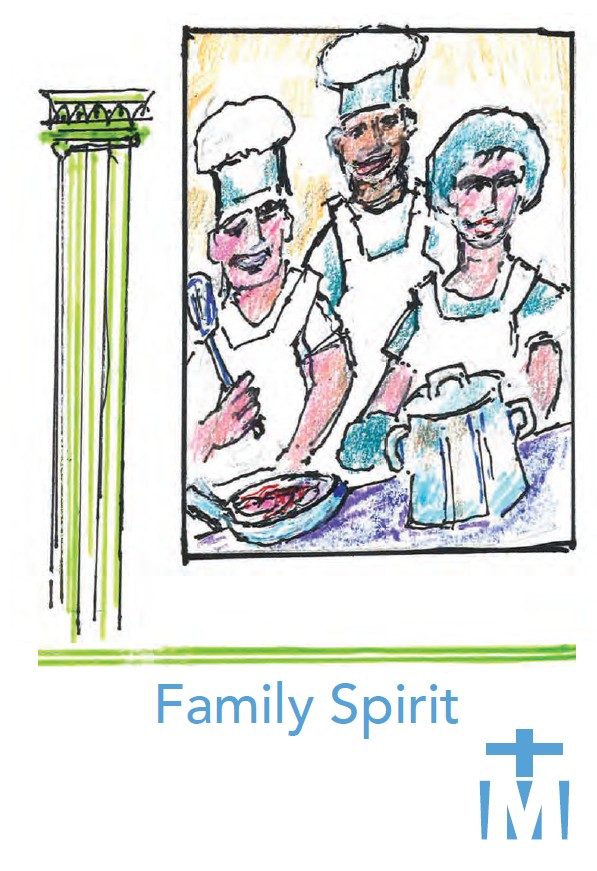
FAMILY SPIRIT
Opening Prayer:
God of all time, of all people, of all places, you have called us to witness the depth of your love through the shared vision of William Joseph Chaminade, Adèle de Batz de Trenquelléon, and Marie Thérèse de Lamourous. Through the grace of God, they understood the profound role of small faith communities in creating a more compassionate society.
Like our predecessors, we ask you to bless our efforts in building community, the essential context of all things Marianist, so that the Gospel may be lived triumphantly in the most ordinary and extraordinary situations.
With the first sodality as our legacy, we ask you to fire our hearts that we will work passionately for local and global justice, in its veiled faces and ongoing challenges. We ask you to inspire our minds to become the Christ-bearers and peacemakers for which our world is desperate, boldly confronting the darkness of violence and greed.As community builders fed by the unfailing grace of prayer and encouragement of one another, we unite our successes in the spirit of cooperation and offer our sufferings to your transforming grace.
We are empowered by Mary, our model of liberation and courage.Led by Mary, affirmed by Marianists throughout time together we say, “Yes, God of life!”
The next element to consider is Family spirit. Family Life is a treasure. The Marianist Charism centers itself from this precious reality. The Marianist Sisters, the Brothers and the Laity are one family. The General Chapter of the Society of Mary in 2018 declared that we could not be who we are as Marianists without the unity of the Brothers, Sisters and Laity being one family. Everyone in a family has the dignity of their true self. The Marianist Family seeks to recognize the call of each person and the beauty and resulting strength that come from the unity of all of these gifts. Love unites the family. CS Lewis, the spiritual writer, wrote on the four types of love–affection, friendship, Eros and agape.[8]
Affection is what develops in a family that cares for each other. Through this caring, an emotional bond of deep union develops.
Friendship is the gift when we grow in union with another and are able to establish a companionship of mutual care.
Eros is the bond of love that a couple has when totally giving themselves to each other in body and soul for the mutual fulfillment of each other in the richness of romantic love.
Agape is the Christian gift of love in which one gives one’s self totally to God or rather God gives totally to the person. In Hebrew, Hesed is the word for mercy and for love. Its meaning is fullness of compassion, kindness, and grace, sharing the beauty and goodness of who God is.
In the Marianist Charism all these loves are encouraged. During the young adult years, one can grow in the ability to grasp the meaning of these loves. To be a true human being is to understand and deeply embrace and enjoy love.
I want to share with you how agape love is essential to the Marianist charism. Chaminade manifested agape love continually in his life by giving himself to the development of the Church. He was passionate and balanced in all the various ways he lived. He was a physics teacher, a seminary professor, and a minister in disguise during the French Revolution, an innovator of a new way to live church life in the Sodality, a founder of religious orders, and a visionary who sought to found normal schools, a leader who brought about education for the poor and encouraged it to be universal.
The founder of the Marianist Sisters, Sister Adèle, fell deeply in love with God. She had deep friendships with others. One was with a deep friend who married. She herself, after much prayer and though, declined a very promising marriage proposal because she wanted to give herself to religious life.
Chaminade’s early ministry with the Sodality was with a group he called the State of Religious Living in the World. From this group some became religious and others who married wanted to dedicate their lives to the growth of the Sodality. They all wanted to help the Sodality to be a force for all kinds of good. The Sodality became the source for much development in the city of Bordeaux. A Bishop in 1870 said that Chaminade was at the root of the works of faith in Bordeaux.
Chaminade and Adèle led by love; they lived the agape that Christ, who is love itself, lived among us, when human, and still lives with us.
How does a young adult find how to live this agape love? It is a love that unites with the other three types of love. It is above the life of the senses. It is the soul of the other loves. It is the core of being a Christian. We find out gradually how to be in agape. It does not come as a blast out of heaven. It is gradual. One discovers one’s passion and authentic true self’s way of loving. One finally says, “I want to marry this person,” or “I want to be in this friendship.” “I want to live a certain way in my family.” “This is it, the way I can care for my church or for the needs around me.” “It is what I want to do for the world. It is what I can do, what I want to do for society.”
On a deeper level it is finding how our true self lives in God’s gifts.
To help find this gift of love, one prepares oneself by doing the study and growth needed for a human being. However, it also comes from a process of being in contact with God, the Spirit leading, finding out what is truly yours, what truly helps, what feels authentic.
Take the example of a student struggling over whether to go to graduate school or go to work. “Am I missing an opportunity to get a good job or not?” “Am I forgetting my dream to be a specialist in some area?” “Am I being selfish?” “Am I missing what God is calling me to be?”
Agape love is entering into the love of Christ Jesus who in all the circumstances of his life on earth and through His death demonstrated that His purpose among us was to bring us into this same love.
For each of us God is love. In God, we find our completeness. In discernment, we discover how we are to love. Affection, romance, friendship may be part of our lives. We all have the ability to be authentic. It is in prayer and discovery that we will find how we are to love in agape.
Pray to be in union with Christ in a spirit of equilibrium not in a dualism where opposite directions pull us apart. Mary will help us to find this balance. We will eventually discover what is off balance. We will discover what Chaminade and Adèle found after much trial and prayer. They were very happy people. They were authentic. They found their gifts and their destiny.
This is the Marianist Charism and the Christian Charism in operation.
How do we find this agape love? Actually, it is a gift. We seek to put ourselves in a disposition to receive it. It is like a young man and woman falling in love. Through their relating they enable the love to grow. After a while, they realize they want to spend their lives together.
God’s life, the life we have in Christ is a gift. It is living in love. We put ourselves into the dispositions that enable us to receive it.
For young adults and those of college age these sufferings in you can be a means to discover the way of loving.
This discovery of how to love is part of personality development. It means putting oneself into the spirit of prayer and reflection. This reflection is necessary, but primarily prayer is simply putting oneself in the presence of God.
It means especially waiting and processing through the various experiences you go through during this period. Where is your heart when you get involved in various activities, when you relate to different people? What do you sense is the authentic passion you want to have impel you for the rest of your life?
This is where agape love is. It is when God is absolute.
Some Questions:
- What method did the Marianist Founders use to bring unity to society? What can you learn from that?
- Reflecting back on groups in which you have been involved, what are the qualities of the members that have enabled the group to grow in unity?
- Reflecting on the divisions in our country currently, how can we personally (or in groups) lead toward unity?
Closing Prayer:
Lord God, bless us with the courage to say “yes” to your call. Bless us with the fortitude to persist in building our local communities, our Church, our nation, and our world, as true communities that exist for the common good. Bless us with the trust in you that enables us to live as good stewards of this earth and its goods. Bless us with caring that we may welcome all with genuine hospitality. Bless us with openness that we may join our voices with the voiceless. Bless us with wisdom to recognize and cherish our interdependence.
CLOSING REFLECTIONS
For someone or a group who wants to develop in the Marianist Charism there are two significant ways to proceed. One is to get in contact with the Marianist System of Virtues.
The first Marianists developed a spiritual direction method for growing in virtues. There are a number of books to help you grow into these virtues. One is Growing in the Virtues of Jesus by Fr. Quentin Hakenewerth, SM. (North American Center for Marianist Studies, NACMS, Dayton, OH, 2008.) The second way is to join or help form a Marianist Lay Community. The Marianist Lay Community of North American, MLC-NA, has a process for those wanting to do this. (Marianist Lay Community of North America, MLC-NA, mlcna.org.)
Our life in Christ grows when we open ourselves through prayer and unity with others. The five pillars of the Marianist Charism have been the center of my life for years. Being with my fellow Marianists has been an extraordinary blessing to me. The friendships and rich experiences I have had with precious companions in community—as well as the ways I have been able to share in ministry in schools, parishes, and a retreat house—have been the joy in my life.
Brief History of the Marianist Five Pillars
I want to say something of the history of this characterization of our charism into five pillars.
In 1996 Father David Fleming, SM, Superior General, in his Circular No. 1 to the Society of Mary[9] wrote the following, “Five key words can sum up the essence of the Marianist Charism: faith, mission, community, inclusivity (or mixed composition), Mary.”
The Marianist Lay Community of North America MLC-NA named the following pillars: Faith, Mission, Mary Community and Inclusivity.[10]
A pamphlet: Living the Marianist Spirit, published by the Association of Marianist Universities, gives the pillars as Faith, Mary, Inclusive Community, Family Spirit, and Mission.[11] I have used those from the pamphlet. The benefit of using the method of pillars is to help the process of internalizing the meaning of the charism. I have used the five from the pamphlet because they relate to the situation of young adults.
I want to give gracious thanks to all who have helped me write this booklet. I am especially thankful to Bro. Joseph Barrish, SM, who did the artwork.
Blessings, Fr. Ted Cassidy, SM
References:
- Thomas Merton, Conjectures of a Guilty Bystander (Doubleday & Company: ©1965, 1966), p. 142.
- Emile Neubert, Living with Mary, NACMS.
- Marialis Cultus, Pope Paul VI, For the Right Ordering of Development of Devotion to the Blessed Virgin Mary, Feb. 2, 1974, Vatican.
- Donald Boccardi, SM, The Marianist Family Prayer Book, page 56, NACMS, 2019.
- Pope Francis, Fratelli Tutti. Vatican 2020.
- Lumen Gentium, Vatican II.
- Chaminade’s letter to the Society of Mary in 1839, NACMS.
- David Fleming, Circular 1. After the General Chapter: Some Reflections on the Future of the Marianist Charism, Rome, Nov. 24, 1996, nacms.org.
- Year of Discernment, Module 2: 2020. Marianist Lay Community of North America, mlcna.org.
- Association of Marianist Universities. Amuhighered.org.
- CS Lewis. The Four Loves, Harvest Books, 1971.
Fr. Ted addresses young adults with his writing in light of his own experiences as a spiritual director, campus minister, former pastor, and teacher. He invites young adults and other readers who are searching for meaning in their lives to a path in life that deepens their faith. He does this by living out his own belonging to a community known as the Marianist Family of which he is a vowed member of the brothers and priests. The Five Pillars are the important characteristics of this community. Fr. Ted presents a way and vision for being a part of the plan of God for the mission of Jesus and Mary. I have read his clear and supportive work to nourish my own life as a fellow brother and friend. I know it will help all who read it to become better people who share in the plan of God through the Five Pillars that Fr. Ted presents.
~ Fr. Bert Buby, S.M.