
Click here for a downloadable PDF version of this article.
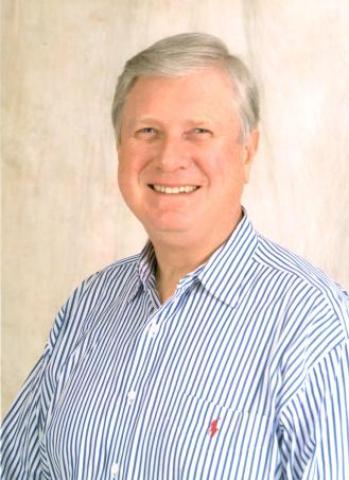
[Editor’s Note: Al Prendergast, a retired business leader, shares his passion for strategic organization and business ethics with numerous Marianist organizations, including in the area of sweatshop labor. He served as co-chair to the 2017 Assembly for the Marianist Lay Community of North America (MLC-NA). Al has been a member of the Visitation State Community since 1969. He is married and has four children and six grandchildren.]
Vow of Stability in Our Marianist Lives
Yes is a very simple but profound word. Mary said yes to God more than 2,000 years ago, and today Marianists say yes to God through their vows and commitments. I am one who has answered the call by taking the vow of stability. I live as a layman but also as Chaminade would say, “a religious living in the world.” The vow of stability is the commitment that binds me to Mary’s apostolic mission, to our Visitation Marianist State Community, and to the rest of the Family of Mary. I will explore in this paper the vow of stability taken by Marianists, both lay and professed.
The Marianist vow of stability is a commitment to a way of life that embraces Mary’s apostolic mission and the Marianist charism, and a commitment to living fully the aspects of the Marian Church. A Marian life reflects the life that Jesus Christ modeled for us and that the Marian Church embraces. The Etat (“etat religieus dans le monde”)[1] was the first Marian vowed community; evolving from this first vowed commitment came the Daughters of Mary, the Society of Mary, and various State communities throughout the world.
This paper will address the history and present use of the vow of stability as well as the history of the Etat (State) and the current existence of the “State of Religious Living in the World” in the Family of Mary. A question that arose in relation to the State and the Family of Mary follows: “Is the vow of stability as taken by Marianists today robust enough by itself to sustain the growth of the Family of Mary in all of its parts—lay and religious branches, educational institutions, retreat centers, and all Marianist sponsored communities. This paper will attempt to answer that question in both the historical and present context of the Family of Mary. The vow of stability has a long history, and it is worth a few paragraphs to illustrate its origins.
History of the Vow of Stability Prior to Being Adopted by Father Chaminade
The vow of stability has a long history that proceeded its use by Father Chaminade and the Marianist religious orders. Its origins began with Benedictine monasteries in medieval Europe. It was required by abbots to help keep religious from moving from one monastery to another or from one community to another. The vow of stability was interpreted as a pledge to not leave one’s community, monastery, or order unless moving to a more religiously rigorous community, monastery, or order and then only with the permission of the abbot and later the head of the order.[2] “For twenty centuries the religious state under the guidance of the Holy Spirit has had to adapt itself to new conditions, both social and political, moral and religious.”[3] Father Chaminade used the experience of others as a base from which to refine the Family of Mary.
One group that existed in Bordeaux around the time of Father Chaminade was the Aa.[4] These Aa groups “were a most secret organization of well-formed sodalists who had the same goals as the State of Father Chaminade.”[5] Aa roots go back to 1630 at the Jesuit collège of La Fléche in Anjou. They did flourish in Bordeaux, where they were often associated with the Marian sodalities. They were devout and included men and women.[6]
The special state and the Association of the Aa were similar to each other in more points than one. Their end was the same: namely, to form a group of select sodalists, imbue them with an intensive Christian life, strengthen them by the closest bonds of union, and make them as it were, the soul of the Sodality.[7]
There were many points of similarity with the Aa and the Etat of Father Chaminade. The Aa “had a special devotion to Mary, evidenced by the fact that many of the members belonged to Marian sodalities.”[8] The Etat was an independent group and had no direct relations with the Aa. The original Etat was semi-secret but was directly active in the Bordeaux Sodality. The main difference was that the Aa did not take vows, and the original Etat just professed the vow of obedience.[9] Father Chaminade was inventive in that he used the example of groups like the Aa as a reference to forming the State and to animating the Sodality.[10]
The Etat and the Aas were similar on more than one point. Their objectives were similar: to group an elite of sodalists, to infuse within them an intense Christian spirit, to strengthen them by very close bonds, and to make of them the soul of the Sodality. Their practices resembled each other.[11]
Aa activities in Bordeaux, as well as everywhere in France, ended with the French Revolution. After the French Revolution, Aa groups in France were mainly priests who banded together for personal and spiritual advancement. While Father Chaminade had dealings with Aa members, there is no written material from him that suggests Father Chaminade was an Aa.
Father Chaminade used what he knew from his own experience and the experience of the Aa to formulate a new form of religious life in post-revolutionary France. The chaos of toppling a monarchy that was in place for more than a thousand years is unimaginable to us in the United States of America today. One only has to look to the chaos in the Middle East and Africa to get a sense of how devastating the French Revolution and subsequent totalitarian regimes were to the French people and the French Catholic Church. Father Chaminade’s vision brought back from his three-year exile in Saragossa, Spain, was an attempt to reorder society and to bring the spirit of the Marian Church to Catholics and the good citizens of Bordeaux.
Early Steps of Father Chaminade’s Etat
Father Chaminade brought people along a path to being spiritually fully alive. That is how he approached the Sodality and the State of Religious Living in the World. Prior to this time, most religious, both for male and female religious orders, lived in cloistered communities. To have sodalists fully dedicated to animating the Sodality in Bordeaux, he needed men and women to commit themselves to this end.
First, Father Chaminade aimed boldly at inaugurating groups of the laity that would be a leaven in the world and would quietly, even secretly, live the evangelical counsels. This has to be achieved first within the Sodality, where he wanted outstanding Christian testimony to be afforded the members, but also within their respective family and social circles.
Secondly, his advance proceeded gradually from groups without promises or vows at all to groups functioning with vows.
Thirdly, he sought frankly to implant religious life into the world, beyond the scope and even influence of convent life.[12]
The earliest evidence of organizing a group that would lead up to “religious life in the world” shows up in a handwritten paper. “[P]robably early in the story of Father Chaminade’s Sodality, a nucleus was meeting secretly. Father Verrier thinks they must date from 1803.”[13]
It was a secret project involving a “‘proposition of union of friendship, of understanding’ within the Sodality.”[14] This group was the beginning of the “State of Religious Living in the World”; the Family of Mary as we know it today grew out of this project. The union of friendship brought elections, governance, and order to the Sodality.
The next evidence of a group pursuing a greater commitment to religious life in the world is in “1806 when, according to Fr. Chaminade’s own testimony, he jotted down his thoughts on a projected grouping of young men who were to commit themselves as special apostles among the sodalists.”[15]
The “Reunion of Twelve” is documented by papers confiscated during a search of Father Chaminade’s apartment by the police on November 17, 1809. This project called for twelve men who would become “a leaven as it were in the midst of the others.” Father Chaminade feared suppression of the Sodality and needed the group of twelve to preserve the Sodality.[16] There is no evidence that the group of twelve ever formally met.
There was a presumption of anonymity among State members. Their role was to be the example of fully committed sodalists. While Father Chaminade’s notes from Bordeaux only mention groups of men, he was at the same time corresponding with Adèle de Batz de Trenquelléon in Agen to form an etat of women in this region. They were charged with starting sodalities in that region.
The members of the Etat are not (to) be exteriorly different from the ordinary Sodalists, although (at least for the feminine group) they are to form other Sodalists secretly in the paths of perfection. They have no special obligations, unless it be to fulfill the ordinary duties of the Sodalist more perfectly.[17]
The Sodality and Etat were devotedly Marian with the expectations of emulating Mary’s twelve virtues that are mentioned in the Gospels. (See appendix II for Mary’s virtues.) I will touch on these virtues later in this work. The ever-present devotion by Chaminade’s requirement of living Mary’s virtues is evident in his notes, from document 46 (b) below.
Its proximate end is the habitual exercise of a true and solid devotion to the Blessed Virgin, or the practice of the 3 great duties of devotion to the Blessed Virgin, to honor her, to invoke her, to imitate her.
The early State members made commitments and later some professed vows of obedience in secret, starting with a three-month commitment and over time advancing to six months then annual vows. As they became more organized, Father Chaminade wanted them to profess the evangelical counsels of poverty, chastity, and obedience but still live in the world.
The State (Etat) was that inner core of more fervent sodalists on whom grace had made a deeper impression and who were led into the paths of perfection while remaining in the world, by embracing the evangelical counsels of poverty, chastity, and obedience in their completeness.[18]
Father Chaminade allowed for three levels or classes of commitment in the State: those with families, those who are contemplating a full religious life, and those for whom a vocation to full religious life was too late or not practical because of personal commitments.
So within the ranks of the Sodality, he founded various groups belonging to the state of the Sodality. To one such group he stated that there will be three classes of persons admitted: 1) those who because of family ties are unable to leave home to join a religious order; 2) those who are thinking in general of becoming religious and who want to prepare themselves more directly for their vocation; 3) those who realize now that they have had a vocation but did not follow it and who therefore wish to give themselves more directly to God.[19]
The State was most active from 1809 to 1817. After this time, Father Chaminade was looking for a way of establishing a director of the Sodality that would never die. The State continued, but at 55 years of age Father Chaminade turned his attention to the two religious orders we know today, the Daughters of Mary Immaculate and the Society of Mary.
The state continued to exist until 1817; after this we have no further proof of its existence, except that in 1819 there is still some trace of one or the other members of the state living in the world. It could have existed beyond this date, but we have no documents to give us this information.[20]
The State’s reason for existence after 1817 in Father Chaminade’s vision was to animate the Sodality and to do that by being leaders both in the spiritual and temporal aspects of the Sodality. He wanted the sodalities to be the spiritual powerhouse wherever they existed.
That it [the State] continued to fulfill its original objectives of sustaining the apostolic fervor of the Sodality and enabling the sodalists who so desired, to partake in the helps and merits of the religious life without leaving the world to live in community.[21]
It seems to me that religious communities would not fulfill the end of this institution [the State].[22]
The role of the State in the early 1800s and the role of the State and the two religious communities then and now should be the same: “sustaining the apostolic fervor of the Sodality.” This is our challenge.
But what binds us together in our lives and work? Let’s look at the Marianist vow of stability to see if it helps us fulfill Father Chaminade’s vision.
Marianist Vow of Stability
Father Chaminade wanted to establish groups of laypeople, the Etat, to live in the world and to animate the Sodality. He started slowly with young men, and Adèle helped in Agen with women. He at first had them take vows privately for six months, which could be renewed every three months. These vows were vows of obedience to the director of the local Sodality. The role of these lay religious living in the world was to animate the Sodality. He extended the vows to a year, which privately could be renewed every six months during the renewal of baptismal promises. He was moving these laypeople toward accepting the three canonical vows. Some members did progress to embracing the three canonical vows. Yet, he saw the canonical vows as empowering vows, but he wanted an additional special vow that would permanently dedicate these laypeople to Mary and to the Marian Sodality. This vow originally was the vow of zeal for the salvation of souls. His followers took this vow seriously.
On the Vow of Zeal for the Salvation of Souls
1. The object of this 3rd vow is as it were the special end of the State: the other vows in this regard are only the means for attaining zeal.
2. Zeal for the salvation of souls is directed especially toward young men [He worked with women of all ages with Adèle in Agen, and probably in Bordeaux as well.] and is concentrated upon the preservation, increase, and the perfecting of the Sodality.
3. One would sin against this vow by refusing offices, employments, commissions compatible with one’s temporal state and that the superiors would order or approve.[23]
The point here is that Father Chaminade was looking for people to be dedicated leaders, animators, and examples of Mary living in the world and spreading her Marian Church every day through their lives in the world.
Here the third vow is not called “a vow of Consecration” but simply a “vow of Zeal” or vow of Zeal for the Salvation of Souls to which, however, is joined “that of Stability in the Sodality.”
[H]e wanted the traditional three vows to serve as a means to the great end that was the object of the special vow sometimes called “vow of Stability,” at times “vow of Zeal,” at others “vow of Consecration.” All of these included the aspects of permanent dedication to a life of service to Mary.[24]
Vows evolved from the simple vows of the “State of Religious Living in the World” to the more formal canonical vows taken by most religious orders professed by both the men of the Society of Mary and the women of the Daughters of Mary. Both Marianist religious congregations also took a vow of stability; while the SM remained in the world, to a great extent by the education apostolate, the Marianist Sisters, for all practical purposes, were cloistered. The FMI did outreach to the poor in their local communities with great zeal and success. The vow of stability was a part of the vow renewal ceremony; for the Society of Mary, it was reserved for those who professed perpetual profession. Some people suggested waiting until 35 or 40 years of age. The vow of stability—which originally dedicated oneself permanently to Mary, to the Marian apostolate, and to the animation of the Sodality—was shortened in the Society of Mary’s 1839 Constitutions to “to spread devotedness to Mary.” It is beyond the scope of this paper to determine how the vow of stability, so clearly stated as a vow of dedication to spread the Marian Church to the world through the Sodality, evolved in the early 1800s to just a “devotion to Mary.” If one takes on the full apostolate of the Marian Church, I guess one works at building sodality-like organizations everywhere. The best description of the vow of stability that is practiced today by the Society of Mary is in Chaminade’s Letter to the Retreat Masters of 1839.
We have enlisted under her banner as her soldiers and ministers, and we have committed ourselves by a special vow, the vow of stability, to help her with all our strength up to the end of our lives in her noble struggle against hell . . . so we have taken the name and standard of Mary and are ready to go quickly wherever she calls us, in order to spread devotedness to her, and, thereby, extend the Kingdom of God in souls.
This, my dear son, is certainly the distinguishing feature and family character of both our orders. . . .
Furthermore, my dear son, by the vow of stability we intend to oblige ourselves in justice to cooperate as well as we can until the end of our lives in the work undertaken.[25]
From the 1839 Constitutions of the Society of Mary
19. By the vow of stability, the member intends constituting himself permanently and irrevocably in the state of servant of Mary. This vow is, in reality, a devotedness to the Blessed Virgin with the filial design of spreading her knowledge and perpetuating her love and her cult as much as possible, by one’s self and by others, in whatever circumstances of life he may be.[26]
Commentary on the Rule of Life of the Society of Mary clarifies a dedication inherent in the vow of stability focusing on educational efforts toward the Family of Mary. “The Rule of Life askes the religious, in virtue of the vow of stability, to ‘consecrate his energies to the formation of others in faith, especially to the development of the Family of Mary,’ (RL 1.5) as to a single task.”[27]
Today both the Daughters of Mary (FMI) and the Society of Mary (SM) take the vow of stability. Additionally, it is taken by members of the lay State of Religious Living in the World. These lay Marianists are not living together in traditional religious communities but are attached to Marianist spiritual communities and are tied to the Family of Mary through the vow of stability with the FMI and the SM. This vow is a distinctly Marian vow with strong community ties; it demands a lifetime of dedication to the Family of Mary and the Marian Church. Whether you see it as binding you to your community or a vow of perseverance in the Marian Church or a vow of zeal to animate the Family of Mary, we all are bound for life to work together to make Mary known and loved as the bearer of Christ and the mother of the Church.
[I]t is in this context that Marianist stability takes all its meaning and all its value. This means that what is at stake is nothing other than the duty of perseverance assumed by anyone who embraces the Marianist state of life such as it is defined and regulated by the Constitutions of the congregation.[28]
The permanence of the vow of stability is very clear from its history even before Father Chaminade learned of it. Father Chaminade embraced it as permanent. The Society of Mary reserves until perpetual profession the taking of the vow. The Daughters of Mary, for a long time, did not take the vow of stability; as of 1947, Rome agreed to their petition, and they have been able to take the Marian vow of stability.[29] The “State of Religious Living in the World” in the United States of America and in Europe embraces Marian stability either as a consecration for a period of a year or as a permanent commitment to Marian stability expressed as a vow, but renewed with their community each year.
Institute of the Daughters of Mary Immaculate (1816): In their early years they made the three vows plus those of enclosure (which they substituted for that of stability) and of education. Later on the two special vows were omitted, but in 1947 the vow of stability was restored to the perpetual profession.[30]
More recently, the Daughters of Mary have been taking the vow of stability at first profession. The vow has evolved from a meaning of commitment to a place or to a community to a meaning of commitment to persevere in the Marian apostolate for an extended amount of time, even for a lifetime. Sr. Laura Leming, FMI, describes the reason for the Marianist Sisters’ use of stability in first profession.
In the Society of Mary, stability has been reserved for final profession, when the brothers take vows for life. The Marianist Sisters, on the other hand, see stability as quintessentially Marianist, and so necessary if one is to commit oneself as Marianist for whatever time period. Therefore, the sisters vow stability at first profession, the “temporary” profession.[31]
As the State unfolded in Bordeaux and Agen, the vows also evolved—from a vow of obedience taken every six months to vows of obedience and chastity taken annually, but in private. Private vows did not create visible levels of commitment. These sodalists lived in the world, either together or more than likely in their own homes. From these beginnings came groups that wanted to take the canonical vows of poverty, chastity, and obedience. Father Chaminade looked at these vows as ones that gave the person the strength and support to carry out the important mission of the apostolate of Mary, which is embodied in the vow of stability, sometimes called the vow of zeal.
The Founder was so strongly occupied with the apostolate for his several groups that a special vow of zeal was often incorporated into the rules of the various institutes proposed. Not only did he use the ordinary vows of poverty, chastity, and obedience as a means to sanctity, but he proposed the vow of zeal as an extra means to sanctifying the lives of the statists.[32]
The point I would like everyone to take away from the above quote is that all vows are very important to the future of the Marian Church and the Family of Mary. The canonical vows power the institutes and communities to embrace stability as the vow of perseverance and zeal for the Marian apostolate and specifically the animation of the Family of Mary in all its parts: FMI, SM, State, sodalities, and all Marian works and institutions. None can be left out. Father Chaminade often said:
The religious life is to Christianity what Christianity is to the human race. It is as indestructible in the Church as the Church is indestructible in the world. . . . Thus the State was intended to accomplish the direct reconstruction of France and the salvation of souls.[33]
The ultimate purpose of the vow of stability and of the State of Religious Living in the World is the apostolate, and he envisioned animating the Sodality as the way of re-Christianizing France.
The object of this vow (stability) is, so to say, the ultimate purpose of the state because the others are regarded only as means to acquire a zealous spirit. And because the salvation of souls is the main objective of the State each religious will bring to bear on it all he does, all he suffers, etc.[34]
There is a clear call in the above thoughts. When we take the vow of stability in whatever form as a consecration, as a vow perpetual or renewed annually, we are taking on the role of Father Chaminade who dedicated his life to animating the Sodality and rebuilding the Church. This commitment should be taken seriously because it is as demanding today as it was during Father Chaminade’s lifetime. As one reflects on the chaos of post-revolutionary France, one may also reflect on the current chaos in the Catholic Church. The need to reach out to Christians to provide an example of living a Christian life in the world is as important today as it was 200-plus years ago. The work of re-Christianizing the world requires, as Father Chaminade saw it, collaboration between all institutions of the Family of Mary working closely together as one, not as separate branches, but as one cohesive unit to animate the Sodality. Animating the Sodality is another way of saying living the Marianist charism in all aspects of one’s life and making it real to everyone. We do this animation when we in the Family of Mary touch the lives of those around us every day. This is a lifetime commitment for all those who embrace the vow of stability in any of its various forms.
Obedience, Zeal, and Perseverance
Father Chaminade was familiar with the vow of obedience and thought that it was the vow that best tied State members to the future of the Sodality. Father Chaminade “arrived at the stage when he felt that he could propose a vow, a single vow, that of obedience.”[35] He did not envision it as much as rigid directives, but more as a commitment to do whatever was needed by the Sodality.
He [Father Chaminade] specifies that it is the person himself who is under obedience, and not his state of life. The vow of Obedience therefore should not interfere with the individual’s state of life—it is limited to what concerns the person himself. . . . The experience of some years [de plusieurs annees] has proven that this vow can be fulfilled without trouble of conscience and nevertheless with a great spiritual advantage, whether for the person himself who makes it or for the persons who become the object of his zeal guided by Obedience [de son zele, guide par l’Obeissance].[36]
He was concerned that some State members were taking it too strictly and that their conscience was troubled. He advises them that they should do what they were able to do to animate the Sodality within the context of their position in life.
What he really wanted, in my opinion, were groups of zealous leaders to animate the Sodality. The Group of Twelve and the Center were two examples of groups of people he trusted to lead and expand the Sodality in Bordeaux. Zeal is a very hard term to attach to a vow, but he wanted State members to closely support the Sodality with enthusiastic commitment, if not daily then frequently, and model the Marian charism throughout their daily and weekly routines. Where do you get the kind of zeal for which Father Chaminade was looking? He thought the other vows would support the commitment to zeal.
The special vow of Stability is not clearly formulated or implemented in the extant writings of Father Chaminade on the Etat. He calls it by several different names; a simple “vow of Zeal” . . . and a “vow of Zeal for the salvation of souls” in 46 (i) in which text he states that to the vow of Zeal is joined that of “Stability in the Sodality” as well as vow of Devotedness to the Sodality which includes that of “Stability in the Sodality.”[37]
He wished to emphasize a person’s spiritual growth. Chaminade’s first priority was spirituality. When a person would spirituality bloomed, Father Chaminade was sure it would lead to an outflowing of zeal directed toward animating the Sodality, both by direct acts and by personal example. Zeal also would bring justice to people one came into contact with regularly, and this would bring it to the work that one did daily to support one’s self or family. This clearly happened when people in Bordeaux admitted that many of the good works in Bordeaux could be traced back to the Sodality.
Father Chaminade’s idea of perseverance was quite clear. You never give up. A State member is a State member for life, and the Sodality and its works are your works for the rest of your life. “Such examples also point out that the modern vow of stability is a vow of perseverance in this institute and imply, as the principal obligation, actual perseverance without fraud, i.e., that the professed perseveres in it and in no way causes or desires his dismissal.”[38]
As stated above, stability has to fit one’s station in life and the abilities one has to offer. Perseverance is the toughest part of the vow of stability because it never goes away.
It is true that perseverance does seem to be the dominant idea in most of the texts cited above, but perseverance is frequently qualified as a perseverance of service, or as perseverance with the obligation of service. Is this obligation of service binding in virtue of the vow? The literal meaning of Father Chaminade’s statement—by the vow of stability we bind ourselves in justice to cooperate as well as we can for life—seems to indicate this.[39]
How one lives out perseverance is the challenge that one’s spirituality will support. The Marian saying “Do whatever he tells you” is an example of the level of perseverance that one accepts with the vow of stability. I believe that it is not a burden but an animating commitment that helps one order one’s life activities. Religious living in the world must balance the commitments of life with the commitments of religious life or whatever level of vowed commitment one makes. Community commitments, spousal commitments, family commitments, work commitments, and personal commitments all have to be worked out in a balance. That is the challenge of all religious living in the world. Concerning the religious commitment to animate the Sodality, I interpret it today to mean the Family of Mary. It is hard to have to say no to a personal family commitment in order to embrace a Family of Mary commitment or event. Our Marianist spirituality leads us to balance these commitments so that each area of our lives is appropriately supported and so that each is balanced and one’s commitments do not dominate at the expense of our vow to live as religious in the world. Friends and family may criticize us for not having the time for them that they expect of us. However, our vow of stability is our life commitment, and we deal with the constant pull of others away from that commitment. That is why Father Chaminade made the Three O’Clock Prayer a daily part of Marianist life. It reminds us daily that we are religious living in the world and not part-time religious.
There are many examples of both lay and religious Marianists living the vow of stability by persevering. An experience that comes to mind was a visit I made with my daughter to the Cupertino Marianist Community a year or so ago. We had the opportunity to visit Father Joseph Stefanelli in the health center of the community. He was unable to get out of bed at that time but greeted us warmly as old Marianist friends do. He was sitting up in bed with his computer translating some of Father Chaminade’s letters from French to English so that they would be useful to all of us. He died a few months after that visit. That’s perseverance!
State of the Etat Today in the Family of Mary
The Etat, as Father Chaminade envisioned it, is alive and well in most of its forms. It is easy to see that the Daughters of Mary and the Society of Mary are religious living in the world. Obviously, the Daughters of Mary are no longer cloistered. One only has to visit a Marianist education institution to see that the religious communities are located in the same geographical setting that the institution serves. Also, there are many apostolates that take religious into the problem areas of the world. Examples of these apostolates are on the websites and the individual social media pages of both the Sisters and Brothers, as well as the websites of the Marianist Family. I would recommend that you view these websites and look for them on social media.
The lay Etat also is alive and well. I will speak to the lay “State of Religious Living in the World” in the United States of America because that is where I have my experience.
There are individual lay Marianists who embrace stability with the intention that it be a perpetual vow as well as some who make an annual consecration of stability to the Family of Mary. These lay Marianists can be found in communities throughout the Family of Mary and in many Marianist Institutions. Taking a vow or promise of stability is something one does as an individual, whether one is a vowed religious or a lay Marianist. One may be fortunate enough to have a community where one lives or a community that only meets a few times per year, but one’s vow or promise is made to God and is witnessed by the community. The earliest Etat groups were called reunions (meetings), and Father Chaminade asked these early Etat members to make their vows or promises to God, not to the community.
Works of the Reunion of the 10? Works of the Special Reunion? . . . Vow of Obedience. In the presence of God. (Although Father Chaminade wrote these last expressions on two separate lines, he may have meant them for one thought; namely, that the vow of Obedience would be made in God’s presence (and not in a ceremony held at a meeting).[40]
The point here is that these vows are made to God directly. It is the role of one’s community to support the person who makes the promise or takes the vow. It was Father Chaminade’s intent that those who took the vow of stability (obedience) did not wear it as a badge of honor but viewed it as an obligation of service to the Sodality. “This center does not have officers with authority. It is rather a leaven of the elite Sodalists within the general membership, unknown to the other and even to the Council of the Sodality.”[41]
Who Takes a Promise of Stability or Vow of Stability?
They are lay Marianists living in the world who have families, jobs, homes to pay for, and they are dedicating a significant portion of their lives to the needs of the Family of Mary. One can find them in Marianist institutions, communities, in the Marianist Lay Community of North America (MLC-NA), Marianist Family Councils, Marianist organizations like the Marianist Social Justice Collaborative (MSJC), and too many more Marianist groups to name here. If you are familiar with the Family of Mary, then you know some of them.
How Many State Members Are There?
There are probably less than 50 in the USA. Too few. What we need, however, is not 50 but 1,000 vowed Marianists living in the world, working side-by-side with other Family of Mary members, members of their local communities and coworkers as models of the Marian Church.
Voice of Marianist State Members Today
These thoughts are a compilation from interviews I have conducted both in-person and via teleconference with State members and some professed religious. The overall commentary was that the vow of stability is permanent, even though it is renewed annually. Responses related to this include the following:
“Loving God, I commit myself to you in the spirit of Mary by. . . .”
“I commit myself by the vow of stability to. . . .”
“It’s a vow and a vow is ongoing but renewed each year.”
“I can’t blow off the commitment because my community is a witness.”
“In my mind, it’s a vow.”
“My ‘yes’ is still good, and I affirm it as a foregone conclusion, but shaped for my life in the coming year.”
The commentary that either form (permanent or annually renewed) had the intention of ceaselessness was expressed in the majority of interviews. Responses from interviewees included the following:
“I don’t see myself as not having this commitment.”
“You don’t say ‘Yes God’ just once.”
“I feel I can plant my feet in the vow of stability.”
“Commitment of whole life.”
I admit I was surprised that so many State members felt this way as contrasted with my assumption that many looked at the commitment as an annual commitment.
Witnessing a State Profession and View of Church
The Visitation Marianist State Community always professes our vow together during the celebration of the Eucharist at one of our retreats, usually the fall retreat at Mount St. John in Dayton, Ohio. The vow is usually witnessed by one or more Marianist brothers or priests and usually one or more of the Marianist Sisters. I believe that is the correct forum for professing the vow. I would suggest to anyone making the Marianist vow of stability that a Society of Mary member be present and, if possible, a member of the Daughters of Mary and at least a member of a State community who has professed the vow. It is more than a promise, and it should be witnessed by professed Marianists.
I have been meeting and working with these State members for more than 50 years, and I am impressed with their level of commitment to the Family of Mary and all its works and to the Catholic Church. The comments below were qualified by many to mean the Catholic Church and not allegiance to the rigid rulings of the Roman Curia and local Roman Catholic Bishops.
“It is a serious commitment to the Marianist Family in a significant way.”
“I would not be Catholic without being Marianist.”
“Marianist life is why I stay in the Church. It renews me and causes me to go on.”
“The Marianist State community is important to me remaining Catholic.”
“We have an in-depth knowledge of Mary. Mary is a real person to me.”
These comments were expressed not only by members of the Visitation Marianist State Community but also by some professed Marianist religious as well. We are all working to animate the Family of Mary in the spirit of Mary and the Marian Church.
Forming Christians is the intent, and the State models the acceptance and outreach that Christ exhibited during his short life. Mary, through her example, embodied it in the early Catholic Church, and this is what the State does within the Family of Mary and in its outreach, as we live as Marianist religious immersed in the world.
Voice of Father Chaminade Today
Father Chaminade’s original dream was to re-Christianize France. He needed help to do this, and he envisioned a number of groups (reunions) of “religious living in the world” to animate his vision. These groups are a fact today. He would endorse today’s groups, both lay “religious living in the world” and professed religious also “living in the world.” He was a challenging person but with the persuasive tact of a Frenchman. He was not a shrinking violet. You only have to look at his pictures in the many biographies to see a man of determination.[42]
If he were meeting with the many groups of religious living in the world today, he would ask us to do more to support the growth of the Family of Mary. This includes recruiting more “religious living in the world,” both lay and canonically professed. He would say your work (calling) is to animate the Sodality and to animate the entire Family of Mary. That is your apostolate. The good works are only a way of animating the Sodality. Education is only the way of adding souls to the Family of Mary.
He was intent on re-Christianizing France, and I would assume he would be doing the same today: re-Christianizing the people you meet and interact with daily. He was devoted to Mary as the Model of the Church and would be advising us to emulate her 10 Marian characteristics today. I don’t think he would let the controversies of the Roman Catholic Church today interfere with his apostolic mission. People’s souls were his concern, not the hierarchy of the Church or the Superior Generals of the religious orders. So, he would tell us to put aside our rage at the Church and to work at bringing people we know and those with whom we come into contact with daily to the Church and to the Family of Mary. “Don’t be embarrassed to proclaim your Christian faith” is what he would say. It is through the Family of Mary in all its institutions that the Catholic Church grows. Would Father Chaminade say the Catholic Church will change? Yes, most definitely, he would, but not in the way you may want it to change, but in the way that Christ envisioned. It will take longer than you would like. Father Chaminade understood the journey is long and our lifetimes are a milepost on this road. He was challenging two hundred years ago and would be today, as well.
State Commitment Today
Committed “religious living in the world,” both lay and professed religious, are living the challenge that Father Chaminade envisioned more than 200 years ago. It is hard for me to describe what one’s vow should require. It is clear to me that whatever wording one says—be it a promise renewed annually or a vow of stability which implies permanence—the focus of the promise or vow is the Family of Mary. That is what Father Chaminade envisioned, that is what unites us and to which we all commit ourselves. The rest of the work is just the means to bring people to Christ through Mary. When you make the promise of Marianist stability or the vow of Marianist stability, you become one of the “directors of the Sodality that would not die.” By that phrase you become an animator of the entire Family of Mary. At least that is what I believe and commit myself to through the vow of stability.
Prayer
Many members of “religious living in the world,” both lay and religious, are great at prayer. I am not one of them. I need more support in prayer. Father Chaminade was a man of prayer. His institution of the Three O’Clock Prayer was a brilliant idea because it does exactly what he wanted it to do, which is to distract us from the world if only for a few minutes and to unite us in prayer wherever we may be in the world. Some members of the Visitation Marianist State Community say, “The Three O’Clock Prayer is a reminder to us of our vow and its obligations.” As “religious living in the world,” we need something to jerk us back to the reality of our spiritual life so that we don’t get so immersed in our work that we forget why we are Marianists.
Prayer is good even for those of us who don’t have much time to pray. We should all place one of the Marianist prayer books in our homes, desks, briefcases, cars, and offices and use these Marian prayers to settle ourselves before making important decisions or taking consequential actions. Centering ourselves in Marian spirituality will help us spread the good news of the Marian Church and the life of Christ.
I think the Three O’Clock Prayer is so important that our communities should send to our email addresses, including to one’s work email address as well, a reminder daily to pray the Three O’Clock Prayer. There are several versions, and each community could decide which is best for its members.
Commitment of State of Religious Living in the World Today
Taking the vow of stability, whether in the form of an annual promise or professing a vow, binds us all together in the Marianist Family. It unifies us under one vision, and it animates the Family of Mary in all its parts and works. The vow of stability enables us to live the Marianist charism; by our example, it demonstrates how to live the Marian Church and bring people to the Catholic Church. It is a serious challenge because there are so many distractions that take our attention and time away from our commitment, be they our spouse, children, friends, jobs, and even charitable works. We commit ourselves to build the Marian Church and to live as religious in the world, which means balancing all these demands and keeping our Marianist spirituality as a focus as we live our lives to the fullest. That is what Christ did and that is what Mary his mother wanted the apostles to do. Living as Christ did is as an example to the world, and this is to what the vow of stability calls us. Will we be totally successful? I don’t think so because even the apostles fell short. But they died trying. Father Chaminade and many others who followed worked up until the end to make the Marian Church a reality, and this is what we are called to do by taking the vow of stability in whatever form we choose to give it voice.
Rule of Life
Originally members of the State were expected to have their own rule of life.
Each one would have his personal rule and would present it to M. le Directeur together with the failings that he would have committed. 4. The director will keep a copy of each one’s rule. . . . All are obliged to have a rule of Christian life, set up or at least approved by M. le Directeur; this rule will vary according to the progress that each one will make and according to the attractions of grace.[43]
Father Chaminade wanted flexibility in one’s rule of life. It was not to be a burden but a help in one’s own spirituality. That is why in the early State he did not require the vow of poverty from those who lived on their own because it was not practical. However, he expected full support of the Sodality by State members.
The Daughters of Mary have a Rule of Life and the Society of Mary also has a quite extensive one. Both are available at the North American Center for Marianist Studies. I will not go into details on either Rule other than to say that they are available. I will, however, address the Visitation Marianist State Community’s Rule of Life that its members follow. The full VMSC Rule of Life is attached in appendix I. Rules of life are living documents and are revised periodically. The Visitation Marianist State Community has revised its Rule in 1990, 2008, 2012, 2013, and 2019. The Society of Mary has revised its Constitutions/Rule of Life from the original in 1839 (1867-1869, 1881, 1885, 1891, 1925, and 1981). The point here is that it must reflect the time we live in and be a help to us, not be a burden to our spiritual growth. The Visitation Marianist State Community’s Rule of Life is currently 24 pages. Items 21 and 22, which talk directly to a personal rule of life, are below.
21. We commit to regularly evaluate the direction of our lives, our activities, and practices. Are they consistent with the beliefs we profess? Are our present involvements still the best way of living our commitments in the Family or should we redirect our energies? Are the things we are doing working, or should we try another tack? We commit ourselves to regular prayer and reflection and attempt to understand the direction and rhythms of our lives so that we might live out this vocation of vowed laity. In short, we are called to develop a rule of life.
22. Historically, a rule of life has been viewed as a specific set of routines or practices by which an individual gives his or her life over more completely to God. A rule of life might also be thought of as the practice of those elements that define who we are as vowed laity. A rule might include common Christian practices such as prayer, spiritual direction, evaluation of our life’s direction in light of our vow and beliefs, or times for listening to the Spirit. For many, it includes the study of the Marianist vision and heritage or accepting responsibilities within local, regional, or national communities. Commitment to attendance at retreats and programs of the Community should be considered.
Whether one follows the Rule of Life from the Visitation Marianist State Community, the Society of Mary, or the Daughters of Mary, it is clear that if one is to aspire to be a “religious living in the world,” a rule of life is essential to keeping focused on religious life and not be totally immersed in the demands of secular life. It is good to have one’s Rule of Life reviewed by a Marianist religious community, be it a State community or one of the two Marianist religious orders. In addition, a Marianist spiritual director is a good person to review a Rule before having it reviewed by a community. An easier way would be to embrace a Marianist’s community’s Rule and to adapt it to your own life circumstances. Whatever way one chooses, a personal rule of life should be drawn up.
State Finances
The finances of the State should be totally separate from the finances of other Family of Mary groups or institutions because the role of the State is to support these other groups and institutions. The State needs its own source of funds to do this. Also, the use of the funds should be for the animation of the Family of Mary. The groups and institutions of the Family of Mary are the ones to do the works that Christianize. Father Chaminade was unambiguously clear on this point.
In order to favor the practice of the spirit of poverty, in order to preserve fraternal union, there will be in the Etat a special fund independent of that of the Sodality . . . to make up the deficits of the fund of the Sodality or of the fractions’ special funds destined to good works . . . for other good works that would be determined. There will be a special regulation for the formation of this fund. The contributions should be regulated by obedience from time to time, etc.[44]
The Visitation Marianist State Community has established a separate fund that is used to support the works of the Family of Mary and its groups and institutions on the basis of need as described in the application for the funds. These applications are reviewed, and funds are awarded based on need and the expected impact on animating the Family of Mary. These funds are separate from the operating funds of the State community and are controlled by the steering committee of this State community. The funds accumulated from Family of Mary members by both religious institutions should likewise go to the support and animation of the Family of Mary in all its forms and parts as Father Chaminade prescribed.
Vow of Stability as a Unifying Marianist Bond
The question that prompted this paper was, “Is the vow of stability as professed by the Society of Mary, Daughters of Mary, and members of the Marianist State robust enough to unite us in the mission that Father Chaminade envisioned more than 200 years ago?” As you read this paper, I hope you found the vow of stability to be a vow that has its roots in the Marian apostolate. That Marian apostolate is to bring people to the Church through emulating the Marianist charism and by animating the Family of Mary as it exists today. The commitment one makes in professing the vow of stability ties us to this Marian apostolate. It demands our focus on supporting the Family of Mary with our time, our talent, and our financial resources. This support could be to Marianist institutions or to both Marianist religious and lay communities.
Conclusion
The Marianist State is functioning today as Father Chaminade had intended in his earliest writings. The State communities exist through members making a set of promises, commitments, and the vows, including the vow of stability, which as expressed today are more in line with his vision for a vow of zeal, perseverance, and dedication to Marian spirituality, the Marianist charism, and the Family of Mary. He was looking for a group of leaders to grow and support the Sodality. Today we have Marianist State members throughout the world that are doing just that. Their commitments and vows put a special obligation on them as Marianist State members to work with the rest of the Family of Mary’s institutions, communities, groups, and Marianist religious orders to animate the Family of Mary and to enhance the Catholic Church. This obligation, which one freely accepts, requires balancing Marianist commitments with family, work, and social obligations.
These Marianist commitments do not take a back seat to one’s other obligations. State members are living a vow of stability to the Marianist Family while fully living in the world. It is not an easy life choice because the demands of secular life will pull one way, and the demands of religious life will pull another way. It is only through the spiritual support that Marianist State members receive from one another and from all members and groups of the Family of Mary that we are able to live in these two worlds simultaneously. Chaminade called us all to increase our own spiritual well-being as the first step in living out our vows and then to share our religious zeal with those we meet each day. It is by this perseverance and personal example that we build the Family of Mary and through the Family of Mary the Catholic Church. How many Marianist Religious living in the World does the world need? A lot!
Appendix II
From: https://udayton.edu/imri/mary/v/virtues-of-mary.php : UD’s Mary Page – Please Note the Evangelical Virtues of Mary are not specifically Marianist
The Evangelical Virtues of Mary – Answered by Father Johann Roten, S.M.
Q: What are the ten evangelical virtues of Mary?
A: Marian devotion and spirituality has many facets, many expressions, and many traditions. The "Ten Evangelical Virtues" is one of them. This devotion comes in the form of a chaplet, and belongs to the Marians of the Immaculate Conception. These ten evangelical virtues are not only object of prayer. More important, they present us with a program of virtuous life, which is that of Mary as she appears to us in the Bible.
The "Ten Evangelical Virtues" are as follows:
- Most Pure (Mt 1:18, 20, 23; Lk 1:24,34)
- Most Prudent (Lk 2:19; 51)
- Most Humble (Lk 1:48)
- Most Faithful ( Lk 1:45; Jn 2:5)
- Most Devout (Lk 1:46-47; Acts 1:14)
- Most Obedient (Lk 1:38; 2:21-22; 27)
- Most Poor (Lk 2:7)
- Most Patient (Jn 19:25)
- Most Merciful (Lk 1:39, 56)
- Most Sorrowful (Lk 2:35)
On the ceiling of the eighteenth-century Marian Church of Gozlin, Poland, there is a ten-pointed star symbolizing Mary's evangelical virtues dear to the Marians. Mary's virtues are like the rays of a star enlightening our path and inspiring our behavior. The Marians made the "Ten Evangelical Virtues" their Rule of Life (1699). However, the origin of this spiritual tradition antedates the foundation of the Marians of the Immaculate Conception. It goes back to the foundation of another order, the sisters of the Annunciation of the Blessed Virgin Mary (1501). This religious order was co-founded by Jeanne of Valois (canonized 1950) and the Franciscan Blessed Gilbert Nicolas (1463-1532). He wrote the sisters' rule and based it on the ten Marian virtues, while Jeanne of Valois (1464-1505) is considered the author of the chaplet.
The chaplet was to be a constant reminder of the rule of life and its Marian foundation. It later became the Marians' everyday prayer up until the reform of the order in 1910. The chaplet is recited like the rosary. After each Hail Mary / "Holy Mary ... Mother of God," one virtue is offered in prayer following the order in which they are listed above (Most Pure to Most Sorrowful). The Ave is then concluded with "pray for us sinners now and at the hour of our death. Amen."
Sources
- Herbert George Kramer, SM, Venerable Chaminade’s ETAT . . . a Forerunner of Secular Institutes: A Fresh Translation, an In-Depth Analysis (St. Louis: MRC, [1974]), 22.
- Matthew F. Kohmescher, SM, Additional Vows of Religious in General and in Particular the Vow of Stability in the Society of Mary (Marianists) (Dayton, OH: Marianist Publications, 1957), 6-8.
- Kohmescher, Additional Vows, 1.
- Joseph Verrier, SM, The Sodality of Father Chaminade, vol. 1, MRC Monograph Series, Doc.26 (Dayton, OH: MRC, May 1981), 25. According to Verrier: “No text gives us the meaning of Aa and some bizarre interpretations have been made. However, a series of documents show that it should be expressed as Assemblée des Amis (Assembly of Friends).”
- Cyril G. Middendorf, SM, “A Continuous Mission . . . To Leaven Secular Life: A Comparative Study of Secular Institutes as Conceived by Pius XII and the State (L’Etat) of William Joseph Chaminade” (master’s thesis, Catholic University of America, 1960), 19.
- Kramer, Venerable Chaminade’s ETAT, 14.
- The Spirit of Our Foundation, vol. III, note 1, p. 272.
- Kramer, Venerable Chaminade’s ETAT, 14-15.
- Middendorf, “A Continuous Mission,” 19.
- Kramer, Venerable Chaminade’s ETAT, 12.
- The Spirit of Our Foundation, vol. III, note 1, p. 272.
- Kramer, Venerable Chaminade’s ETAT, 22.
- Kramer, Venerable Chaminade’s ETAT, 22.
- Kramer, Venerable Chaminade’s ETAT, 22.
- Kramer, Venerable Chaminade’s ETAT, 24.
- Chaminade, Letters, no. 38 to Peter Pierre, Nov. 21, 1809; vol. 1, pt. 1, pp. 102-103.
- Kramer, Venerable Chaminade’s ETAT, 26.
- Middendorf, “A Continuous Mission,” 11.
- Middendorf, “A Continuous Mission,” 12. Refers to William Joseph Chaminade, Special Reunion in Honor of the Ten Virtues of Blessed Virgin, Doc. X2, Box 46 (Rome: Archives of the Society of Mary), 1.
- Middendorf, “A Continuing Mission,” 13.
- The Spirit of Our Foundation, vol. III, 279.
- Chaminade, Letters, no. 51 to Mlle de Trenquelléon, Aug. 30, 1814; vol. 1, pt. 1, p. 130.
- Kramer, Venerable Chaminade’s ETAT, 104.
- Kramer, Venerable Chaminade’s ETAT, 101.
- Lawrence J. Cada, SM, Chaminade’s Letter to the Retreat Masters of 1839 (Dayton, OH: Cincinnati Province of the Society of Mary, 1989), 5.
- Cada, Chaminade’s Letter, 6.
- Ambrogio Albano, ed., Commentary on the Rule of Life of the Society of Mary (Dayton, OH: NACMS, 1994), 468.
- Albano, Commentary, 743.
- Kohmescher, Additional Vows, 19.
- Kohmescher, Additional Vows, 77-78.
- Laura Leming, FMI, “Stability and the Deep Meaning of Marianist” (Dayton, OH: University of Dayton, 2006), 2.
- Middendorf, “A Continuous Mission,” 73.
- Middendorf, “A Continuous Mission,” 13-14.
- Middendorf, “A Continuous Mission,” 36.
- Kramer, Venerable Chaminade’s ETAT, 52.
- Kramer, Venerable Chaminade’s ETAT, 55.
- Kramer, Venerable Chaminade’s ETAT, 147-48.
- Kohmescher, Additional Vows, 82.
- Kohmescher, Additional Vows, 150.
- Kramer, Venerable Chaminade’s ETAT, 55.
- Kramer, Venerable Chaminade’s ETAT, 60.
- Eduardo Benlloch, SM, Origins of the Marianist Family: Notes on Marianist History (Dayton, OH: NACMS, 2010), 233.
- Kramer, Venerable Chaminade’s ETAT, 62-63.
- Kramer, Venerable Chaminade’s ETAT, 97.